





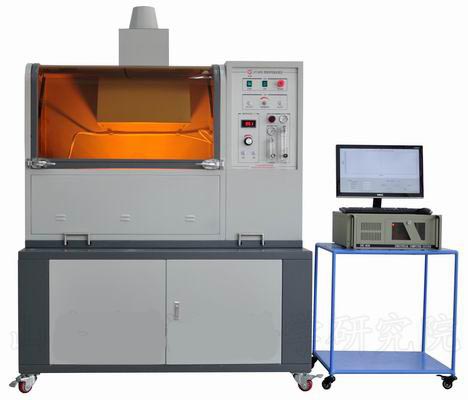
What is a Thermal Radiation Performance Tester (RPP)?
2026/03/04
Share:

What Is Thermal Radiation
Thermal radiation refers to the phenomenon in which all objects with a temperature above absolute zero emit electromagnetic waves. It represents the conversion of thermal energy into electromagnetic energy, where thermal energy fundamentally originates from the random kinetic motion of atoms and molecules within matter.
Working Principle of the RPP Thermal Radiation Performance Tester
The core principle of the RPP tester is based on simulating a high-temperature radiant heat environment and measuring the rate and extent of heat transfer through a material to determine its level of skin burn protection. According to publicly available information, the working principle can be summarized as follows:
The test specimen is positioned vertically at a specified distance in front of a controlled radiant heat source.
A copper calorimeter (heat flux sensor) is mounted behind the specimen to measure the heat transmitted through the material in real time.
The time required for the calorimeter temperature to rise by 12°C or 24°C is recorded to calculate the heat flux (heat transferred per unit area).
The RPP value (Radiant Protective Performance Value) is then determined. This represents the total heat energy required, under specified exposure conditions, to cause a second-degree skin burn. A higher RPP value indicates better thermal protective performance.
Why Choose the RPP Thermal Radiation Performance Tester
The selection of the RPP tester is based on its professionalism, standardization, and practicality in evaluating radiant heat protection performance.
1. Accurate Evaluation of Radiant Heat Protection
The RPP tester specifically measures a material’s insulation capability under pure radiant heat exposure. By recording the backside temperature rise using a copper calorimeter and applying the Stoll burn injury curve (or similar burn threshold models), it calculates the time required to cause second-degree skin burns, thereby quantifying protective performance.
2. Compliance with International Standards
The RPP method complies with internationally recognized standards such as ISO 6942. EN 366. and ASTM F2702. ensuring comparability and industry acceptance of results for research, product development, and certification.
3. Distinction Between Radiation and Convection Effects
Compared with TPP testing (which combines radiant and convective heat), RPP simulates only radiant heat exposure, enabling independent analysis of material performance in radiation-dominant scenarios such as fires, metallurgy, and aerospace environments.
4. Quantitative Performance Indicator (RPP Value)
Results are expressed as the RPP value (in cal/cm² or kJ/m²). Higher values indicate superior protective performance, facilitating material selection and comparison.
5. Multiple Testing Modes
Method 1: Visual assessment of material appearance changes (e.g., charring, melting) under radiant exposure.
Method 2: Calculation of heat transfer time and RPP value using backside heat flux and temperature rise curves.
6. Wide Application in High-Risk Fields
Especially suitable for firefighting suits, wildland fire protective clothing, industrial insulation materials, aerospace protective materials, and other applications requiring stringent radiant heat protection.
How to Use the RPP Thermal Radiation Performance Tester
1. Specimen Preparation
Cut specimens to standard sizes (commonly 22.86 cm × 10.16 cm under older standards or 14 cm × 24 cm for some newer systems).
Condition specimens under standard atmospheric conditions (e.g., 20°C, 65% RH) for at least 24 hours.
2. Equipment Preheating and Calibration
Turn on the system and preheat the infrared quartz tubes or silicon carbide (Glowbar) heat source for 60 seconds to ensure stable heat flux.
Typical heat flux density settings: 0.5 cal/(cm²·s) or 2.0 cal/(cm²·s) (approximately 20.9 kW/m² or 83.6 kW/m²).
Modern systems may support automatic heat flux calibration.
3. Specimen Installation
Mount the specimen smoothly in the holder without wrinkles.
Install the copper calorimeter behind the specimen and connect the temperature sensor (e.g., Pt100).
4. Testing Procedure
Remove the preheating shield to expose the specimen to radiant heat.
Start the data acquisition system to record the temperature-time curve.
Continue testing for 30 seconds or until the calorimeter temperature rise reaches 12°C or 24°C (depending on Method A or B).
5. Completion and Cooling
Turn off the heat source and stop recording.
Remove the calorimeter and allow it to cool below 33°C before conducting the next test.
Modern systems may include automatic water-cooling systems.
6. Data Analysis
Determine time T from the intersection of the temperature-time curve with the second-degree burn curve (Stoll curve).
Calculate RPP = F × T (where F is heat flux).
Some systems automatically output RPP, HTI, and heat flux parameters.
7. Key Precautions
Environmental conditions: Laboratory temperature 15–35°C with no airflow.
Safety: Operate in a fume hood or protective enclosure due to high temperatures and heat flux.
Calibration: Regularly calibrate with a standard heat flux meter to maintain accuracy within ±3%.
Repeatability: Test each specimen 3–5 times and calculate the average value.
Routine Maintenance and Care
1. Cleaning and Dust Prevention
Regularly wipe the instrument surface with a soft dry cloth to prevent dust and oil accumulation. Pay special attention to cleaning radiant tubes, the copper calorimeter, and specimen holders to avoid contamination that may affect heat distribution or measurement accuracy.
2. Inspection of Sensors and Key Components
Check the copper calorimeter for deformation, oxidation, or contamination to ensure sensitivity. Inspect radiant tubes (typically six Glowbar elements) for damage, discoloration, or abnormal power output. Verify that the water-cooling system operates smoothly without leakage.
3. Electrical and Connection Safety
Regularly inspect power cables, data cables, and connectors to prevent poor contact or short circuits. Ensure the computer control system, touchscreen, and software operate properly, and back up test data and calibration parameters regularly.
4. Environmental Control
Place the instrument in a well-ventilated, low-airflow environment (e.g., inside a fume hood). Recommended ambient temperature: 10–30°C; relative humidity below 80% to prevent condensation or corrosion.
5. Calibration and Performance Verification
Conduct professional calibration at least once per year using a standard heat flux meter to verify accuracy. Periodically test reference materials with known thermal protective performance to confirm system stability.
If the equipment is not used for an extended period, turn off the main power supply and unplug it. Remove internal batteries (if applicable) to prevent leakage. Cover the instrument with a dust cover or protective case. Power it on once per month to maintain electronic component stability. Annual comprehensive maintenance by the manufacturer or authorized service provider is recommended, including cleaning internal optical or thermal components, replacing aged seals and coolant, and calibrating temperature sensors and data acquisition systems.
Overall, the RPP Thermal Radiation Performance Tester is evolving from traditional manual operation toward automation and intelligent systems. Modern systems integrate Windows-based user interfaces, real-time data monitoring, fault diagnostics, and logging functions to improve accuracy and efficiency. Standardization continues to deepen in strict compliance with EN 366 and ISO 6942. ensuring global comparability and authority of results.
The application scope is expanding from single-layer and multi-layer fabric evaluation to include fire-resistant panels and other insulation materials, meeting increasingly complex safety protection requirements in firefighting, industrial, and military sectors. In the future, as research into thermal protective materials advances, RPP systems will become more integrated and may incorporate additional sensors and advanced data analysis models to provide more comprehensive performance evaluations.
Previous: Thermal Protective Performance Tester (TPP), ISO 11612
N e x t : What is a Simulated Human Body Underwear Tester?
