





What is Garment Electromagnetic Radiation Shielding Performance Testing System?
2026/03/12
Share:

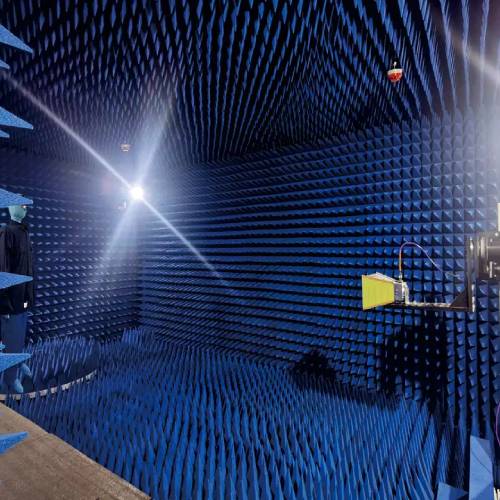
Purpose of the Garment EMR Shielding Performance Testing System
The core purpose of this system is to scientifically assess the shielding effectiveness of EMR-protective garments in real-life wearing conditions, ensuring that they can effectively reduce electromagnetic radiation exposure to the human body. Specifically, the system addresses the following needs:
Verification of protective performance: EMR-protective clothing is commonly worn by pregnant women, electronics operators, and professionals in medical or communications fields. It is essential to verify that their actual shielding performance meets advertised claims or safety standards.
Compensation for material-to-garment differences: While clothing is made of fabric, openings such as collars, cuffs, and front plackets can cause radiation leakage, making the finished garment's shielding effectiveness lower than that of the raw material. By simulating real-wear conditions (e.g., using mannequins), the system provides a more accurate reflection of actual protection.
Support for standards and compliance: Although unified national standards for finished garments are not yet established, the testing system provides technical data for future standardization and helps manufacturers conduct quality control according to material standards such as GB/T 23463-2009.
Consumer protection: By using scientific methods (e.g., flange coaxial method, shielded room method) to measure shielding effectiveness (SE), third-party laboratories prevent misleading claims and provide reliable guidance for consumers.
Operating Guidelines for the Garment EMR Shielding Performance Testing System
1. Testing Principle and Standards
EMR shielding performance testing is based on the propagation characteristics of electromagnetic waves through materials. By measuring the attenuation of EM waves passing through the garment, the shielding effectiveness is determined. Tests follow national and international standards, such as GB/T 23463-2009 “Protective Clothing—Microwave Radiation Protective Clothing” and GB/T 30106-2013 “Electromagnetic Radiation-Protective Textiles”. These standards specify test frequency ranges (e.g., 30 MHz–3 GHz), performance indicators (e.g., SE ≥ 30 dB), and test methods.
2. System Composition and Instrument Operation
The testing system generally consists of:
An electromagnetic field generator (signal source)
An electromagnetic field meter (for measuring electric or magnetic field strength)
Test fixtures (for securing the garment)
Data acquisition and analysis software
Instrument preparation and calibration: Inspect all instruments before use and calibrate according to manufacturer guidelines or relevant standards to ensure measurement accuracy.
Electromagnetic field meter operation: Power on the device, select the appropriate measurement range based on requirements (e.g., radiation source intensity or post-shielding attenuation). Place the probe near the source or garment surface and record stable readings. If the radiation is below the instrument’s minimum resolution (e.g., <1 μW/cm²), the reading may display as zero.
Test environment control: Conduct tests in a controlled environment, maintaining stable temperature and humidity, and minimize external electromagnetic interference for reliable results.
3. Test Procedure and Workflow
Baseline measurement: Use the electromagnetic field meter to measure the EM field strength of the source (e.g., signal generator or simulated source like a router) without any shielding as the reference value.
Sample placement and testing: Place the garment between the radiation source and measurement probe. Simulate realistic wearing conditions, ensure the garment is flat and securely fixed, avoiding wrinkles that may cause uneven distribution of conductive fibers.
Post-shielding measurement: Measure the EM field strength after passing through the garment under the same conditions.
Data recording and multi-point testing: Record baseline and post-shielding values. Repeat measurements at different garment locations (e.g., chest, back, sleeves) to assess uniformity of protection.
Comparative testing (auxiliary method): Optional tests can be conducted in real environments (e.g., near a microwave oven) for pre/post-wear comparison, but results may be affected by environmental interference and are recommended only as supplementary reference.
4. Data Processing and Result Evaluation
Shielding Effectiveness Calculation: SE is usually expressed in decibels (dB) and calculated as:
[SE = 10 \times \log_{10}\left(\frac{P_1}{P_2}\right)]
where (P_1) is the baseline power density or field strength, and (P_2) is the value after shielding. Field strength readings from the instrument can be directly used for calculation.
Result Analysis: Compare calculated SE with the product’s claimed value and relevant standards (e.g., ≥30 dB). Assess data consistency across different test points to evaluate protection uniformity.
Report Generation: Include test standards, instrument details, environmental conditions, sample description, raw data for all points, calculated SE values, and final conclusions.
5. Precautions and Maintenance
Instrument maintenance: Regularly calibrate and maintain measurement instruments to avoid probe damage.
Sample handling: Ensure garments are clean, dry, and undamaged before testing to maintain inherent shielding performance.
Safety operation: Operators must understand basic EM safety. Maintain safe distances from high-field sources.
Result interpretation: Test results are specific to the tested frequencies and conditions. Real-world garment protection may vary due to usage frequency, wearing style, and wear/tear. Periodic re-testing by professional labs is recommended.
By following these guidelines, the EMR shielding performance of garments can be systematically tested, providing reliable data for product quality assessment and development improvement.
Industry Benefits
The Garment EMR Shielding Performance Testing System supports the industry in multiple ways:
Promotes Standardization and Regulation
Provides unified testing benchmarks based on GB/T 23463-2009. IEEE Std 299.1-2013. IEC 61557-12:2018. and other international standards.
Defines protection levels (e.g., Class A ≥ 30 dB SE for 0.8–6 GHz, Class B 20–30 dB), encouraging standardized production.
Covers full lifecycle testing, including washing, wear, and friction, ensuring sustained protection in real use.
Enhances Product Quality and Reliability
Accurately measures SE using high-precision equipment (vector network analyzers, anechoic chambers, equivalent tissue phantoms).
Reveals leakage points (collars, cuffs, plackets) to guide garment design optimization.
Ensures durability through wash, wear, and temperature/humidity cycle tests.
Strengthens Consumer Trust and Market Transparency
Third-party reports (e.g., CNAS-certified labs) provide credible verification.
Clearly label shielding frequency ranges (30 MHz–18 GHz) and attenuation (dB) for informed purchase decisions.
Curb false claims, promote healthy market competition.
Promotes Technological Innovation and Industry Upgrade
Drives development of high-SE, comfortable, washable conductive fabrics (e.g., silver fibers, conductive polymers).
Supports integration with smart monitoring systems for real-time radiation feedback.
Expands application scenarios: maternity wear, occupational clothing, military, aerospace, and high-frequency environments.
Supports Regulatory Compliance and International Trade
Meets mandatory certifications (CCC, EU EMC directive) for market access.
Compliance with international standards enhances competitiveness in Europe, the US, Japan, Korea, and other strict EM markets.
In summary, the Garment EMR Shielding Performance Testing System is a critical tool for ensuring product quality, fostering technological advancement, maintaining market regulation, and driving industry-wide upgrades. With the rapid growth of 5G, IoT, and wearable technology, electromagnetic environments are increasingly complex, making scientific evaluation of protective garments essential. This system enhances product competitiveness, builds consumer trust, and provides data support for standards development, making its strategic and practical value increasingly significant.
Previous: What is an automatic coating thickness measuring instrument?
N e x t : How to Conduct a Single-Station Jounce Test?
