





What is a Filter Integrity Test System?
2026/04/01
Share:

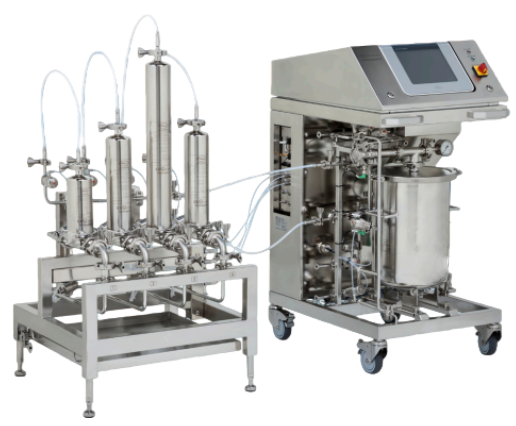
What is Filter Integrity Testing?
Integrity testing is a systematic validation process aimed at ensuring that a filter or filtration system maintains its structural integrity and functional effectiveness before, during, and after use. The core objective of this testing is to confirm that the filter can operate continuously and stably within its preset performance parameters, effectively preventing performance degradation or failure caused by leakage, structural damage, or deformation of filtration pores. Through this process, users can comprehensively assess the reliability of the filter, ensuring safety and efficiency in critical application scenarios.
What is the Purpose of a Filter Integrity Test System?
A Filter Integrity Test System is a specialized device used to verify the physical integrity and filtration performance of filters, especially sterilizing-grade filters. It is widely applied in industries with stringent requirements for sterility and safety. Its main purposes are as follows:
Ensure Filtration Effectiveness: Using non-destructive testing methods, it verifies whether the filter can effectively retain bacteria, viruses, and particulate matter, thereby ensuring the safety and purity of pharmaceuticals, food products, and biological materials.
Meet Regulatory Compliance Requirements: Compliant with domestic and international regulations and standards such as the Chinese Pharmacopoeia, GMP, FDA 21 CFR Part 11. USP <1227>, and ASTM F838. it serves as a mandatory validation step in pharmaceutical manufacturing and aseptic operations.
Prevent Contamination Risks: By testing filter integrity before and after use (following the PUPSIT principle — Post-Use / Pre-Use Integrity Testing), it prevents cross-contamination or batch rejection caused by membrane damage, seal failure, or improper installation.
Support Process Validation and Audits: Provides traceable and printable test data and graphs, meeting the requirements for quality audits and regulatory inspections.
How Does a Filter Integrity Test System Work?
The core objective of a Filter Integrity Test System is to ensure that filters can effectively retain microorganisms, particulates, and other contaminants, thereby safeguarding the sterility and safety of the final product. The system primarily operates through the following four non-destructive testing methods, each based on different physical principles and suitable for different types of filters and application scenarios:
Bubble Point Test
Principle: Before testing, the filter membrane is fully wetted. The upstream gas pressure of the filter is then gradually increased. The pressure at which gas begins to continuously form stable bubbles through the largest pores of the membrane is recorded as the bubble point.
Applicable Cases: Mainly suitable for hydrophilic membranes; the bubble point pressure indirectly reflects the size of the membrane’s largest pores.
Characteristics: Highly sensitive to large structural defects, with a relatively simple and intuitive operation. However, test results can be influenced by factors such as liquid surface tension, membrane contact angle, and ambient temperature, so it must be conducted under controlled conditions.
Diffusion Flow Test
Principle: At a constant pressure below the bubble point, the gas flow through the wetted membrane is measured. If the membrane pores are uniform and defect-free, the gas passes slowly by molecular diffusion; if there are holes or damage, the diffusion flow increases significantly.
Applicable Cases: Suitable for hydrophilic membranes, especially for verifying the integrity of 0.2 μm and 0.45 μm sterilizing-grade filters.
Characteristics: Highly sensitive, capable of detecting very small membrane defects, and easily automated, meeting GMP requirements for pharmaceutical manufacturing environments.
Pressure Hold / Pressure Decay Test
Principle: The wetted filter is pressurized to a set value, then the gas supply is closed and the system sealed. Pressure decay is monitored over time. A rapid pressure drop indicates leakage or large pore defects in the filter.
Applicable Cases: Suitable for all types of filters; commonly used for pre-checks after filter installation or for integrity verification of large filtration systems.
Characteristics: Requires relatively simple equipment and is easy to operate. However, its sensitivity to very small defects is low, so it is typically used as an auxiliary test rather than the sole validation method for sterilizing-grade filters.
Water Intrusion Test
Principle: Specifically designed for hydrophobic membranes (e.g., PVDF or PTFE). Water pressure is applied upstream of the membrane at a level below the Water Entry Pressure (WEP), and the flow of water gradually penetrating the membrane pores is measured to assess filter integrity.
Applicable Cases: Mainly for hydrophobic gas filters or vent filters, such as freeze-dryer inlet filters and tank breathers.
Characteristics: No organic solvents like isopropanol are required, making it safer and more environmentally friendly. However, testing typically takes longer and requires specialized equipment and strict operational control.
Why is a Filter Integrity Test System Important?
The importance of a Filter Integrity Test System lies in its direct impact on product safety, regulatory compliance, and production efficiency, particularly in industries with extremely high requirements for sterility and purity. Its core significance can be summarized as follows:
Ensuring Product Safety and Patient Health
Filters are commonly used to remove bacteria, viruses, particulates, and other contaminants. Defective filters—such as those with cracks, seal failures, or abnormal pore sizes—may allow harmful substances to enter the final product, posing a risk to patient safety. Integrity testing provides a non-destructive method to verify the effectiveness of the filtration barrier, preventing contamination events.
Meeting Global Regulatory Requirements
Major regulatory authorities, including the FDA and EMA, as well as international standards such as USP <1227>, ASTM F838. and EU GMP Annex 1. explicitly require integrity testing of sterilizing-grade filters. Particularly in aseptic manufacturing processes, pre-use (PUPSIT) and post-use integrity testing have become mandatory quality control steps.
Supporting cGMP Compliance and Audit Readiness
Integrity testing provides traceable, quantifiable data, serving as critical evidence for compliance with current Good Manufacturing Practices (cGMP). Complete test records are essential during regulatory inspections to demonstrate the effectiveness of the quality management system.
Reducing Operational Risk and Cost
By detecting filter defects early—such as membrane damage or O-ring leaks—companies can avoid batch rejection, product recalls, or production downtime. Non-destructive testing allows the same filter to be verified multiple times before and after use, reducing replacement frequency and significantly lowering costs.
Adapting to Diverse Industrial Scenarios
Different industries—pharmaceuticals, biotechnology, food and beverage, water treatment—have varying filtration requirements. Integrity test systems support multiple testing methods, including bubble point, diffusion flow, pressure hold, and water intrusion, and can be flexibly applied to hydrophilic or hydrophobic membranes, ensuring broad applicability.
Driving Intelligent and Automated Upgrades
Modern integrity testers, such as Sartorius Sartocheck®, Thermo Scientific inSITE™, and Festo CPX/MPA, integrate automated control, data recording, and remote monitoring functions. These features improve testing consistency, reduce human error, and meet data integrity requirements (ALCOA+).
Which Industries Use a Filter Integrity Test System?
A Filter Integrity Test System is primarily used to verify the structural integrity and filtration performance of filters, ensuring they can effectively retain microorganisms, particulates, and other contaminants. According to authoritative public sources, this system is widely applied in the following industries:
Pharmaceuticals: Used for integrity verification of sterilizing-grade filters (e.g., 0.22 μm or 0.1 μm), in compliance with GMP, FDA 21 CFR Part 11. and the Chinese Pharmacopoeia, ensuring the safety of sterile drugs.
Biotechnology: Ensures that filtration steps in cell therapy, vaccine production, and protein purification processes do not introduce contamination.
Food & Beverage: Applied for sterilizing filtration of products such as alcoholic beverages, bottled water, and soft drinks, guaranteeing product hygiene and safety.
Medical Devices: Used to verify filtration components in gas or liquid sterilization systems, meeting standards for sterile device production.
Water Treatment: Includes verification of terminal filters in pharmaceutical water systems and ultrapure water systems to ensure water quality compliance.
Semiconductor & Microelectronics: Applied to integrity testing of filtration systems for ultrapure process gases or liquids, maintaining a clean manufacturing environment.
Chemical & Fine Chemicals: Monitors filtration processes for high-purity fluids in critical chemical processes.
In summary, the Filter Integrity Test System is undoubtedly an advanced technology deserving close attention and in-depth study. It plays a vital role in ensuring the reliability and safety of filtration processes. Its precise testing principles and wide range of applications make it a key focus for professionals in related industries.We sincerely invite you to visit our official website to access detailed and comprehensive information on device specifications, operation manuals, application cases, and the latest industry updates. By exploring our website, you will gain a deeper understanding of the system’s exceptional performance and unique advantages.
Previous: FAQs About Aluminum Foil Pinhole Tester
N e x t : FAQs About Fuel Water Separator Test Bench
