





FAQs About Aluminum Foil Pinhole Tester
2026/03/30
Share:

How to Effectively Detect Pinhole Defects?
For pinholes (also referred to as pores or voids) that may exist in insulating coatings on conductive substrates, an electrical principle–based detection method can be employed. The procedure is as follows: first, connect the conductive substrate to one electrode of a power supply, and then use a counter electrode connected to the other pole of the power supply to systematically scan the surface of the coating. When the counter electrode passes over a pinhole, the discontinuity in the coating allows current to pass through the pinhole, thereby indicating the defect’s location.
How does the Aluminum Foil Pinhole Tester operate?
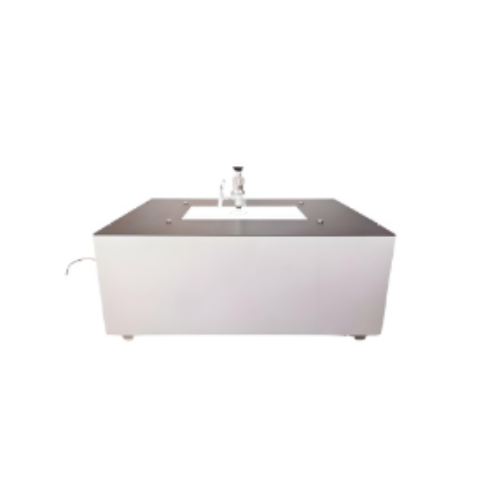
The core function of the instrument is to detect pinhole defects in aluminum foil. It mainly relies on precise optical transmission principles, exploiting the significant differences in light transmittance between intact foil and pinholes to efficiently and accurately identify the number of pinholes, measure their exact sizes, and analyze their spatial distribution. The detailed operation mechanism and workflow are as follows:
Detailed Working Principle
Uniform Illumination: The aluminum foil sample is first placed flat in front of a specialized light source providing uniform, stable, high-intensity illumination. The light source is typically a calibrated LED light box or a simulated daylight source meeting international standards such as CIE D65. ensuring consistent and accurate testing conditions.
Transmission Identification: Intact aluminum foil blocks light effectively, while pinholes are microscopic structural breaks. When pinholes are present, light passes through them, creating bright, easily recognizable spots or reflections against a dark background or enclosed dark box.
Magnified Observation and Precise Measurement: For detailed analysis of micro pinholes, operators use the instrument’s integrated optical microscope, high-magnification lens, or high-resolution digital camera system to observe the bright spots. Using magnification and built-in measurement scales, the diameter of each pinhole can be measured precisely, with high-end instruments achieving detection accuracy as fine as 0.01 mm.
Standard Operating Procedures
Pre-Check of Equipment: Before testing, the pinhole detection chamber (usually including a frosted glass diffuser, stable light source, and enclosed dark box) must be inspected to ensure stable, flicker-free illumination. Observation devices (e.g., 10–20× reading microscopes) should be clean and all components functional.
Sample Preparation: Representative samples are taken from each foil roll (typically 2 meters in length) and cut according to standard methods (e.g., ten samples of 400 mm × 250 mm each; if the original foil width is less, use the full width). Samples must equilibrate in a controlled environment (usually 23 °C ±2 °C and 50% ±5% relative humidity) for at least 4 hours to minimize material stress from environmental variations and ensure reliable results.
Equipment Calibration: Before testing actual samples, a standard reference plate or calibration sheet provided with the device is placed in the detection area. Light source intensity is calibrated (usually to achieve approximately 1000 lux at the sample plane), and microscope magnification is adjusted to the pre-set range (typically 10–20×) to meet standard observation scales.
Test Execution: The equilibrated aluminum foil is carefully unfolded and placed flat in the observation area, with the dull side facing up. Ensure the surface is wrinkle-free and fully adheres to the stage to avoid shadows or false defect signals.
Observation and Identification: In complete darkness, the specialized light source is turned on. Operators systematically scan the foil surface through the microscope or camera-connected display. Any pinholes appear as sharply defined bright spots due to their higher light transmission compared to the dense aluminum base.
Result Evaluation and Recording:
Counting: Total pinholes per unit area (typically 1 m²) are counted.
Size Measurement (Optional): For detailed analysis, a microscope with precise scales measures the diameters of significant pinholes.
Compliance Determination and Documentation: Based on national or industry standards (e.g., China’s GB/T 3198 “Aluminum and Aluminum Alloy Foil” or pharmaceutical packaging standard YBB 00152002), the sample is judged as compliant or non-compliant. All data and conclusions are documented in a detailed inspection report.
Why is the Aluminum Foil Pinhole Tester Important?
The Aluminum Foil Pinhole Tester is crucial because it directly impacts the safety and quality assurance of highly sensitive products such as pharmaceuticals and food. Although aluminum foil is thin, it is a critical packaging material, and pinhole defects can compromise its barrier properties, leading to product spoilage or even health hazards. Its key importance is highlighted in the following aspects:
Ensuring Pharmaceutical Safety: Pharmaceutical aluminum foil must block moisture, oxygen, and microorganisms. Pinhole defects—especially those with diameters larger than 0.3 mm—can compromise moisture resistance and anti-oxidation capabilities, causing drugs to degrade, oxidize, or become contaminated. Minor defects may reduce efficacy, while severe defects could pose health risks. Regulations, such as the Chinese Pharmacopoeia, set strict limits on the number and size of pinholes, making the tester an essential compliance tool for manufacturers.
Maintaining Food Preservation and Safety: Food aluminum foil packaging must prevent oxidation of fats, moisture absorption, or cross-contamination of flavors. Pinhole defects can break the seal, shorten shelf life, and compromise taste and safety. Leak detection devices, such as vacuum leak testers, can detect micro-defects as small as 5 μm, preventing defective products from reaching consumers.
Meeting Industry Regulations and Quality Standards: Industries like pharmaceuticals and food require strict packaging standards (e.g., GMP). Pinhole testing is not only a mandatory production step but also a key source of traceable data for quality audits and regulatory compliance.
Improving Production Efficiency and Automation: Modern pinhole testers integrate AI algorithms, line-scan cameras, or laser scanning technology to perform high-speed online inspection (capable of matching production lines at 600 m/min). They automatically identify and classify defects and generate heatmaps, enabling precise traceability and process optimization.
Reducing Corporate Risk and Cost: Early detection of pinholes prevents product recalls, claims, or brand reputation damage caused by packaging failures. An automated tester can replace over 90% of manual inspection, significantly reducing labor costs while increasing efficiency.
Which Industries are Suitable for the Aluminum Foil Pinhole Tester?
The Aluminum Foil Pinhole Tester is primarily suitable for the following industries:
Food Packaging Industry: Detects pinholes in aluminum foil used for packaging snacks, chocolate, beverages, and other food products, preventing oxygen and moisture ingress that could lead to spoilage.
Pharmaceutical Packaging Industry: Ensures pharmaceutical aluminum foil (e.g., blister packaging) is free of pinholes or that pinholes meet standards such as YBB 00152002-2015. safeguarding drug stability and safety.
Electronic Materials Industry: Used for quality control of aluminum foil in electronic components such as capacitors, preventing pinholes from affecting conductivity and electrical performance.
Building Insulation Materials Industry: Checks the integrity of aluminum foil insulation and heat-reflective materials, ensuring their thermal reflection efficiency.
Metal Foil Production and Quality Control: Suitable for online or offline pinhole detection in aluminum foil production lines, complying with national standards such as GB/T 3198 and GB/T 22638.2.
In summary, considering the application value and market prospects of the aluminum foil pinhole tester, this inspection tool is indeed worthy of attention from users and professionals across relevant industries. For more detailed product features, technical specifications, or real-world application cases, we sincerely invite you to visit our official website, where comprehensive and in-depth information is available.
Previous: FAQs About Automatic Filter Performance Tester
N e x t : What is a Filter Integrity Test System?
