





What is a hydraulic oil purification and filtration tester?
2026/04/07
Share:

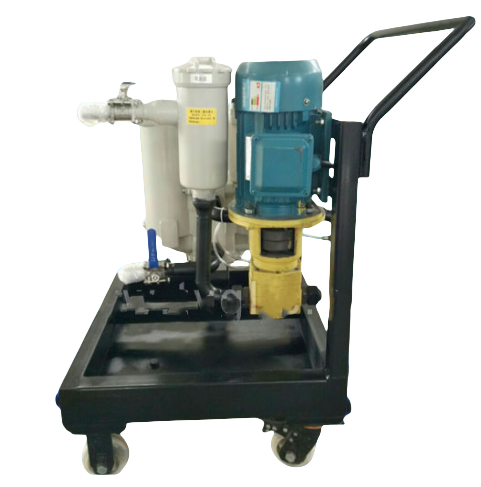
Applications of the Hydraulic Oil Purification and Filtration Tester
The Hydraulic Oil Purification and Filtration Tester is a specialized device designed to evaluate the filtration performance and contamination control capability of hydraulic oil under actual operating conditions. Its core purpose is to quantify the ability of hydraulic oil to pass through filters and predict potential clogging tendencies in the filtration system, thereby ensuring the reliable operation of hydraulic systems. Its main applications include:
Assessment of Hydraulic Oil Filterability
By simulating real working conditions, the tester measures the time or pressure drop required for an oil sample to pass through a standard filter membrane under specific temperature, pressure, or flow conditions, allowing evaluation of the oil’s ability to maintain cleanliness.
Evaluation of the Impact of Water on Filtration Performance
Conducts “wet filterability tests” by adding a specified amount of water to the oil sample. This assesses the oil’s resistance to emulsification, hydrolysis, and additive precipitation under humid conditions.
Monitoring Oil Aging and Performance Degradation
Tests used or thermally aged and sheared oil samples to track changes in filterability, providing early warnings of additive depletion or formation of oxidation by-products.
Support for Filter Selection and System Design
Provides comparative data under different filtration ratings, offering guidance for selecting appropriate filter elements for hydraulic systems.
Research & Development and Quality Control
Used in the development of new hydraulic oil formulations (such as biodegradable or low-ash synthetic oils) to verify the compatibility of base oils and additives, and to ensure the oil meets cleanliness standards.
Industries Applicable for the Hydraulic Oil Purification and Filtration Tester
The Hydraulic Oil Purification and Filtration Tester is primarily used to assess hydraulic oil cleanliness, water content, particulate contamination, and filtration performance, ensuring that oils meet equipment operational requirements. According to authoritative sources, this type of equipment is widely applied in the following industries:
Construction Machinery and Heavy Equipment Manufacturing
Used to test the cleanliness of hydraulic oil in excavators, loaders, bulldozers, and other machinery, preventing valve wear or system blockages caused by contamination.
Power and Energy Industry
Including wind power, thermal power, and hydropower sectors. The tester monitors the filtration performance and contamination levels of oils in gearboxes and hydraulic control systems to ensure long-term stable operation of equipment.
Aerospace
Aircraft hydraulic systems, such as landing gear and flight controls, require extremely high oil cleanliness. The tester ensures that hydraulic oil meets aviation standards (e.g., NAS 1638).
Petrochemical and Metallurgical Industry
In high-temperature and high-pressure environments, hydraulic oil is prone to contamination. The tester monitors oil conditions to prevent equipment failures.
Transportation and Marine Engineering
Used in ship rudder systems, port machinery, and offshore hydraulic systems to verify oil purification efficiency, with particular attention to water and particulate removal performance.
Manufacturing and Automated Production Lines
CNC machines, injection molding machines, and other precision hydraulic systems require regular oil cleanliness testing to maintain system response speed and operational accuracy.
Third-Party Testing Laboratories and Oil R&D
Used for new oil acceptance, in-service oil evaluation, and additive performance verification. Supports quantitative analyses such as filterability testing and contamination classification.
How to Use the Hydraulic Oil Purification and Filtration Tester
The Hydraulic Oil Purification and Filtration Tester is primarily used to evaluate hydraulic oil performance during the filtration process, covering key indicators such as filtration efficiency, clogging tendency, and contaminant removal capability. Although specific models and manufacturer designs may vary, the core operation procedures share common elements. The following are detailed basic steps to ensure accurate and repeatable testing:
1. Preparation
Place the instrument on a stable, horizontal workbench free from vibration.
Ensure the testing environment is clean and dust-free to minimize contamination of the oil sample and internal instrument components.
Check the power supply:
For portable devices, confirm the built-in battery is fully charged.
For benchtop devices, connect properly to a 220V AC power supply with good grounding.
2. Preheating and System Calibration
Turn on the power and wait for the system to complete the self-check process (usually indicated on the LCD screen).
Perform key zeroing operations to establish a baseline reference:
Use clean new oil of the same type as the test sample (or a standard calibration fluid) and add 3–5 drops into the designated oil chamber.
Press the corresponding function key on the panel (labeled [MZ], [ZERO], or similar) to start the automatic calibration program.
Wait until the instrument displays “Zeroing Complete” or a similar message, indicating that the baseline is set.
3. Sample Pre-treatment (Critical Step)
To ensure test results accurately reflect oil condition:
For contamination testing, follow strict sampling and preparation procedures:
Thoroughly rinse all containers, sampling bottles, syringes, and sample inlets with filtered solvent (e.g., isopropanol, petroleum ether) to eliminate residual contaminants.
Select the appropriate filter membrane based on oil viscosity and expected contamination level (e.g., 1.2 μm nylon membrane for standard hydraulic oil, 5.0 μm membrane for heavily contaminated or high-viscosity oil).
Match the solvent to the oil type: petroleum-based hydraulic oil should use PF degreasing solvent or equivalent; water-based hydraulic oil should use purified water or a designated water-based cleaning agent.
Let the collected oil sample sit in a sealed container for a period (e.g., 30 minutes) to allow trapped air bubbles to escape, avoiding interference with optical or pressure measurements.
4. Conducting the Test
The instrument typically provides multiple test modes to meet different requirements:
a. Quick Test Mode (QT):
Using clean sampling tools, add 3–5 drops of the test oil into the instrument’s designated oil chamber (main detection chamber).
Press [ENTER] or [START]; the instrument begins rapid analysis and displays contamination level (e.g., particles/mL) or overall oil quality in real time.
Upon completion, the instrument indicates the final result, such as “TEST OK!” (pass), “MAY” (attention required), or “USELESS!” (replacement needed).
b. Standard Test Mode (ST):
Enter or select the corresponding oil code (usually a 4-digit code corresponding to pre-set oil parameters) in the instrument menu.
After confirmation, add the specified amount of oil sample; the instrument executes a comprehensive automatic test sequence.
This mode calculates and outputs multiple performance indicators, such as filtration time ratio (compared to new standard oil), clogging coefficient (β value), and pressure increment, providing a detailed evaluation of filter performance or oil contamination tolerance.
5. Result Analysis, Interpretation, and Recording
Compare the instrument’s output data (particle distribution, ISO codes, etc.) against general oil discard standards or manufacturer-recommended limits, referencing standards such as NAS 1638. ISO 4406. or SAE AS4059 to scientifically determine oil quality compliance.
Test reports with date, time, and data can be directly printed via the instrument’s built-in micro thermal printer (supported in some advanced models) or transmitted to a computer for storage and management, enabling long-term oil condition tracking.
6. Post-Test Cleaning and Maintenance
After each test, immediately rinse the oil chambers, detection flow paths, and all oil-contact parts with filtered clean solvent to prevent residual oil buildup or cross-contamination.
Dry cleaned components with a lint-free soft cloth or clean air, ensuring no solvent residue remains.
Store the main instrument and accessories in a dry environment free from corrosive gases, and perform regular maintenance to ensure long-term measurement stability and accuracy.
Significance of the Hydraulic Oil Purification and Filtration Tester
The Hydraulic Oil Purification and Filtration Tester is crucial because it plays a key role in the reliability, lifespan, and safety of hydraulic systems. The core reasons for its importance are as follows:
Ensuring Hydraulic System Performance
Contaminants in hydraulic oil—such as metal particles, dust, and gums—can accelerate wear of precision components like valves, pumps, and cylinders, leading to delayed system response or failure. The tester verifies filtration effectiveness to ensure the oil meets cleanliness standards.
Preventing Unexpected Failures
Industry statistics indicate that approximately 70% of hydraulic system failures are caused by inadequate contamination control. Regular testing helps identify contamination trends early, preventing unplanned downtime and costly repairs.
Compliance with Industrial Standards
Many industries, such as wind power, mining, and aerospace, impose strict hydraulic oil cleanliness requirements (e.g., ISO 4406). The tester provides quantitative data to ensure compliance with these standards.
Optimizing Maintenance Strategies
Combined with online particle monitoring, the tester supports condition-based predictive maintenance, reducing unnecessary filter or oil replacement and lowering operational costs.
Extending Equipment Lifespan
Maintaining oil cleanliness over time significantly prolongs the overall service life of hydraulic systems, particularly under high-load or harsh operating conditions, such as wind turbines and construction machinery.
How to Detect Contamination in Hydraulic Oil
Observing the appearance of hydraulic oil is one of the simplest and most intuitive methods to preliminarily assess potential contamination. Clean, uncontaminated hydraulic oil typically exhibits a nearly transparent to light amber color, with uniform hue and pure texture. Visual inspection allows an initial evaluation of oil cleanliness and potential issues.
Recommended Hydraulic Filter Replacement Interval
Generally, the suggested replacement interval for hydraulic filters in a system is between 225 and 250 operating hours. This range represents a common guideline that balances equipment maintenance and operational efficiency. The exact replacement schedule should strictly follow the technical specifications and operating instructions provided by the equipment manufacturer, and should also consider actual working conditions, such as load intensity, environmental cleanliness, and the level of hydraulic oil contamination.
In summary, the Hydraulic Oil Purification and Filtration Tester is a critical tool that embodies the principle: “Clean hydraulic oil equals an efficient and reliable system.” In modern industrial production, it plays an indispensable role. By accurately detecting and filtering contaminants in hydraulic oil, the tester ensures stable hydraulic system operation, significantly enhances equipment performance, and prolongs service life. Consequently, it holds irreplaceable value in modern industrial maintenance and management.
Previous: FAQs About Hydraulic Oil Filtration and Dehydration Unit
N e x t : FAQs About Hydraulic Pump Contamination Resistance Tester
