





What is a Manikin Coughing System (Cough Simulator)?
2026/04/15
Share:

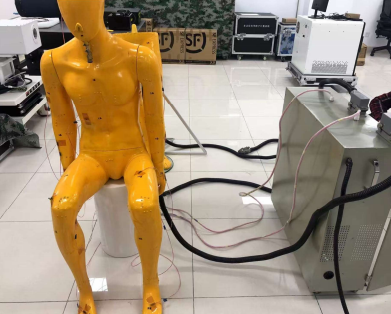
Functions of the Manikin Coughing System (Cough Simulator)
The Manikin Coughing System is an experimental or training device designed to simulate the human coughing process. It is widely used in fields such as medical device testing, respiratory therapy research, and infection control assessment. Its main functions include:
Simulating physiological cough mechanisms: By precisely controlling airflow and pressure changes, the system can replicate the high-velocity expiratory airflow of human coughing (with peak cough flow rates reaching 5–10 L/s). This is used to test or train medical interventions related to coughing.
Evaluating the effectiveness of respiratory protective equipment: In studies involving masks, face shields, and other protective gear, the system can measure how effectively filtration reduces droplet and aerosol emission. For example, some studies use cough simulators to assess how different oxygen masks decrease aerosol dispersion.
Supporting the development and calibration of respiratory therapy devices: When combined with active lung simulators, the system can test the performance of devices such as cough assist machines and ventilators under simulated cough conditions.
Providing a standardized experimental environment: In laboratory settings, it enables reproducible and controllable cough simulations for airway clearance techniques, infection transmission models, and personal protective equipment (PPE) testing.
It is important to note that the Manikin Coughing System is not a clinical device for patient treatment. It is a simulation tool used for research, education, or product testing. For assisting actual patient coughing, devices like the cough assist machine are used, which help clear airway secretions rather than simulating coughing behavior.
Industries Applicable for the Manikin Coughing System (Cough Simulator)
The Manikin Coughing System is primarily applicable in the following industries:
Healthcare and Public Health: Used to study aerosol transmission mechanisms of respiratory infectious diseases such as influenza, tuberculosis, and COVID-19 generated by coughing, and to evaluate the effectiveness of ventilation systems, personal protective equipment (PPE) such as masks, and hospital infection control measures.
Medical Device Development and Clinical Applications: Certain devices (e.g., intelligent bionic airway clearance systems developed by companies like Beijing Yaguo Technology) assist mechanically ventilated patients in clearing airway secretions, simulate physiological coughing, and avoid disconnecting the ventilator.
Medical Education and Training: As part of CPR (cardiopulmonary resuscitation) or airway management training, it simulates real patient physiological responses, including coughing and breathing, to enhance healthcare professionals’ response capabilities.
Scientific Research and Laboratory Studies: In controlled environments, it generates standardized cough aerosols for testing disinfection technologies, air purification devices, or novel protective materials, supporting epidemiological and aerodynamic research.
AI and Health Monitoring Technology Development: Provides a standardized platform for data collection and validation for AI models that identify diseases based on cough sounds (e.g., HeAR), facilitating non-contact disease screening.
Standards Applicable to the Manikin Coughing System (Cough Simulator)
The Manikin Coughing System must comply with the following categories of standards:
1. Basic Safety and Performance Standards for Medical Electrical Equipment
IEC 60601-1:2005 + AMD2:2020
This standard specifies fundamental safety and general performance requirements for medical electrical equipment, including leakage current (≤0.5 mA), mechanical strength (e.g., 1.5-meter drop test), and environmental adaptability (temperature 10–40°C). It also introduces requirements for risk management related to Software as a Medical Device (SaMD).
IEC 60601-1-2:2014 + AMD1:2020
This standard addresses electromagnetic compatibility (EMC), requiring devices to pass tests such as electrostatic discharge (±8 kV contact discharge) and radiofrequency field immunity (10 V/m @ 80–2700 MHz). It also specifies that devices should be kept at least 30 cm away from wireless equipment.
2. Technical Specifications for Respiratory Devices
TZSA 233-2024 “Technical Specification for Bionic Airway Clearance Systems”
This specification defines the technical parameters of bionic airway clearance systems, including cough simulation functions. Parameters include minimum trigger tidal volume, positive end-expiratory pressure (PEEP) range, and connection requirements for suction ports and breathing circuits. It applies to bionic airway clearance/cough simulation devices used in conjunction with invasive ventilators.
3. Quality Management and Risk Management Standards
ISO 13485:2016
Requires manufacturers to establish a quality management system covering the entire lifecycle from design and production to after-sales service, including supplier audits, change control, and adverse event reporting.
ISO 14971:2019
Mandates risk analysis for device use (e.g., nerve injury from electrical overstimulation) using FMEA methodology.
4. References for Clinical Simulation and Educational Applications
Some advanced obstetric or ICU nursing training systems (e.g., products by Kangwei Medical) include cough simulation functions, but their standards are mainly based on clinical skills training guidelines (e.g., AHA 2010 CPR Guidelines), rather than independent standards specific to cough simulation.
Additionally, in research applications (e.g., airflow dynamics simulation systems studied at Beihang University), the peak cough flow rate (CPFR) is required to reach at least 5 L/s, and feedback control is used to prevent airway collapse. However, such systems currently do not have a unified industry standard.
Summary: The Manikin Coughing System primarily needs to comply with the IEC 60601 series safety standards and TZSA 233-2024 (if used in respiratory support scenarios), while it is also recommended to follow ISO 13485 and ISO 14971 for quality and risk management.
How to Use the Manikin Coughing System
The Manikin Coughing System typically refers to a simulation device used for teaching, research, or equipment testing, designed to replicate the human coughing process. These systems are generally used for two main purposes:
1. Cough/Airway Function Manikins for CPR Training
These devices are primarily used for emergency training. The “cough” function mainly relates to airway patency and feedback during artificial ventilation, rather than actively simulating a coughing motion. Typical operation includes:
Power On and Setup
Place the manikin flat on a firm surface. Connect the microcomputer controller and power supply.
Ensure the airway open indicator is functioning (it lights up when the head is tilted back 70–90°).
Select Mode
Use the “+ / –” buttons to choose the operational mode: Training, Assessment, or Simulation.
Training mode allows free operation and provides voice prompts (e.g., “Insufficient ventilation,” “Compression too deep”).
Perform Procedures
Artificial Ventilation: Seal the manikin’s mouth and nose, delivering 500–1000 mL per breath. The barcode indicator turns green for correct ventilation.
Chest Compressions: Place both hands overlapped on the middle-lower sternum, compress 5–6 cm deep at a rate of 100–120 compressions per minute.
2. Thermal Manikins for Cough Aerosol Research
These devices are mainly used in medical or environmental science research. They simulate aerosol dispersion generated by real coughing through controlled heating and fluid dynamics.
Setup Parameters: Controlled by researchers rather than manual operation:
Surface temperature of the manikin (simulating 37°C human body temperature).
Cough jet velocity, airflow direction, and droplet size distribution (0.1–1000 μm).
Environmental temperature and humidity settings.
Purpose: To analyze the spread of cough droplets in indoor spaces, evaporation processes, and infection risks.
Why the Manikin Coughing System (Cough Simulator) Is So Important
The significance of the Manikin Coughing System lies primarily in its critical role in medical education, infection control research, and the evaluation of protective equipment. Its importance can be highlighted in the following aspects:
Realistic Simulation of Human Cough Aerosol Transmission:
The system can generate aerosols closely matching those produced by human coughs in terms of particle size distribution, velocity, and volume. This allows for studying droplet dispersion patterns, deposition sites, and infection risks in indoor environments. For example, research using cough simulators measured droplet deposition on facial mucosa and horizontal surfaces under varying distances and humidity conditions, finding that over 90% of droplets settled within a 90 cm range.
Evaluation of Infection Control Measures:
By simulating virus-containing cough aerosols, the system can test the effectiveness of interventions such as ventilation systems, protective barriers, and masks in reducing transmission. For instance, studies combining cough simulators with respiratory manikins assessed the efficiency of different oxygen masks in blocking aerosol emission, showing that filtered masks reduced aerosol output during coughing by up to 5.1 times.
Study of Environmental Factors on Viral Survival:
In controlled environments, the cough simulation system can explore how variables like temperature and humidity affect the survival of viruses (e.g., influenza) in aerosols. One study showed that at relative humidity ≥43%, the infectivity of influenza virus in simulated cough aerosols decreased significantly within 15 minutes, suggesting that maintaining indoor humidity above 40% can help lower transmission risk.
Support for Public Health Decision-Making and Standard Development:
Quantitative data from the system provide scientific evidence for agencies such as the CDC and OSHA in developing engineering control guidelines (e.g., transparent barrier height, ventilation requirements). For example, studies using <4 µm aerosol data generated by cough simulators recommended that protective barriers should extend to the height of the breathing zone to effectively intercept respirable particles.
Training of Healthcare Personnel and Emergency Drills:
By integrating cough simulation into advanced manikins (e.g., high-fidelity obstetric emergency training systems), healthcare workers can improve their response capabilities for respiratory infectious disease scenarios.
In conclusion,the Manikin Coughing System is a highly realistic experimental device that plays a crucial role in respiratory infectious disease research and prevention. It serves as a key bridge between fundamental research and practical infection control applications, providing an irreplaceable, highly controllable, and standardized platform for evaluating and mitigating viral transmission risks.We sincerely invite you to visit our official website to obtain more comprehensive information about the product’s specifications, application cases, and technical advantages.
Previous: What is a Diesel Water, Ash, and Sulfur Mixing Tester?
N e x t : What is Flame Spread Index Tester?
