





What is a Diesel Water, Ash, and Sulfur Mixing Tester?
2026/04/14
Share:

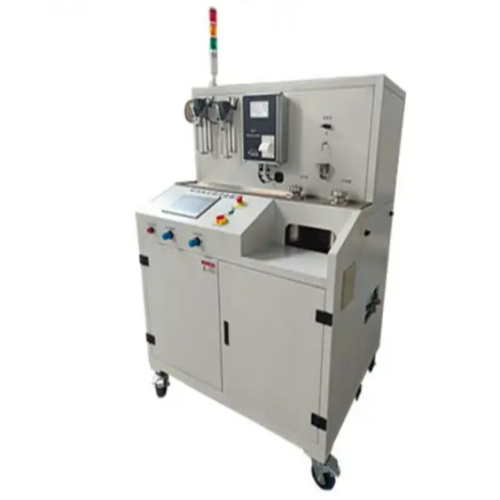
Uses of the Diesel Water Ash Sulfur Mixing Tester
The Diesel Water Ash Sulfur Mixing Tester is primarily used for comprehensive quality evaluation and compliance verification of diesel and related blended fuels. Its applications include precise control of fuel quality, strict compliance testing with environmental protection regulations, and optimization of fuel formulations to enhance engine performance. The core functions and value of this equipment can be systematically summarized as follows:
1. Precise Sulfur Content Detection
The tester can accurately measure the sulfur content in diesel, which is a critical indicator of fuel environmental performance. High-precision detection ensures that diesel products meet increasingly stringent global and regional environmental regulations, such as China’s National VI emission standards or the International Maritime Organization (IMO) 2020 global marine fuel sulfur cap. Excess sulfur in diesel leads to overproduction of sulfur dioxide (SO₂) during combustion, contributing to air pollution and causing severe damage to engine after-treatment systems—such as Selective Catalytic Reduction (SCR) units and Diesel Particulate Filters (DPF)—shortening their service life and increasing maintenance costs.
2. Accurate Water Content Measurement
The tester can precisely determine the water content in fuel. Water is a common harmful impurity in diesel that can cause a series of problems: it may trigger electrochemical corrosion of metal components in the fuel delivery and injection systems; it provides a breeding environment for bacteria and fungi, forming viscous deposits that clog filters; and in low-temperature conditions, water can freeze and block fuel lines, directly impacting fuel supply. These issues reduce combustion efficiency, increase abnormal engine wear, and ultimately affect overall engine reliability and lifespan.
3. Ash Content Evaluation
The instrument can assess the ash content in fuel, which mainly originates from lubricating oil additives (such as certain metallic compounds) or solid impurities and inorganic matter in the fuel itself. Excess ash produces harmful residues upon combustion: it accumulates and clogs the DPF, reducing filtration efficiency and increasing exhaust backpressure. Furthermore, hard ash particles accelerate abrasive wear of critical moving parts such as cylinders, piston rings, and injectors, leading to engine performance degradation over time.
4. Verification of Blended Fuel Uniformity and Specification Compliance
The tester is particularly valuable for confirming the uniformity and specification compliance of blended fuels. As the use of renewable or alternative additives such as biodiesel and ethanol mixed with conventional diesel becomes more widespread, it is essential to ensure that fuel components are evenly distributed and meet predetermined physicochemical specifications. This device helps manufacturers, blending stations, and end-users verify that blended fuels comply with relevant international or industry standards—such as ASTM D975 (USA) or EN 590 (Europe)—thereby ensuring consistent fuel performance and stable engine operation.
Applicable Fields of the Diesel Water Ash Sulfur Mixing Device
The Diesel Water Ash Sulfur Mixing Device is primarily used for fuel adaptability testing of fuel supply systems and for fuel system technology development. It serves as a key apparatus for expanding fuel adaptability testing in both low-pressure and high-pressure injection performance evaluations. Its specific application fields include:
1. Fuel System R&D and Testing
The device simulates different fuel conditions (containing water, ash, and sulfur) to evaluate the performance and durability of fuel supply components, such as injectors and filters, under complex operating conditions.
2. Fuel Standard Compliance Verification
In accordance with standards such as ISO 16332. ISO 4406. and GB 19147. the device enables controlled addition and uniform mixing of water, ash, and sulfur in diesel, facilitating verification of whether fuels meet regulatory requirements.
3. Fuel-Water Separation Efficiency Assessment
By precisely controlling water content (ranging from 1.500 to 20.000 ppm), the device tests the oil-water separation capability of fuel filters.
4. Particulate Contamination Simulation
Following ISO 4406 levels 17–25. dust is added to study the impact of solid particles on fuel system wear and clogging.
5. Sulfur Content Impact Studies
Sulfur concentration can be adjusted within a 10–2.000 ppm range to simulate diesel of varying quality, allowing evaluation of its effects on engine emissions and after-treatment systems such as SCR (Selective Catalytic Reduction) and DPF (Diesel Particulate Filter).
The device consists of a dust injection system, water injection system, sulfur injection system, mixing system, and detection system. It supports programmable quantitative addition and automatic feedback control, making it suitable for R&D, testing, and certification of internal combustion engine fuel systems for automobiles, ships, and construction machinery.
Working Principle of the Diesel Water Ash Sulfur Mixing Device
The Diesel Water Ash Sulfur Mixing Device operates primarily based on precise multi-component dosing and uniform mixing technology. It allows for the proportional addition of water, ash (dust), and sulfur into diesel fuel, ensuring their even distribution within the liquid to simulate real fuel conditions for experimental research. The core working process of the device is as follows:
1. Dust Injection System
Solid particles (simulating ash) are added quantitatively according to preset programs. The particle concentration range conforms to ISO 4406 levels 17–25.
2. Water Injection System
Water is automatically injected under controlled conditions, with water content ranging from 1.500 ppm to 20.000 ppm in accordance with ISO 16332 standards.
3. Sulfur Injection System
Sulfur compounds are precisely added according to GB 19147 standards, maintaining sulfur content within the 10 ppm to 2.000 ppm range.
4. Mixing System
Through mechanical stirring or circulation flow, the added water, ash, and sulfur are fully dispersed and maintained evenly and stably in the diesel fuel.
5. Detection and Feedback System
The concentrations and mixing status of all components are monitored in real time. The system automatically adjusts the dosing amounts to ensure that test conditions meet preset parameters and generates test reports.
This device is mainly used for fuel adaptability testing and technical development of fuel supply systems. It supports custom mixing ratios and is suitable for performance evaluation of both low-pressure and high-pressure injection systems.
Correct Operation of the Diesel Water Ash Sulfur Mixing Device
Equipment Overview
The device is typically composed of multiple subsystems, including the dust injection system, water injection system, sulfur injection system, mixing system, and detection system. Its primary function is to accurately add components such as water, ash (solid particles), and sulfur to diesel fuel according to predetermined ratios, while continuously stirring or circulating to ensure uniform mixing and produce a blended fuel that meets test requirements.
Applicable Standards
Dust Addition Test: Must strictly comply with the particle contamination levels specified in ISO 4406. generally ranging from level 17 to 25.
Water Addition Test: Should meet the water content control requirements of ISO 16332. typically within 1.500 ppm to 20.000 ppm.
Sulfur Addition Test: Must follow the GB 19147 national standard, with sulfur concentration usually controlled between 10 ppm and 2.000 ppm.
Basic Operating Procedures
1. Preparation
Ensure the diesel sample is ready. Check that all injection system pipelines for water, dust, and sulfur are securely connected and free of leaks.
Inspect the mixing system for cleanliness to ensure no residual contaminants remain, and verify that detection equipment is calibrated for accurate measurements.
2. Parameter Setting
Set key parameters in the device control program according to test requirements:
Base diesel injection volume
Target concentrations of water, ash, and sulfur (expressed in ppm or mass ratio)
Total mixing time and stirring intensity level
3. Automated Injection and Mixing
Start the automated program; the system will sequentially inject each component according to the preset ratios.
The mixing system disperses each component evenly throughout the diesel via mechanical stirring or circulation flow.
The system monitors the mixing status in real time, providing feedback to ensure dosing precision. If necessary, boundary conditions can be checked to confirm compliance with standards.
4. Completion and Documentation
Upon completion, the system automatically generates a detailed test report, including final concentrations of each component, uniformity metrics, and other relevant data.
The blended diesel sample is then ready for subsequent performance testing and evaluation in fuel supply systems, such as low-pressure or high-pressure injection devices.
Why the Diesel Water Ash Sulfur Mixing Device is So Important
The Diesel Water Ash Sulfur Mixing Device is crucial due to its key role in fuel system R&D and fuel adaptability testing. The device can accurately simulate impurities that may be present in real-world diesel—such as water, ash, and sulfur—allowing evaluation of the performance and durability of engine fuel supply systems under complex operating conditions. Its core importance can be summarized as follows:
1. Supports Fuel Adaptability Testing
The device is used for market fuel adaptability tests on low-pressure and high-pressure injection systems, helping to verify the operational stability of fuel systems under diesel of varying quality, containing water, ash, and sulfur.
2. Compliance with International and National Standards
Tests are conducted in accordance with standards such as ISO 16332. ISO 4406. and GB 19147. ensuring that results are authoritative and comparable.
3. Achieves Uniform Multi-Component Mixing
Through the coordinated operation of dust, water, and sulfur injection systems along with the mixing system, the device precisely controls and maintains uniform distribution of impurities in the fuel, ensuring repeatability and accuracy of tests.
4. Enhances Fuel System Reliability
By simulating extreme or low-quality fuel conditions, potential failure points can be identified in advance, design optimizations can be implemented, and engine lifespan can be extended.
5. Supports Custom Test Scenarios
The device allows setting different combinations and concentrations of water, ash, and sulfur according to specific requirements, meeting personalized R&D or regulatory certification needs.
Manufactured by the Hong Kong Standards Group, this device is widely used in fuel system technology development and testing.
In summary, the Diesel Water Ash Sulfur Mixing Tester is a professional testing instrument whose performance and reliability deserve careful attention and in-depth study. We sincerely invite you to explore further and visit our website to learn more about its technical specifications, application scenarios, detailed operation guides, and other related information.
Previous: What is a Pump and Valve Contamination Tolerance Tester?
N e x t : What is a Manikin Coughing System (Cough Simulator)?
