





FAQs About kinematic viscometer
2026/04/17
Share:

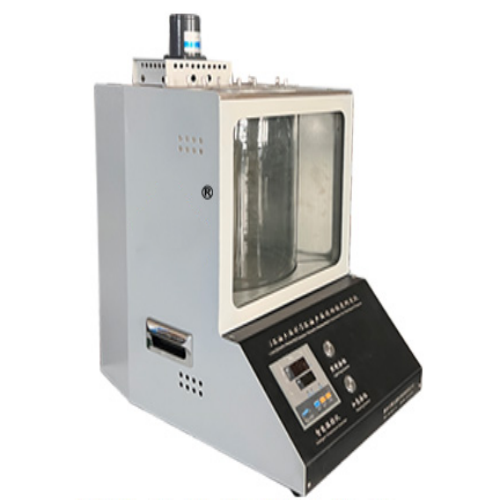
What is a Kinematic Viscosity Tester used for?
A kinematic viscosity tester is a precision instrument used to measure the flow resistance of liquids at a specified temperature. Its core function is to determine kinematic viscosity (unit: mm²/s), which reflects the internal friction characteristics between molecules in a fluid.
1. Petroleum and Chemical Industry
It is widely used to evaluate the flow properties of petroleum products such as crude oil, lubricating oils, fuel oils, diesel, and transformer oils under low or high temperature conditions, ensuring their performance in different environments.
For example, low-temperature kinematic viscosity directly affects engine starting performance in cold conditions.
2. Quality Control and R&D
In petrochemical enterprises, research institutions, and quality inspection agencies, it is used to perform consistency testing and performance verification of oils and chemical fluids in accordance with international and national standards such as ASTM D445. ISO 3104. and GB/T 265.
3. Environmental Protection and Advanced Materials Research
It is also used for viscosity analysis of emerging or complex fluids such as biodiesel, polymer solutions, and organic heat transfer fluids, supporting research in environmental science and new materials development.
4. On-site Industrial Rapid Testing
Some models (such as capillary automatic viscometers compliant with ASTM D7279) support small sample volumes (within 5 mL) and can complete testing within 5 minutes, making them suitable for rapid on-site evaluation of in-service lubricating oils.
What standards does a Kinematic Viscosity Tester comply with?
A Kinematic Viscosity Tester is designed to comply with a wide range of international, national, and industrial standards. The applicable standards depend on the instrument type, measurement method, and application range.
1. International Standards
ISO 3104:2023
Specifies the determination of kinematic viscosity of transparent and opaque liquids (such as petroleum products and biodiesel) over a wide temperature range from -20°C to +150°C and viscosity range of 0.2 to 300.000 mm²/s. Automated instruments are required to achieve temperature control accuracy of ±0.01°C and timing precision of 0.001 s.
ASTM D445 / ASTM D446
Classical capillary methods for measuring kinematic viscosity of transparent and opaque liquids. Temperature control accuracy is typically ±0.01°C, with timing precision requirements of ±0.01 s (D445) and ±0.001 s (D446).
ASTM D7279
Applicable to automated inverted U-tube viscometers for rapid testing of in-service lubricating oils. Requires small sample volume (about 5 mL), short test time (<5 minutes), temperature range 20–150°C, and viscosity range of 2–1500 mm²/s.
ASTM D7042
Uses vibrating tube method to measure dynamic viscosity and density, then calculates kinematic viscosity. Suitable for a wide viscosity range from 1 to 10.000 mPa·s.
ASTM D8092-22
Designed for rapid field measurement of kinematic viscosity (typically at 40°C) using microchannel viscometers. Requires only about 60 µL sample, no solvent needed, suitable for opaque used oils.
2. Chinese National Standards
GB/T 265-1988 (equivalent to ISO 3104:1994)
Standard method for kinematic viscosity of petroleum products using capillary viscometers. Requires temperature control accuracy of ±0.01°C and timing accuracy of ±0.1 s for automated instruments.
GB/T 265-2021
Updated national standard for kinematic viscosity measurement of various oil products.
SH/T 0956-2017
Corresponds to ASTM D7279. defining procedures, calibration methods, and precision requirements for inverted U-tube automatic viscometers.
GB 23971-2009
Specifies kinematic viscosity testing methods for organic heat transfer fluids.
JJG 155-2016
National metrological verification regulation for capillary viscometers, including temperature stability (±0.01°C) and timing error (±0.05%).
JJF 1274-2011
Technical specification for calibration methods of kinematic viscosity measuring instruments.
3. Industry and Local Standards
SY/T 5651
Petroleum industry standard defining technical requirements for petroleum product kinematic viscosity testers.
DB43/T 1170-2016
Rapid determination method for organic heat transfer fluids using automatic viscometers.
DB34/T 4147
Technical specification for the application of inverted U-tube automatic viscometers in specific industries.
In summary, Kinematic Viscosity Testers comply with multiple standard systems including ASTM, ISO, GB, SH/T, and industry/local standards. The specific applicable standards depend on the instrument model and intended application scenario.
How to operate a Kinematic Viscosity Tester?
The operation of a kinematic viscosity tester should follow a standardized procedure to ensure accuracy and repeatability of test results. The following steps summarize the general operating process for both portable and laboratory-type instruments.
1. Pre-operation Preparation
Place the instrument on a stable, clean, vibration-free workbench, away from strong airflow and electromagnetic interference.
Ensure the ambient temperature is maintained at 10–28°C, with relative humidity below 80% RH (for portable instruments).
Check battery level (for portable models) or confirm proper power connection (for laboratory models).
Prepare representative oil samples and ensure they are free from contamination.
Confirm that the viscometer tube is clean, dry, and free of oil residue or particles.
2. Power On and Preheating
Turn on the instrument and enter the operation interface (typically a 7-inch color touchscreen or LCD display).
Preheat the system for 10–15 minutes to allow the constant temperature system to stabilize. The temperature control accuracy can reach ±0.1°C.
3. Parameter Setting
Set the test temperature via the touchscreen or control panel (commonly 40°C–100°C, with some models supporting up to 130°C or higher).
Configure test parameters such as number of measurements, sample ID, and cleaning mode if required.
The instrument will automatically heat and maintain constant temperature until stabilization is achieved before testing begins.
4. Sample Measurement
Use a disposable syringe or pipette to accurately draw 0.3–1 mL of oil sample.
Inject the sample into the viscometer inlet, avoiding bubble formation.
Start the measurement program. The instrument will automatically complete the following steps:
Temperature equilibrium
Capillary flow timing (based on ASTM D445 or GB/T 265 standards)
Automatic calculation of kinematic viscosity (unit: mm²/s)
The result is typically displayed within 1–3 minutes and automatically saved in the system.
5. Automatic Cleaning and Drying
After measurement, the instrument automatically starts the cleaning cycle, using a cleaning solvent of ≤10 mL.
The viscometer tube is then automatically dried without manual intervention.
If tube replacement is required, the plug-in design allows replacement in less than 10 seconds.
6. Shutdown and Data Export
After completing all tests, turn off the power.
Export data to a computer via USB interface for recording and traceability.
It is recommended to maintain a usage log, including date, temperature, sample ID, and test results.
Key Precautions
Compliance with standards: Instruments typically comply with ASTM D445. ISO 3104. GB/T 265. and other international/national standards.
Viscometer selection: Select appropriate capillary tubes (e.g., Ubbelohde or Ostwald viscometers) according to the viscosity range of the sample.
Regular calibration: Periodic calibration is recommended according to JJF 1274-2011 Calibration Specification for Kinematic Viscosity Measuring Instruments.
How to maintain a Kinematic Viscosity Tester?
Proper maintenance of a kinematic viscosity tester is essential to ensure measurement accuracy and extend the service life of the instrument. The key maintenance guidelines are as follows:
1. Regular Calibration
Long-term use or changes in environmental conditions may cause measurement deviations. Regular calibration is necessary to correct errors.
Calibration includes zero-point calibration to eliminate system errors.
Standard fluid calibration is used to verify and adjust instrument sensitivity.
Calibration frequency should be increased in high-frequency usage or strict quality control environments.
All calibration results should be properly recorded and archived for traceability.
2. Routine Maintenance
Clean the measuring tubes and sample-contacting parts before and after use.
Use appropriate solvents for cleaning; thoroughly clean the system after testing special or contaminated samples to prevent cross-contamination.
Place the instrument in a dry, well-ventilated environment. Avoid direct sunlight and sudden temperature changes.
In humid environments, moisture protection is required.
When not in use, cover the instrument with a dust cover.
3. Key Component Maintenance
Capillary tubes and sealing system: Regularly inspect for bending, blockage, and ensure good flexibility and sealing performance.
Moving parts: Apply compatible lubricants that will not contaminate the measurement system.
Electrical system: Check power cords and connectors regularly. Disconnect power if the instrument will not be used for a long period.
Temperature control system (for low/high temperature models): Ensure the constant temperature bath is clean and regularly verify temperature accuracy.
4. Operational Best Practices
Ensure samples are fully mixed and stabilized at the test temperature before measurement.
Operate strictly according to the manufacturer’s instructions.
Do not disassemble or adjust internal components without authorization.
Clean rotors or capillary tubes immediately after use.
Do not clean samples directly inside the instrument structure.
Why is a Kinematic Viscosity Tester so important?
A kinematic viscosity tester plays a critical role in multiple key industrial fields by ensuring product quality, equipment safety, and operational efficiency. Its importance is reflected in the following aspects:
1. Evaluating Fluid Flow Under Gravity
Kinematic viscosity is defined as the ratio of dynamic viscosity to density (ν = η / ρ). It reflects the internal friction characteristics of a fluid under the influence of gravity alone. This makes it a fundamental parameter for evaluating the flow performance of petroleum products, lubricants, fuels, and other liquids.
2. Ensuring Proper Operation in Low-Temperature Environments
The flowability of lubricating oils and fuels under cold conditions directly affects engine start-up and system lubrication performance. Low-temperature kinematic viscosity testing simulates real working conditions to verify whether products meet operational requirements in extreme environments.
3. Compliance with International Standards and Industry Regulations
These instruments are designed in accordance with authoritative standards such as GB/T 265. ASTM D445. and ISO 3104. ensuring test results are consistent, comparable, and compliant. They are widely used in petrochemical, automotive, aviation, and power industries.
4. Ensuring Safety and Reliability
In safety-critical applications such as automotive brake fluids, kinematic viscosity directly affects hydraulic response and braking force transmission. Advanced instruments (e.g., SVM 3001) can measure viscosity rapidly over a wide temperature range from -40°C to +100°C, ensuring compliance with safety requirements.
5. Supporting R&D and Quality Control
By precisely measuring viscosity changes with temperature, the viscosity index (VI) can be calculated to evaluate the temperature-viscosity performance of oils. This provides essential data for formulation optimization, service life prediction, and fault diagnosis.
6. Improving Testing Efficiency and Accuracy
Modern fully automatic kinematic viscosity testers (such as SVM series or SYD-265 models) integrate technologies like Peltier temperature control, digital timing, and multi-channel testing. These features significantly reduce human error and increase laboratory throughput.
In summary, the kinematic viscosity tester is not only a routine laboratory instrument but also a critical tool in industrial production and research. It provides scientific data to ensure safe and stable industrial operations, helps prevent risks caused by abnormal fluid properties, and supports technological innovation, process optimization, and new material development.It has become an indispensable core instrument in modern industry and laboratory environments.We sincerely welcome further inquiries and discussions to learn more about its technical specifications, application scenarios, and operational guidance.
Previous: What is Flame Spread Index Tester?
N e x t : What is a Hydraulic Oil Precision Filter Tester?
