





What is a Hydraulic Oil Precision Filter Tester?
2026/04/20
Share:

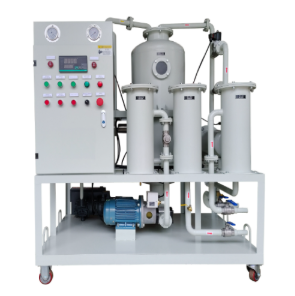
Applications of the Hydraulic Oil Precision Filter Tester
The Hydraulic Oil Precision Filter Tester is primarily used to evaluate the performance of hydraulic oil filtration systems, ensuring that fluid cleanliness meets operational requirements and thereby safeguarding the reliability and service life of hydraulic equipment. Its core applications include the following:
1. Assessing Filtration Efficiency
By measuring the quantity and size distribution of particles in the oil before and after filtration, the tester verifies whether the filter element meets its rated filtration precision (e.g., βx(c) ≥ 2000 or NAS 5–7).
2. Monitoring Oil Cleanliness
The device enables regular or online monitoring of hydraulic oil contamination levels to determine whether filter replacement or purification measures are necessary.
3. Verifying Filter Element Performance
Under laboratory or field conditions, the tester evaluates filter elements for dirt-holding capacity, pressure drop characteristics, and burst resistance under varying flow rates and pressures.
4. Supporting Predictive Maintenance
By integrating data from particle counters or differential pressure transmitters, it helps establish scientifically based maintenance schedules, preventing unexpected failures caused by oil contamination.
These tests typically employ portable or online particle counters and assess oil cleanliness according to standards such as ISO 4406 and NAS 1638. with results compared against the performance curves provided by filter manufacturers.
Applicable Standards for the Hydraulic Oil Precision Filter Tester
The Hydraulic Oil Precision Filter Tester is primarily used to evaluate the cleanliness of hydraulic oil and the filtration performance of precision filters. Its applicable standards cover two main areas: oil cleanliness assessment and filter/filter tester performance testing.
1. Oil Cleanliness Assessment Standards
ISO 4406: Classifies oil cleanliness by counting particles larger than 4 μm, 6 μm, and 14 μm per 1 mL of oil. It is one of the most widely recognized international standards. The equivalent standard in China is GB/T 14039-2002.
NAS 1638: Divides oil cleanliness into 00 to 12 levels, where higher numbers indicate more severe contamination. Precision hydraulic systems typically require initial oil cleanliness to be within NAS 7.
2. Filter and Testing Equipment Standards
ISO 4527-1981: Measures the β ratio (absolute filtration rating) of filter elements, a core method for evaluating filtration efficiency.
ISO 3968: Tests the flow-versus-pressure-drop characteristics of filter elements.
ISO 2941: Evaluates the burst strength of filter elements.
ISO 3724: Assesses the flow fatigue characteristics of filter elements (requires 100.000 cycles).
GB/T 20079-2006: Chinese national standard specifying general technical requirements and test methods for hydraulic filters, applicable to filters using hydraulic oil as the medium.
GB/T 25132-2010: Equivalent to ISO 16860:2005. specifies test methods for differential pressure devices or bypass valve state indicators of hydraulic filters.
Working Principle of the Hydraulic Oil Precision Filter Tester
The core function of the Hydraulic Oil Precision Filter Tester is to measure parameters such as oil cleanliness, particle contamination levels, and water content before and after filtration, thereby verifying whether the filter meets the required performance standards. These testers generally do not directly filter the oil; rather, they monitor and analyze the filtration process. The working principle is primarily based on the following aspects:
1. Particle Counting and Cleanliness Assessment
A Laser Particle Counter is used to detect oil samples either online or offline. Based on international standards such as ISO 4406 or U.S. standards such as NAS 1638. the device quantifies the number of particles in different size ranges (e.g., ≥4 μm, ≥6 μm, ≥14 μm), determining the oil cleanliness level.
2. Differential Pressure and Flow Monitoring
Differential pressure sensors monitor the pressure drop across the filter element in real time, indicating the degree of clogging. Flow meters are used simultaneously to ensure that testing occurs under rated operating conditions.
3. Water and Gas Detection
High-end testers may integrate water activity sensors or infrared spectroscopy modules to detect free water, dissolved water, and dissolved gases in the oil, verifying the effectiveness of dehydration.
4. Temperature and Vibration Environment Simulation
Under laboratory conditions, the tester can be combined with a temperature-controlled chamber and a vibration test system to simulate actual hydraulic system operating environments, evaluating filter stability under dynamic conditions.
5. Multi-Pass Testing
According to ISO 16889. oil with a known contamination level is circulated through the filter under test multiple times. The β ratio (filtration ratio) is measured to quantify the filter’s efficiency. For example, β₃ ≥ 200 indicates that 99.5% of particles with a 3 μm size are removed.
Operating Procedure for the Hydraulic Oil Precision Filter Tester
Mastering the detailed operating steps of the Hydraulic Oil Precision Filter Tester helps ensure efficient and safe testing, while maintaining equipment stability and measurement accuracy.
1. Pre-Startup Preparation
Place the tester on a stable, clean workbench free from strong vibrations.
Ensure the ambient temperature is between 10–35°C and relative humidity is below 80% RH (refer to requirements for similar oil testing equipment).
Check that the power supply and hydraulic connections are normal, and confirm that the test oil sample is representative and uncontaminated.
2. System Preheating and Calibration
Power on the device and preheat for 10–15 minutes to allow the temperature control system, pressure sensors, and flow meters to stabilize.
Perform zero-point calibration or particle counter calibration according to ISO 4406. NAS 1638. or SAE 4059 standards (if the tester is equipped with particle counting functionality).
3. Setting Test Parameters
Using the control panel or software, set the following parameters:
Target filtration precision (e.g., 3 μm, 5 μm, 10 μm).
Test pressure range (commonly 0–21 MPa).
Flow rate (e.g., 30–600 L/h, depending on the applicable standard).
Test duration or total volume of oil passed.
4. Loading Oil Sample and Starting the Test
Pour the hydraulic oil to be tested into the storage tank, or connect it directly to the circulation loop.
Start the pump to circulate oil through the filter under test at the set flow rate.
Monitor real-time differential pressure (ΔP), outlet particle contamination levels, and water/impurity content.
5. Data Recording and Analysis
The tester automatically records key indicators such as filtration efficiency, pressure drop curves, and dirt-holding capacity.
Some high-end models support automatic report generation in accordance with ISO 16889 multi-pass test standards.
6. Cleaning and Shutdown
After testing, use a clean solvent (e.g., isopropanol) to manually or automatically flush the piping and filter housing.
Power off the device, drain residual oil, and properly document the test results and usage records.
Maintenance Procedures for the Hydraulic Oil Precision Filter Tester
Maintenance of the Hydraulic Oil Precision Filter Tester should follow both the equipment-specific requirements and general maintenance guidelines for oil testing instruments.
1. Daily Maintenance (After Each Use)
Cleaning the Equipment:
Wipe the equipment surface with a soft, lint-free cloth, paying special attention to critical areas such as the oil inlet and measurement ports to prevent residual oil or contaminants.
Inspection:
Ensure that power cords and data cables are intact and undamaged.
Check that indicator lights and display screens function properly.
Verify that all components are secure and no parts are missing.
Recording Operational Data:
Document usage time, sample type, and number of tests to facilitate tracking of equipment performance changes.
2. Weekly Maintenance
Deep Cleaning:
Use a vacuum cleaner or compressed air to remove internal dust.
Ensure no debris remains inside the device.
Function Testing:
Test basic functions according to the operation manual (e.g., pressure control, flow stability, filtration accuracy display).
Investigate and resolve any abnormalities immediately.
Lubrication of Mechanical Parts:
Apply lubricant or grease to gears, slides, and other moving components as specified in the manual.
3. Monthly Maintenance
Calibration and Adjustment:
Perform calibration using standard samples or calibration instruments.
Adjust or repair the system if measurement errors exceed allowable limits.
Inspection and Replacement of Wearable Parts:
Check seals, filter elements, and sensors for wear or aging.
Replace any damaged components promptly.
System Maintenance:
Update device software, clean up unnecessary files, and optimize operational stability.
Why the Hydraulic Oil Precision Filter Tester Is So Important
The importance of the Hydraulic Oil Precision Filter Tester lies primarily in its critical role in ensuring the operational reliability of hydraulic systems, extending equipment lifespan, and optimizing maintenance efficiency.
1. Ensuring Filtration Accuracy
Hydraulic systems require extremely high oil cleanliness. Tiny particles such as metal powder, oxidized gel, or dust can cause valve sticking, pump wear, or even complete system failure. A high-precision filter tester accurately evaluates the filtration efficiency of filter elements or oil filtration devices (e.g., retention rate for 3–50 μm particles), ensuring that oil cleanliness meets international standards such as ISO 4406.
2. Preventing Equipment Failures and Extending Service Life
Approximately 70% of hydraulic system failures are caused by oil contamination. Regular monitoring of oil cleanliness using this tester allows early detection of contamination trends, preventing unplanned downtime and costly repairs caused by particle-induced wear.
3. Optimizing Maintenance Strategies
The tester provides quantitative data on contamination levels, water content, and viscosity changes, supporting condition-based predictive maintenance. This approach replaces traditional fixed-interval replacement schedules, reducing operational costs and increasing equipment availability.
4. Verifying Filter Performance
When selecting domestic replacement filter elements from brands like Hydac or Parker, the tester can verify their actual filtration precision, preventing potential system damage caused by substandard filters.
5. Meeting Industry Compliance Requirements:
High-end sectors such as wind power, aerospace, and construction machinery have strict requirements for hydraulic oil cleanliness. This tester is an essential tool for ensuring compliance during audits and achieving quality certification.
The Hydraulic Oil Precision Filter Tester is not only a routine quality monitoring tool but also a critical diagnostic device that ensures safe and stable hydraulic system operation, maintains high operational efficiency, and extends equipment service life. Users and industry professionals are encouraged to share insights and feedback, and are welcome to contact us directly for detailed technical specifications, application examples, and additional professional information.
Previous: FAQs About kinematic viscometer
N e x t : What is a Safety Harness Test Rubber Dummy?
