





FAQs About Aircraft Seat Cushion Fuel Burn Test System
2026/04/20
Share:

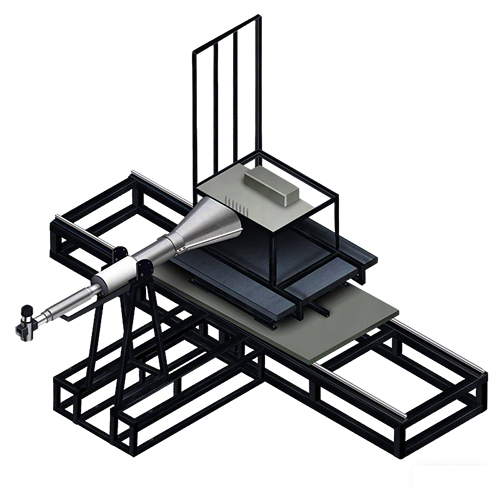
What is the purpose of the Aircraft Seat Cushion Fuel Burn Test System?
The Aircraft Seat Cushion Fuel Burn Test System is primarily used to evaluate the flame-retardant performance and fire safety of aircraft cabin seat cushions under simulated fuel fire conditions. Its core purpose is to ensure that seat cushion materials meet the strict flammability requirements specified by aviation airworthiness regulations, thereby enhancing flight safety.
Assessing the flammability of seat cushion materials: Samples are exposed to standardized fuel flames (such as aviation kerosene Jet A), and measurements are taken for ignition time, burn rate, flame spread, and self-extinguishing capability.
Verifying compliance with airworthiness standards: Seat cushions are tested for regulatory compliance according to standards such as FAA FAR Part 25 Appendix F and CAAC CCAR-25-R4 Appendix F.
Measuring combustion products and heat release characteristics: During combustion, indicators such as heat release rate, smoke density, and toxic gas generation are recorded to assess potential secondary hazards to passengers.
Supporting material development and quality control: Provides performance data for new flame-retardant materials (e.g., structures with integrated fire barriers), assisting in product optimization and batch testing for mass production.
Which standards apply to the Aircraft Seat Cushion Fuel Burn Test System?
The Aircraft Seat Cushion Fuel Burn Test System is primarily governed by both international and domestic aviation safety standards, covering the following key regulations:
FAR 25.853 (Federal Aviation Regulations, USA)
Corresponding to Appendix F, Part II, which specifies the combined burn test method for seat cushions. The test uses fuel nozzles (e.g., JP-8 or Jet A) to perform full-scale burn tests on seat cushions and seatbacks. FAA-approved test equipment must meet requirements for airflow velocity, burner configuration, and heat flux density.
CCAR-25-R4 (Civil Aviation Administration of China, Transport Aircraft Airworthiness Standards)
This standard adopts the FAR 25.853 methodology. Its Appendix F, Part II similarly applies to fuel burn tests of seat cushions.
HB 7263-2022 “Test Method for Flammability of Civil Aircraft Seat Cushions”
A Chinese aviation industry standard specifying the testing procedures and evaluation criteria for seat cushions under fuel fire conditions.
RTCA DO-160G, Section 26 (Environmental Conditions and Test Procedures for Airborne Equipment)
Primarily intended for airborne equipment, its Category A (fire performance) and Category B (flame resistance) test methods have technical relevance to seat cushion fuel burn testing. Some laboratory equipment may be compatible with these methods.
MH/T 6086-2012 “Aircraft Cargo Compartment Liner Burn-Through Resistance Test”
Although mainly for cargo liners, its test principle (e.g., flame burn-through resistance) shares equipment configuration similarities with seat cushion fuel burn tests, allowing some systems to be extended for this application.
What is the working principle of the Aircraft Seat Cushion Fuel Burn Test System?
The Aircraft Seat Cushion Fuel Burn Test System simulates fuel-fire scenarios in an aircraft cabin caused by fuel leakage through standardized fuel burn tests, assessing seat cushion materials’ flame spread characteristics, self-extinguishing capability, and heat release behavior.
According to the FAA Advisory Circular AC 25.853-1. the testing procedure mainly follows these steps:
Test Specimen: Standardized samples constructed identically to actual seat cushions, including foam padding and outer fabric layers.
Fuel Type: Typically #1 kerosene (or equivalent aviation fuel) is used as the simulated fuel.
Ignition Source: A standard fuel burner (e.g., Bunsen-type burner) is employed, with flame temperature, heat flux, and fuel flow rate set according to regulatory specifications.
Testing Environment: Conducted in a controlled laboratory environment equipped with thermocouples, calorimeters, and drip pans to record key parameters such as burn length, weight loss, and total burn time.
Evaluation Metrics:
Burn Length: Maximum distance the flame spreads along the sample.
Weight Loss Rate: Mass reduction of the sample due to combustion.
Self-Extinguishing Behavior: Ability of the material to stop burning after flame exposure.
Drip Ignition: Whether molten material ignites aluminum foil placed beneath the sample, preventing secondary fire spread.
What are the key technical highlights of the Aircraft Seat Cushion Fuel Burn Test System?
Indirect Heating and Explosion-Proof Design: To prevent direct contact between fuel and high-temperature elements, which could cause explosions, the system typically employs heat-transfer oil for indirect heating or explosion-proof heaters.
Multi-Point Temperature Feedback Control: Advanced systems may use multiple temperature sensors (e.g., T₁–T₄) combined with PID control algorithms to dynamically adjust heating power, ensuring fuel temperature remains stable at set values (e.g., 40°C or 60°C).
Compliance with Airworthiness Standards: Testing must strictly follow FAR Part 25.853. Appendix F, Part II in terms of equipment configuration and procedures; otherwise, the results are considered invalid.
What are the operating procedures for the Aircraft Seat Cushion Fuel Burn Test System?
1. Sample Preparation
Prepare test specimens that replicate the actual seat cushion construction, typically including a foam core and outer fabric layer.
Ensure the sample’s dimensions, material composition, and proportions match those of the mass-produced product.
2. Equipment Calibration
Calibrate the fuel burner using kerosene (#1 Kerosene) or Jet A fuel.
Ensure burner parameters—including nozzle angle, fuel flow rate, and flame temperature—comply with the requirements of Appendix F, Part II.
3. Sample Installation
Secure the specimen on the standard mounting stand.
Place a drip pan at the bottom of the stand legs, maintaining a distance of 12 1/8 inches from the horizontal sample support frame.
4. Ignition and Combustion
Activate the burner to expose the sample to a 2-minute flame impingement.
The ignition source may use 1 liter of Jet A fuel or a propane radiant source with flame, depending on the test type.
5. Data Acquisition
Record the following parameters in real time:
Burn length
Sample weight loss
Smoke density
Temperature distribution (measured via thermocouples)
Gas composition changes
6. Evaluation Criteria
Burn length ≤ 6 inches (~152 mm).
Weight loss ≤ 35% (as required by some standards).
No persistent smoldering; flames must not spread to the sample edges.
7. Recording and Reporting
Preserve raw test data, environmental conditions, and photographs of the sample.
Prepare a compliance report in accordance with FAA or EASA requirements.
8. Safety and Precautions
Tests must be conducted in a professional fire-testing laboratory equipped with smoke exhaust, fire suppression, and safety protection systems.
Equipment must be calibrated regularly, and deviations require FAA approval.
Alternative fuels (e.g., diesel) may only be used if heat flux and flame temperature are equivalent to the standard fuel.
What are the maintenance procedures for the Aircraft Seat Cushion Fuel Burn Test System?
1. Fuel System Maintenance
Use standard-compliant fuels such as Jet A or #1 Kerosene, ensuring fuel purity and stable flow.
Regularly inspect fuel lines, nozzles, and valves for leaks or blockages to prevent uneven combustion or safety hazards.
Calibrate the fuel flow controller according to FAA AC 25.853-1 and other relevant standards to maintain consistent burn intensity.
2. Burner and Flame Control Calibration
Periodically calibrate the burner (whether fuel burner or propane flame source) to ensure flame temperature, heat flux, and burn duration meet Appendix F requirements.
Monthly verification of flame characteristics using standard thermocouples or heat flux meters is recommended to prevent drift that could cause test deviations.
3. Environment and Data Acquisition System Maintenance
Regularly calibrate temperature sensors (thermocouples), smoke density meters, radiative heat flux meters, and other instruments to ensure data accuracy.
If equipped with an environmental chamber, check the temperature uniformity quarterly to ensure controlled test conditions.
4. Structural and Safety Inspection
Daily inspection of the test chamber, mounting stands, drip pans, and other components to ensure no displacement or corrosion that may affect sample heating.
Confirm emergency stop systems, ventilation, and fire suppression equipment are operational and meet aviation laboratory safety standards.
5. Long-Term Shutdown Maintenance
If the system is idle for more than one month, drain the fuel system and add rust inhibitor to prevent internal corrosion.
Periodically power up the electrical control system to prevent moisture-related component failures.
Why is the aircraft seat cushion flammability testing system so important?
The importance of the Aircraft Seat Cushion Fuel Burn Test System stems from its direct impact on passenger safety and evacuation capability in emergency situations such as aircraft fires. Its key value can be summarized as follows:
1. Simulating Realistic Fire Scenarios:
This system uses aviation fuel (such as Jet A) as the ignition source to conduct full-scale burn tests on seat cushions, realistically reproducing fire scenarios caused by fuel leaks in the aircraft cabin, rather than relying on traditional simplified methods such as Bunsen burner tests.
2. Evaluating Material Flame Resistance:
Aircraft seat cushions are among the main potential combustible materials in the cabin, typically composed of polyurethane foam, fabric, and flame-retardant layers. This testing system accurately measures critical parameters such as heat release rate, smoke density, weight loss rate, and toxicity of combustion products under high temperatures and flame exposure.
3. Meeting Regulatory Requirements:
According to the U.S. Federal Aviation Administration (FAA), aircraft seat cushions must pass burn tests using fuel burners to comply with safety standards such as FAR 25.853(c). This testing system is a core tool for verifying product compliance.
4. Improving Cabin Fire Response Time:
By testing and optimizing the fire-resistant performance of seat materials, the system can effectively delay flashover in the cabin, giving passengers valuable time for evacuation and reducing casualties during incidents.
5. Supporting New Material and Design Validation:
As the aviation industry increasingly adopts lightweight and sustainable materials (e.g., composites, bio-based flame retardants), this testing system provides reliable data to assess the safety performance of new materials under realistic fire conditions.
In conclusion,the Aircraft Seat Cushion Fuel Burn Test System is not only an essential step in aircraft safety certification but also a critical technological measure for ensuring flight safety and minimizing fire hazards. By strictly simulating potential cabin fire scenarios, the system provides scientific evaluation of seat material fire performance, thereby enhancing overall aircraft safety at the source.We sincerely invite industry peers, researchers, and relevant organizations interested in this field to contact us for further information. By connecting with us, you can learn more about the detailed technical specifications, operational procedures, and wide-ranging applications of this system in aviation safety, as well as its latest developments. We look forward to discussing these topics with you and contributing to the advancement of aviation safety.
Previous: What is a Safety Harness Test Rubber Dummy?
N e x t : What is Puncture Strength Tester?
