





What is Seat Thermal Manikin?
2026/04/21
Share:

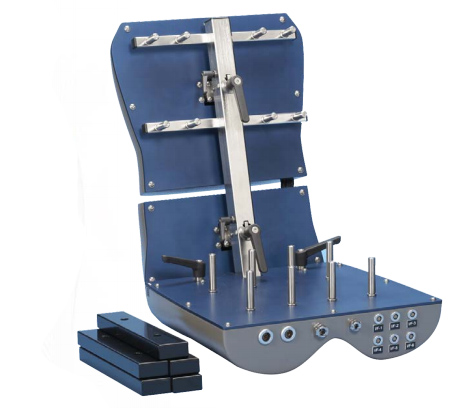
Uses of a Seat Thermal Manikin
A Seat Thermal Manikin is a specialized type of thermal manikin used to evaluate the thermal and moisture comfort performance of seating systems. Its core function is to simulate heat exchange and moisture transfer between the human body and the seat, thereby quantifying the impact of the seat on occupant thermal comfort.
Specifically, its uses include:
Measuring Seat Thermal Resistance and Moisture Permeability:
Evaluate the insulation and breathability of seats under various environmental conditions.
Studying Contact Thermal Sensation:
Assess the perception of heat or cold at the points where the body contacts the seat, which is crucial for enhancing overall comfort in vehicles, aircraft, and other transportation equipment.
Validating Seat Heating, Ventilation, or Cooling Systems:
Provide data to optimize critical components such as automotive air-conditioning systems and ensure the effectiveness of thermal management features.
Modeling Thermal Comfort Correlations:
Establish experimental models linking seat thermal and moisture performance with subjective occupant comfort, allowing prediction of real-world comfort levels.
These manikins typically simulate the torso region, with some models capable of simulating sweating, providing a more realistic representation of heat and moisture effects experienced during seated use.For example, in the automotive industry, Seat Thermal Manikins are used to optimize the cabin thermal environment, making the seat a core component for enhancing overall vehicle thermal comfort.Some advanced systems, such as the ADAM manikin developed by the Hong Kong Standards and Testing Centre, feature 120 independently controlled temperature zones, allowing high-precision simulation of local heat flux and sweat distribution, suitable for detailed thermal analysis of seat-to-body contact surfaces.
Applicable Standards for Seat Thermal Manikins
A Seat Thermal Manikin is a specialized testing device designed to evaluate the thermal and moisture comfort performance of seats in environments such as automotive, aviation, and office settings.
It should be noted that GB/T 18830-2009 (“Textiles — Assessment of Protection Against Ultraviolet Radiation”) is not applicable to seat thermal comfort testing, as this standard focuses on UV protection for textiles and is unrelated to seat thermal comfort.
Seat thermal comfort testing is primarily based on internationally recognized standards or their equivalent adaptations, as follows:
ISO 12894 — Ergonomics of the thermal environment — Anthropometry for seat design applications
SAE J826 — Human Engineering H-Point Methodology (H-point location method for human engineering)
ISO 14505-2 — Thermal comfort of vehicle seats — Part 2: Thermal manikin method
ASTM F2370 — Standard Test Method for Measuring Thermal and Moisture Transfer Performance of Vehicle Seats
EN 12127 — Automotive seating — Measurement of heat flow and pressure distribution
Additionally, some manufacturers refer to the following standards during development:
ISO 9920 — Evaluation of thermal insulation and water vapor resistance of clothing, personal protective equipment, and seats
ASTM F1291 — Standard Method for Measuring Thermal Comfort of Seated Humans
In summary, these standards cover multiple aspects of seat evaluation, including thermal comfort, heat and moisture transfer, anthropometric modeling, and energy transfer assessment, making them suitable for the development, testing, and certification of automotive, aviation, and office seating products.
Operating Procedure for a Seat Thermal Manikin
The following is a detailed step-by-step procedure for operating a Seat Thermal Manikin:
1. Environmental Preparation
Place the thermal manikin in a controlled environmental chamber (e.g., a temperature- and humidity-controlled room) and set the desired temperature, humidity, and airflow conditions.
Ensure the manikin is secured on the designated seating support in a stable position, following the required test posture (e.g., standard seated posture).
2. System Connection and Initialization
Connect the power supply, heating system, sweat simulation system (such as spray or circulating tubing), and data acquisition terminal.
Power on the system and allow it to complete self-checks, confirming that temperature sensors, heating modules, and sweat output units are functioning correctly.
3. Parameter Settings
Set the target skin temperature (typically 34°C ± 0.1°C to simulate human steady state).
If sweat simulation is required, activate the sweat system (methods include spray, vapor, or circulating tubing) and set the sweat rate (e.g., 30–100 g/m²/h).
Select the operating mode:
Comfort mode: Simulates real thermoregulation.
Constant temperature mode.
Constant heat mode.
4. Preheating and Stabilization
Start the heating system and wait for all body segments’ surface temperatures to reach the set values and stabilize (usually 20–30 minutes).
Simultaneously, ensure the sweat system reaches a stable state with uniform distribution.
5. Test Execution
Dress the manikin in the test clothing or seating system (e.g., protective clothing, workwear), ensuring standard fit.
Start data acquisition, recording parameters such as:
Heating power per segment
Heat flux
Surface temperature
Sweat evaporation rate
Test duration should follow relevant standards (commonly 30 minutes to several hours).
6. Data Recording and Analysis
Automatically or manually record metrics such as total thermal resistance (Icl) and evaporative resistance (Ret).
Use software to calculate overall or local thermal comfort indices, e.g., PMV (Predicted Mean Vote) and PPD (Predicted Percentage of Dissatisfied).
7. Shutdown and Maintenance
After testing, turn off the heating and sweat systems and drain any remaining water.
Clean the manikin surface and store it in a dry environment to prevent sensor damage or contamination.
Notes and Considerations
Sweat Simulation Limitations: Current technology cannot fully replicate complex human sweating; sweat distribution is usually uniform or zone-specific and cannot achieve true localized control.
Posture Influence: Sitting posture changes body surface exposure and heat exchange patterns; the specific posture should be recorded in the test report.
Calibration Requirements: Periodically calibrate sensors using a standard heat source (e.g., blackbody radiator) to ensure data accuracy.
Maintenance Methods for a Seat Thermal Manikin
Based on the maintenance principles and structural characteristics of seat-type thermal manikin systems, the following key maintenance practices can be systematically outlined:
1. Surface Cleaning
Wipe the outer shell with a soft dry cloth or slightly damp cloth.
Avoid using corrosive cleaning agents to prevent damage to the high-emissivity (ε≈0.9) artificial skin coating.
2. Inspection of Heating and Sensing Systems
Regularly check heating elements and temperature sensors in the backrest, seat cushion, and other body segments.
Ensure there are no broken wires, short circuits, or delayed sensor responses.
3. Joints and Structural Maintenance
For manikins with adjustable posture seats (supporting seated/reclined angles), periodically lubricate moving joints such as shoulder, hip, and knee joints to prevent stiffness or jamming.
4. Environmental Control
Avoid long-term storage in extreme temperatures or humidity (e.g., >60°C or high humidity).
Recommended storage and usage conditions: -20°C to 40°C and relative humidity ≤80% indoors.
5. Software and Data Calibration
Regularly run system self-check programs.
Calibrate temperature sensors and power output modules to ensure measurement repeatability error <5%.
6. Moisture and Dust Protection
Cover the manikin with a dust-proof cover when not in use, especially in dusty environments or coastal, high-humidity areas, to prevent corrosion of electronic components.
7. Power and Safety Checks
Inspect the DC 48V power supply and test the emergency stop button.
Ensure the overheat protection (automatic power-off above 60°C) functions correctly.
Importance of a Seat Thermal Manikin
The significance of a Seat Thermal Manikin lies primarily in its ability to objectively and reproducibly evaluate seat thermal comfort performance under different thermal and humidity conditions, thereby enhancing occupant comfort and safety in vehicles, aircraft, spacecraft, and other transport systems. Key roles include:
1. Simulating Real Human Thermal and Moisture Responses
Seat Thermal Manikins can replicate sweating, heat dissipation, and temperature regulation of the human torso.
They accurately reflect heat and moisture transfer between the seat surface and the body, something that traditional air temperature measurements alone cannot achieve.
2. Improving Thermal Comfort Assessment Accuracy
By dividing the seat into multiple independently controlled temperature zones (some advanced models exceed 120 zones), local heat flux and sweat distribution can be measured at high resolution.
This allows precise evaluation of the seat’s contribution to overall thermal comfort metrics such as PMV (Predicted Mean Vote) and PPD (Predicted Percentage of Dissatisfied).
3. Supporting Product Development and Optimization
In automotive and aviation applications, these manikins are used to test temperature-adjustable seats, ventilated seats, and liquid-cooling systems.
They assist engineers in optimizing heating/cooling efficiency, reducing energy consumption, and complying with international standards like ISO 7933.
4. Replacing High-Risk Human Trials
In extreme environments such as high/low temperatures or space missions, thermal manikins provide safe, reproducible experimental data, eliminating potential harm to humans.
5. Enabling Personalized Thermal Environment Design
By integrating physiological and psychological comfort models, Seat Thermal Manikins can predict how different individuals perceive seat thermal environments, supporting personalized microclimate control solutions.
In summary, Seat Thermal Manikins are not only core experimental tools in thermal comfort research, but also provide critical technical support for enhancing user experience in:Vehicles (cars, high-speed trains, airplanes)、Protective clothing (firefighter suits, spacesuits)、Daily furniture (office chairs, sofas)We invite researchers, industry professionals, and interested parties to contact us for detailed technical specifications, application examples, and customized solutions. These instruments are essential for advancing both product performance and occupant well-being.
Previous: What is Puncture Strength Tester?
N e x t : FAQs About Blow-By Test Rig
