





What is Puncture Strength Tester?
2026/04/21
Share:

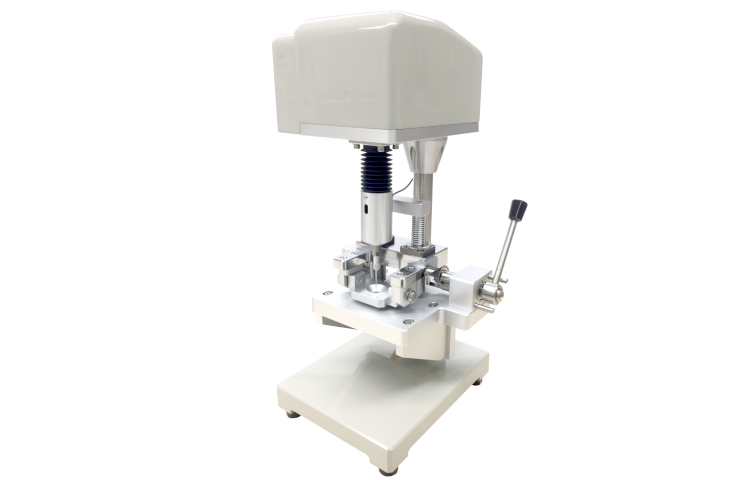
Uses of a Puncture Strength Tester
A Puncture Strength Tester is a specialized instrument used to measure a material’s resistance to penetration by sharp objects, and it is widely applied across multiple industries. Its core function is to evaluate a material’s puncture resistance under concentrated force by recording the maximum force required during the puncturing process (i.e., the puncture force), thereby quantifying the material’s resistance to penetration.
Packaging Material Testing:
Used to test the puncture strength of plastic films, composite films, aluminum-plastic laminates, and flexible packaging materials. It is particularly suitable for packaging containing hard components in food and pharmaceutical products, ensuring safety during transportation and use.
Medical Material Evaluation:
Measures the puncture force of products such as medical rubber stoppers, infusion bag caps, oral liquid bottle caps, artificial skin, and injection needles, ensuring the safety and effectiveness of medical devices.
Battery and Separator Testing:
Used for puncture performance testing of materials such as lithium-ion battery separators, evaluating their safety under abuse conditions.
Nonwoven Fabrics and Paper Testing:
Assesses the puncture resistance of nonwoven fabrics, paper, and paperboard, applicable to hygiene products and industrial packaging.
Research and Quality Control:
Applied in universities, research institutions, and quality inspection centers for new material development, compliance verification with standards (such as GB, ISO, ASTM), and factory quality inspection.
Applicable Standards for a Puncture Strength Tester
The applicable standards for a Puncture Strength Tester vary depending on the application scenario and material type. The main applicable standards are as follows:
Common Applicable Standards
ISO 3036: Determination of puncture resistance of paper and paperboard; widely used in packaging material testing.
ASTM D781: Standard test method for puncture resistance of paperboard; commonly used in North America.
GB/T 2679.7: Chinese national standard specifying the method for determining puncture resistance of paperboard.
QB/T 1664: Light industry standard applicable to puncture resistance testing of paperboard.
DIN 53142: German industrial standard involving puncture resistance testing of paperboard.
TAPPI T 803: Standard of the Technical Association of the Pulp and Paper Industry; applicable to puncture resistance of paperboard.
GB/T 20991-2007 / EN 344 / ANSI Z41 / ISO 20344: Applicable to puncture resistance testing of safety footwear.
YY/T 0043-2016: Specialized standard for testing the strength and puncture force of suture needles.
ISO 7864 / GB 15811: Standards for puncture force testing of medical hypodermic needles.
ISO 13998. ASTM F1342. GB/T 2812-2006: Applicable to puncture resistance testing of protective clothing, industrial fabrics, and related materials.
Operating Procedure of a Puncture Strength Tester
The operating procedure of a Puncture Strength Tester may vary slightly depending on the testing standard and equipment type. The following is a general procedure applicable to puncture resistance testing of packaging materials such as paperboard and corrugated board:
1. Pre-Test Preparation
Environmental Conditions:
Condition the specimens in a standard temperature and humidity environment (typically (23 ± 1)°C and (50 ± 2)% RH) for at least 24 hours.
Equipment Inspection:
Check that the power supply, sensors, clamps, pendulum, and other components are functioning properly. Calibrate the instrument—dial-type devices require zero adjustment, while digital devices use standard weights or built-in calibration programs.
Safety Protection:
Wear appropriate personal protective equipment such as safety goggles and gloves.
2. Specimen Preparation
Cut square specimens measuring 175 mm × 175 mm, with no fewer than 8 samples to ensure statistical representativeness. Ensure that the specimen surfaces are flat and free from damage or wrinkles.
3. Installation and Testing
Fixing the Specimen:
Place the specimen flat in the clamp and secure it firmly to prevent slipping or deformation.
Parameter Setting:
For dial-type devices: Select an appropriate pendulum range (so that readings fall within 20%–80% of the full scale) and set the initial angle (e.g., 60° or 90°).
For digital devices: Set the test mode, pendulum release angle, and other parameters via the touchscreen.
Start the Test:
Lock the pendulum at the initial position. Press the “Start” button to release the pendulum, allowing the conical probe to puncture the specimen.
Data Reading:
Dial-type devices: Read the puncture strength (unit: J) from the scale indicated by the pointer.
Digital devices: Read the value directly from the display; the instrument will automatically record the data.
4. Post-Test Handling
Manual Reset:
Return the pendulum arm to the initial position.
Equipment Cleaning:
Remove specimen debris and keep the clamps and sensors clean.
Result Calculation:
Calculate the arithmetic mean of the test results from multiple specimens, retain three significant figures, and generate a test report.
Maintenance Methods for a Puncture Strength Tester
A Puncture Strength Tester is a specialized instrument used to evaluate the puncture resistance of materials, and it is widely applied in quality control processes across industries such as packaging, films, rubber, and medical consumables. Based on general maintenance principles for testing equipment and the working characteristics of puncture testers, its maintenance methods can be summarized as follows:
Daily Maintenance
Pre- and Post-Use Inspection:
Check whether the main unit housing, clamps, and puncture probe are in good condition, ensuring there is no looseness, deformation, or damage.
Cleaning and Care:
After each use, wipe the instrument surface with a soft, dry cloth. If residue adheres to the probe or clamps, clean it with alcohol or an appropriate solvent to prevent corrosion or buildup.
Environmental Requirements:
Place the instrument in a dry, well-ventilated environment free from corrosive gases and strong vibrations, and avoid direct sunlight exposure.
Periodic Maintenance
Puncture Probe Inspection:
Regularly check whether the probe is worn, bent, or blunted. Replace it promptly if necessary to ensure testing accuracy.
Sensor Calibration:
Calibrate the force sensor according to the manufacturer’s recommendations (typically every 3–6 months) to ensure accurate data.
Lubrication of Mechanical Parts:
Apply an appropriate amount of specialized lubricant to moving parts such as lifting mechanisms and guide rails to maintain smooth operation.
Electrical System Inspection:
Check whether power cables, signal cables, and connectors are secure, and ensure there is no aging, damage, or poor contact.
Maintenance During Long-Term Inactivity
Power-Off and Dust Protection:
Disconnect the power supply during long periods of inactivity and cover the instrument with a dust cover.
Periodic Power-On:
It is recommended to power on and run the instrument 1–2 times per month, for no less than 30 minutes each time, to prevent moisture buildup or performance degradation of electronic components.
Protection of Key Components:
Apply anti-rust oil to the puncture probe and store it properly to prevent oxidation.
Importance of a Puncture Strength Tester
The importance of a Puncture Strength Tester is mainly reflected in its critical role in ensuring material safety, product quality, and reliability in use.
1. Ensuring Medical Safety and Patient Protection
In the medical field, this equipment is used to test the puncture performance of devices such as hypodermic needles, biopsy needles, intravenous catheters, and infusion bottles, ensuring that their sharpness, puncture resistance, and sealing performance meet required standards.
For example, the NPT-01 needle puncture tester can accurately evaluate the resistance encountered during the puncturing of infusion bottles, preventing damage or leakage caused by abnormal puncture force, which directly impacts medication safety.
Intravenous catheter penetration testers equipped with simulated skin modules can realistically replicate the resistance of human tissue, making test results closer to clinical conditions and improving the safety of device usage.
2. Ensuring Reliable Packaging Material Performance
In the packaging industry, the puncture strength of corrugated boxes and paperboard is a key indicator of their resistance to impact and compression.
If puncture strength is insufficient, damage may occur during transportation, leading to product loss or even safety incidents. A Puncture Strength Tester quantifies a material’s ability to resist penetration by sharp objects, ensuring compliance with national standards such as GB/T 2679.7.
3. Supporting Quality Control in Industry and Protective Equipment
This equipment is used to test the puncture resistance of materials such as anti-puncture gloves, geotextiles, tires, and protective clothing.
For instance, the PT-500 Pro puncture strength tester complies with international standards such as ISO 13998 and ASTM F1342. and is widely applied in the quality certification of personal protective equipment (PPE) and industrial materials.
4. Improving Production Efficiency and Data Traceability
Modern Puncture Strength Testers are equipped with automated control, data storage, and report generation functions. They also support remote data sharing, facilitating quality traceability and continuous improvement.
For example, the NPT-01 supports exporting data in multiple formats, helping pharmaceutical companies optimize production processes.
5. Meeting Regulatory and Standards Compliance Requirements
This equipment is widely used in industries such as pharmaceuticals, packaging, and textiles to help manufacturers comply with domestic and international standards, including GB, ISO, ASTM, and DIN.
Inspection and certification bodies rely on such instruments for product entry testing to ensure the safety of products circulating in the market.
In summary, the Puncture Strength Tester, as a precision testing instrument, serves far beyond a routine quality control tool on the production line. It is not only an essential safeguard for product safety and public welfare, but also a key driver of technological innovation and quality improvement across related industries.We sincerely invite industry professionals, partners, and all interested parties to reach out to us through messages or direct contact for further discussion and consultation. We are committed to providing detailed product information, technical specifications, and application solutions to help you gain a more comprehensive and in-depth understanding of this instrument’s outstanding performance and broad value.
Previous: FAQs About Aircraft Seat Cushion Fuel Burn Test System
N e x t : What is Seat Thermal Manikin?
