





What is a Cargo Compartment Liner Burn-Through Fuel Test System?
2026/04/22
Share:

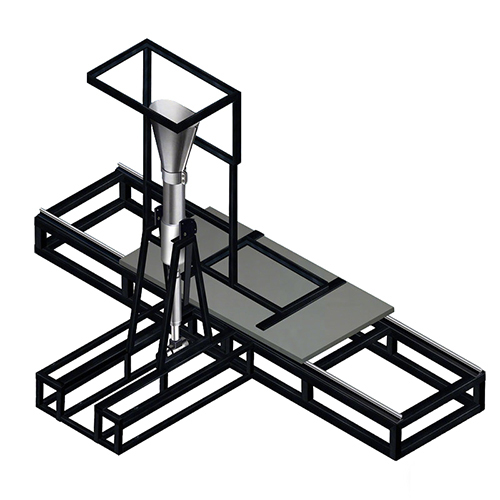
Functions and Applications of the Cargo Compartment Liner Burn-Through Fuel Test System
The core function of the Cargo Compartment Liner Burn-Through Fuel Test System is to simulate real fire scenarios and evaluate the fire resistance performance of liner materials under high-temperature and direct flame exposure. In particular, it assesses whether the cargo compartment liner can prevent flame penetration and protect the aircraft structure and critical systems.
Simulation of Real Fire Environments:
The system generates a stable flame using controlled fuel sources (such as aviation fuel) and applies continuous thermal exposure to the cargo compartment fire-resistant liner. This simulates the heat load conditions that may occur during an actual fire event inside an aircraft cargo compartment.
Evaluation of Burn-Through Time and Mechanism:
The system measures the time required for the liner material to experience burn-through under high-temperature conditions. It also records failure behaviors such as charring, expansion, melting, and structural degradation of the material.
Verification of Fire Protection Compliance:
It ensures that cargo liner materials comply with aviation safety regulations, such as FAA FAR 25.857 or equivalent civil aviation standards in China, which define requirements for fire containment and resistance limits in aircraft structures.
Support for Advanced Material Development:
The system provides experimental data for the development of lightweight, high fire-resistant liner materials, supporting the optimization of cargo compartment fire protection system design.
Study of Dynamic Environmental Effects:
By incorporating pressure variations (such as rapid decompression at high altitude), the system can analyze how dynamic environmental changes influence combustion behavior and burn-through characteristics.
Industries Applicable to the Cargo Compartment Liner Burn-Through Fuel Test System
The Cargo Compartment Liner Burn-Through Fuel Test System is primarily used in the aviation industry, particularly in the design, certification, and safety evaluation of civil transport aircraft. Its core function is to simulate and evaluate the burn-through resistance of cargo compartment liner materials under fire conditions, ensuring compliance with aviation safety regulations. The main application scenarios and industries are as follows:
Civil Aircraft Manufacturing and Airworthiness Certification:
This testing system is used to verify whether cargo liner materials meet the requirements of Title 14 of the Code of Federal Regulations (FAR) Part 25. Appendix F, Part III, which specifies the oil burner test requirements. The standard typically requires that materials prevent flame penetration within 5 minutes and limit backside temperature to 400°F (approximately 204°C).
Cargo Aircraft and Passenger Aircraft Cargo Compartment Design:
Whether for lower cargo compartments in passenger aircraft (typically Class C cargo compartments) or main decks in freighter aircraft (such as Boeing 777F and 767-300F), this type of testing is required to ensure compliance with fire safety standards.
Aviation Material R&D and Testing Institutions:
The system is widely used in the development of new flame-retardant composite materials and metallic structures to evaluate their burn-through resistance under realistic fire conditions.
Aviation Safety Regulation and Research:
Organizations such as the Federal Aviation Administration and the National Transportation Safety Board may utilize test data generated by such systems to support regulatory development, certification processes, and accident investigation.
Testing Principle of the Cargo Compartment Liner Burn-Through Fuel Test System
The Cargo Compartment Liner Burn-Through Fuel Test System is a testing device used to evaluate the resistance of aircraft cargo compartment liner materials to flame penetration under simulated fire conditions. Its primary purpose is to verify whether cargo liner materials comply with aviation airworthiness regulations regarding fire safety, particularly burn-through resistance. The test is based on an oil burner method and simulates the severe thermal and physical exposure that may occur during a cargo compartment fire.
The testing principle includes the following key aspects:
High-Temperature Flame Simulation:
A standardized oil burner is used to generate a stable flame with temperatures reaching up to 927°C (approximately 1700°F). The flame is continuously applied to the surface of the liner specimen to simulate intense fire exposure.
Time-to-Burn-Through and Penetration Criteria:
The test requires that the liner must not be penetrated by flame within 5 minutes. No sustained flame or molten material is allowed to pass through to the opposite side of the specimen.
Backside Temperature Control:
The temperature on the backside of the liner (the side facing the cabin or structural area), measured at a distance of 4 inches (approximately 10 cm) from the flame source, must not exceed 400°F (approximately 204°C). This requirement ensures that internal structures or cabin materials are not ignited or thermally damaged.
Evaluation of Material and Structural Response:
In addition to burn-through resistance, the test also evaluates the material’s thermal conductivity, melting behavior, dripping characteristics, and smoke generation. These factors are essential to ensure overall fire integrity and safety performance of the liner system.
Operating Procedure of the Cargo Compartment Liner Burn-Through Fuel Test System
The Cargo Compartment Liner Burn-Through Fuel Test System is used to evaluate the flame penetration resistance of aircraft cargo compartment liner materials under simulated fire conditions. The operation process is designed in accordance with aviation safety standards to ensure accuracy, repeatability, and compliance with regulatory requirements.
1. Pre-Test Preparation
Sample Installation:
The cargo compartment liner specimen is installed in a dedicated test chamber according to standard dimensions. Proper sealing and boundary conditions must comply with relevant airworthiness standards such as FAA or EASA requirements.
Instrument Calibration:
Devices such as heat flux sensors, thermocouples, high-speed cameras, and gas analyzers must be calibrated before testing to ensure accurate data collection.
Fuel System Inspection:
The fuel supply system (e.g., propane or aviation kerosene nozzles) is checked to ensure there are no leaks, and that pressure regulators are functioning properly.
2. Ignition and Combustion Phase
Ignition Start:
The fuel is ignited according to a predefined procedure to simulate typical cargo fire scenarios, such as lithium battery fires or combustible cargo ignition.
Controlled Combustion Conditions:
A stable heat flux of approximately 50–100 kW/m² is maintained, along with specified ventilation conditions to replicate realistic cargo compartment environments.
3. Monitoring and Data Acquisition
Key Parameters Recorded:
Time to ignition
Burn-through time (time required for flame penetration through the liner)
Backside temperature of the liner
Emission of combustible gases such as CO and CO₂
Visual Monitoring:
High-speed cameras are used to record flame propagation and structural failure behavior throughout the test.
4. Extinguishing and Termination
Manual or Automatic Shutdown:
At the end of the predefined test duration (e.g., 20 minutes) or immediately after burn-through occurs, the fuel supply is shut off.
Ventilation and Smoke Exhaust:
A ventilation system is activated to remove smoke and hazardous gases from the test chamber.
5. Post-Test Evaluation
Damage Assessment:
The liner is evaluated for burn-through area, deformation level, and char depth.
Report Generation:
Based on standards such as Federal Aviation Administration AC 25.854 or ICAO Doc 9740. the material is assessed for compliance with fire resistance requirements.
6. Safety and Precautions
Safety Protection:
Testing must be conducted in a dedicated fire-testing laboratory equipped with emergency sprinkler systems, gas detection systems, and personal protective equipment.
Compliance Requirements:
Testing should follow standards such as the FAA Aircraft Materials Fire Test Handbook or equivalent international regulations.
Environmental Control:
The test chamber should simulate cargo compartment conditions, including pressure, temperature, and humidity equivalent to an altitude of approximately 8.000 feet.
This structured procedure ensures that the Cargo Compartment Liner Burn-Through Fuel Test System provides reliable and regulatory-compliant evaluation of aircraft fire-resistant materials.
Maintenance Recommendations for the Cargo Compartment Liner Burn-Through Fuel Test System
The maintenance of the Cargo Compartment Liner Burn-Through Fuel Test System is closely linked to aviation fire safety evaluation and system reliability assurance. It involves comprehensive considerations across prevention, detection, suppression, and compliance aspects to ensure consistent and accurate test performance.
1. Preventive Maintenance: Reducing Fire Risk and Delaying Burn-Through
Preventive measures form the first line of defense, aiming to reduce the likelihood of fire events and delay liner burn-through.
Cargo Compliance and Packaging Management:
Strict compliance with the International Air Transport Association (IATA) Dangerous Goods Regulations is required. Shippers must accurately declare cargo contents, especially when using generic descriptions, which must include “non-restricted” clarification where applicable.
Cargo Safety Warnings:
Proper design, placement, and visibility of dangerous goods warning notices at cargo handling stations must be ensured for effective hazard communication.
Liner Material and Structural Assessment:
Regular inspection of cargo liner materials (including ceiling panels) and supporting structures (such as aluminum support strips) is necessary. Attention should be given to high-temperature resistance and potential erosion risks of materials such as phenolic resins under fire conditions.
Pressure Management Awareness:
Decompression as a fire suppression method may have unintended effects, such as increasing flame height and raising thermal zones in liquid fires. This may accelerate liner burn-through. Maintenance procedures should incorporate this risk when defining emergency protocols.
2. Detection and Monitoring Maintenance: Ensuring Early Response Capability
Effective detection systems are critical for early fire identification and response.
Fire and Smoke Detection Systems:
Cargo compartments must be equipped with properly maintained fire and smoke detection systems. Historical incidents have shown that lack of detection can delay crew awareness until smoke enters the passenger cabin.
Regular testing of detector sensitivity and system reliability is required.
Temperature and Structural Monitoring:
Monitoring or periodic inspection of cargo compartment ceilings, liners, and critical structures (such as flight control cables and floor beams) should be implemented. Localized overheating may cause structural weakening and liner burn-through. Maintenance procedures must include rapid assessment and reporting of high-temperature zones.
3. Suppression and Emergency Maintenance: Enhancing Fire Control Effectiveness
Maintenance efforts during fire scenarios focus on ensuring suppression systems function effectively to control fire spread and prevent burn-through.
System evaluation should be based on updated test data to assess performance suitability and potential risks.
Water Mist Systems:
Zone-controlled water mist systems may be considered as an option. Testing has shown that such systems can control bulk cargo fires for up to 90 minutes while maintaining ceiling temperatures below 300°F with manageable water consumption.
Maintenance must ensure proper nozzle pressure, zoning logic, and water supply integrity.
Response to Specific Fire Sources:
Maintenance strategies should address different fire scenarios, including bulk cargo fires, container fires, surface combustion, and aerosol can explosions. The development of aerosol explosion simulators provides repeatable test conditions for evaluating extinguishing agents.
Emergency Procedures and Crew Training:
Cargo fire emergency procedures must be updated, including awareness of decompression side effects. Crew training should emphasize early detection signs such as localized floor heating or softening.
Even when visible flames are extinguished, smoldering solid cargo may continue producing combustible gases and smoke, increasing flash fire risk. Pressure restoration during descent may also trigger flash combustion, representing a major hazard in solid cargo fires.
Overall, the maintenance of the Cargo Compartment Liner Burn-Through Fuel Test System is a comprehensive process involving cargo safety management, material evaluation, system monitoring, fire suppression effectiveness, and regulatory compliance.Its core objective is to reduce risk through prevention, ensure timely response through reliable detection, and control fire development through effective suppression systems such as gas extinguishing or water mist technologies, ultimately preventing structural burn-through and ensuring aviation safety.
Importance of the Cargo Compartment Liner Burn-Through Fuel Test System
The importance of the Cargo Compartment Liner Burn-Through Fuel Test System lies primarily in its critical role in ensuring aircraft fire safety, especially in managing fire risks within cargo compartments. Its significance can be summarized as follows:
Verification of Material Flame-Retardant Performance:
This system is used to simulate fire scenarios caused by fuel or flammable liquid leakage in the cargo compartment. It evaluates the fire resistance and burn-through resistance of cargo liner materials under fuel fire conditions, such as spray combustion.
Prevention of Fire Propagation to Critical Structures:
If the cargo liner is burned through, flames may directly impact essential aircraft components, including the pressure hull, electrical wiring, hydraulic lines, and flight control systems, potentially leading to catastrophic failure.
Assessment Under Low-Pressure Flight Conditions:
Research shows that during high-altitude flight, cargo fires combined with cabin depressurization can produce complex effects. While some fire intensity may decrease, liquid fuel fires may exhibit increased flame height, making liner burn-through more likely. Meanwhile, solid materials may transition into smoldering combustion, generating large amounts of combustible gases, which can lead to flash fires when pressure is restored. This testing system helps evaluate material behavior under such extreme conditions.
Enhancement of Overall Aviation Safety:
By optimizing liner design and material selection through testing, the risk of in-flight accidents caused by cargo compartment fires can be significantly reduced, ensuring the safety of passengers, crew members, and aircraft structures.
In summary, the application of the Cargo Compartment Liner Burn-Through Fuel Test System holds strategic importance in civil aviation safety. It is not only an indispensable requirement for aircraft airworthiness certification but also a core engineering method for proactively mitigating risks at the design stage and preventing cargo fires from escalating into catastrophic events.Through scientific experimentation and validation, this system provides a solid technical foundation for improving overall flight safety. We sincerely welcome inquiries and discussions regarding technical details, application cases, or cooperation opportunities. Feel free to contact us at any time for more comprehensive information and professional support regarding this testing equipment.
Previous: What is a Textile Fabric Steam Shrinkage Tester?
N e x t : FAQs About Automated HEPA/ULPA Filter Scanning Test System
