





FAQs About Automated HEPA/ULPA Filter Scanning Test System
2026/04/22
Share:

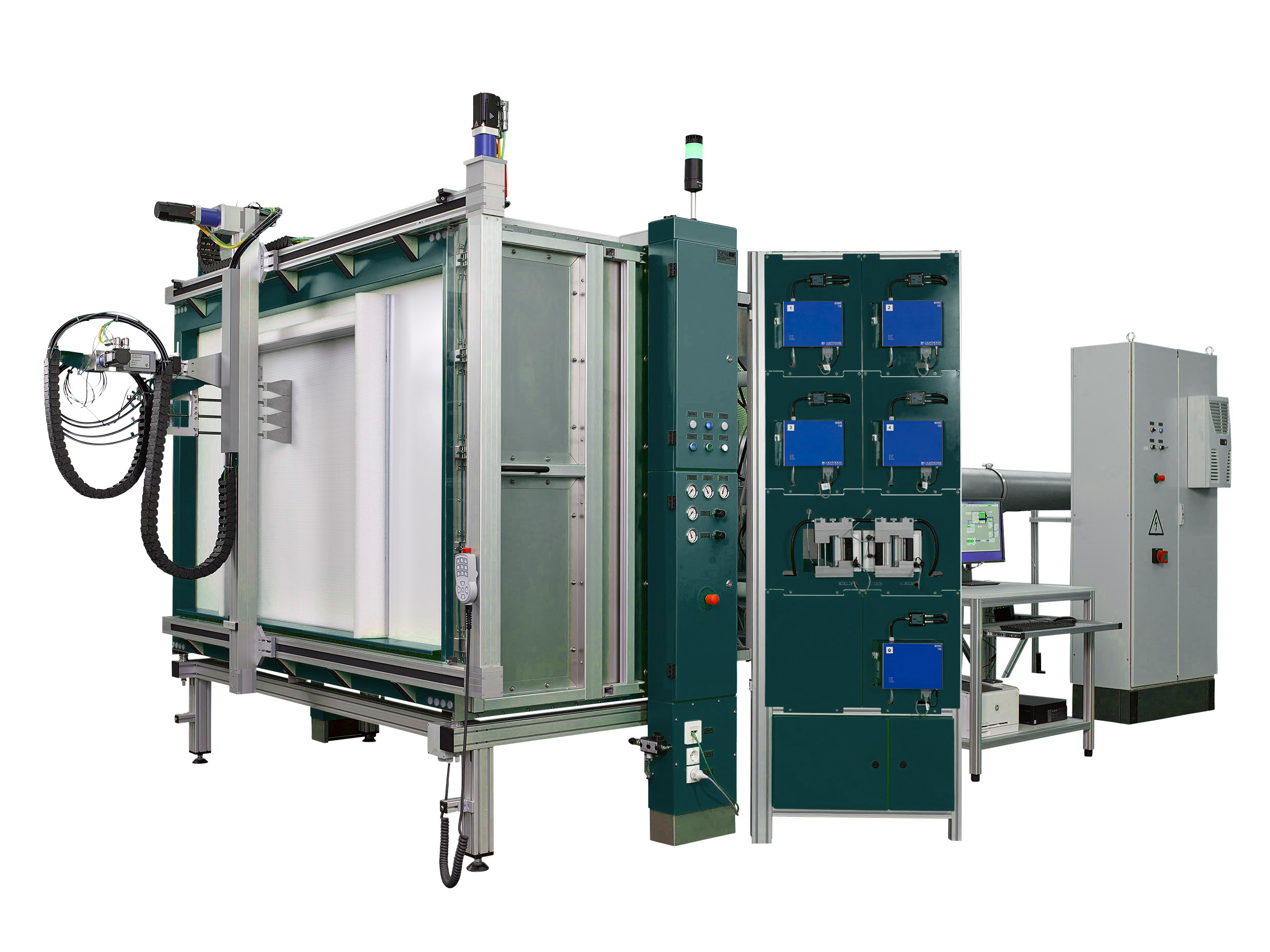
What are the functions and applications of the Automated HEPA/ULPA Filter Scanning Test System?
The Automated HEPA/ULPA Filter Scanning Test System is a specialized device used for testing and evaluating the performance of HEPA (High-Efficiency Particulate Air) and ULPA (Ultra-Low Penetration Air) filters. Its core functions and applications are as follows:
Functions
Automated Scanning Inspection:
Using a mechanical scanning system, the device moves across the filter surface to perform point-by-point testing, ensuring full coverage without omissions.
Particle Concentration Measurement:
By integrating an aerosol generator and particle counter, the system simultaneously measures upstream and downstream particle concentrations of the filter to calculate filtration efficiency.
Leak Detection and Localization:
Precisely identifies microscopic leakage points in the filter media or at sealing joints.
Data Recording and Analysis:
Real-time data collection and storage are performed, and the system generates reports that comply with international standards such as ISO 14644 and EN 1822.
Compliance with International Standards:
The system is designed to meet international testing requirements for HEPA/ULPA filter certification.
Applications
Cleanroom Validation:
Used in industries such as semiconductors, pharmaceuticals, and healthcare to ensure that installed HEPA/ULPA filters meet required cleanliness standards.
Quality Control:
Conducts incoming and outgoing inspection of filters after manufacturing or maintenance to ensure product performance compliance.
Regulatory Compliance Testing:
Meets mandatory air cleanliness requirements set by regulatory authorities such as GMP (Good Manufacturing Practice) and the Food and Drug Administration.
Maintenance Diagnostics:
Regular testing of operating filtration systems to detect performance degradation or damage in time and prevent contamination risks.
Application Fields
This system is widely used in environments requiring extremely high air quality standards, such as:
Semiconductor manufacturing plants
Biosafety laboratories
Hospital operating rooms
Pharmaceutical clean production facilities
High-end precision electronics manufacturing environments
What industries are suitable for the Automated HEPA/ULPA Filter Scanning Test System?
The Automated HEPA/ULPA Filter Scanning Test System is primarily used in industries that require extremely high levels of air cleanliness. Its main application sectors include the following:
Semiconductor and Microelectronics Manufacturing:
Used in key cleanroom areas of wafer fabrication plants, such as photolithography and packaging zones, to ensure a particle-free production environment.
Biopharmaceutical and Healthcare:
Applied in vaccine production, sterile pharmaceutical manufacturing workshops, biosafety laboratories, and hospital cleanrooms (especially Class I operating rooms), ensuring a sterile environment.
Aerospace Industry:
Used in high-precision instrument assembly and satellite component manufacturing processes where strict contamination control is required.
Precision Instrument and Optical Manufacturing:
Applied in production and assembly environments for products such as cameras, laser equipment, and precision mechanical instruments.
Food Processing (High Hygiene Standards):
Used in food packaging and filling processes that require sterile or low-microbial contamination conditions.
Nuclear Industry and Laboratories:
In certain applications, methods such as fluorescent tracing or particle counting are used for filter leak detection to ensure that radioactive or biohazard substances do not escape.
In summary, the Automated HEPA/ULPA Filter Scanning Test System is essential for maintaining ultra-clean environments across multiple high-tech and high-safety industries, ensuring product quality, operational safety, and regulatory compliance.
What is the testing principle of the Automated HEPA/ULPA Filter Scanning Test System?
The core principle of the Automated HEPA/ULPA Filter Scanning Test System is to introduce a known concentration of aerosol upstream of the filter as a tracer particle source, and then use a high-sensitivity detection device downstream to perform point-by-point scanning across the filter surface and frame in order to locate and quantify local leakage.
Core Testing Principle
Upstream Aerosol Injection:
On the upstream side of the HEPA/ULPA filter (such as within a plenum or duct), a uniform aerosol challenge is introduced. Commonly used aerosols include PAO, DOP, DEHS, or PSL. A stable challenge concentration is established, typically in the range of 10–20 µg/L.
Downstream Scanning Detection:
A handheld or automated scanning probe equipped with a photometer or laser particle counter moves across the downstream surface of the filter at a speed of ≤ 5 cm/s, maintaining a distance of approximately 2–3 cm from the filter media.
Leak Detection and Criteria:
When using the aerosol photometer method, leakage is expressed in micrograms per liter (µg/L). A leak is identified when downstream concentration exceeds 0.01% of the upstream reference concentration.
When using the laser particle counting method (more suitable for ULPA filters), particles ≥0.1–0.3 µm are analyzed to determine local penetration rates, applicable to high-efficiency filters such as ULPA Class 1–4.
Automated Data Processing:
The system integrates an XY scanning mechanism, multi-probe sampling, particle counters, and control software. It automatically generates leakage maps and test reports, complying with standards such as ISO 14644-3. EN 1822. and GB/T 25915.
Applicable Standards and Key Parameters
Main Standards:
ISO 14644-3. EN 1822. IEST-RP-CC034. GB/T 14295. and GB/T 13554.
Acceptance Criteria:
Leakage rate ≤ 0.01% (equivalent to filtration efficiency ≥ 99.99%).
Aerosol Selection:
HEPA (ISO Class 5–8): PAO/DOP using photometer method
ULPA (ISO Class 1–4): PSL or DEHS using particle counting method
Scanning Speed:
0.5–5 cm/s to ensure measurement repeatability and accuracy.
This system is widely used in pharmaceutical manufacturing, semiconductor production, and cleanroom environments where air quality requirements are extremely strict. It ensures that installed HEPA/ULPA filters are free from structural leaks and fully meet contamination control standards.
What is the operating procedure for the Automated HEPA/ULPA Filter Scanning Test System?
The Automated HEPA/ULPA Filter Scanning Test System is a highly integrated automated device used for leakage detection and performance certification of HEPA (High-Efficiency Particulate Air) and ULPA (Ultra-Low Penetration Air) filters. It complies with international standards such as ISO 29463-4 and EN 1822-4. The system is computer-controlled and capable of automatically generating standardized test reports.
1. System Preparation and Calibration
Ensure that the equipment is within its valid calibration period (typically once per year).
Connect compressed air supply (6 bar) and power supply (typically 3×400 VAC).
After powering on, run the self-check program to initialize key modules such as the aerosol generator, photometer, and airflow control system.
2. Filter Installation
Mount the filter under test onto the dedicated test rig using an appropriate adapter frame to ensure proper sealing.
Select suitable adapters based on filter size (up to approximately 1830 × 1220 × 300 mm).
3. Aerosol Generation and Concentration Stabilization
Start the aerosol generator (commonly DEHS or PSL) to produce a stable upstream aerosol concentration, typically 10–20 µg/mL.
Use the dilution system to adjust and stabilize the concentration, ensuring a signal-to-noise ratio of at least 20 µg/L for reliable detection.
4. Automated Scanning and Data Acquisition
The system drives an XY scanning mechanism to move the sampling probe across the downstream surface at a constant speed (≤ 5 cm/s).
The probe maintains a distance of 2–3 cm from the filter surface. The scanning path follows an “S-shaped” or grid pattern, with at least 20% overlap between adjacent tracks to ensure full coverage.
Real-time downstream aerosol concentration is measured, and leakage rate is calculated as:
Leakage Rate = (Downstream Concentration / Upstream Concentration) × 100%
5. Leak Detection and Evaluation
If leakage rate ≥ 0.01% (HEPA) or ≥ 0.005% (ULPA), the system automatically triggers an alarm and marks the leak location.
If three consecutive readings exceed the threshold, the filter is classified as non-compliant.
All data, including local efficiency, overall efficiency, and pressure drop, are automatically recorded and processed.
6. Result Output and Report Generation
Test reports can be exported via USB or printed using a thermal printer.
The system generates standardized reports in compliance with ISO 29463-4 and EN 1822-4 requirements.
It supports multiple testing modes, including:
Local efficiency testing (ISO 29463-4)
Overall efficiency testing (ISO 29463-5)
Particle separation efficiency testing (ISO 16890)
The system provides a fully automated, high-precision solution for HEPA/ULPA filter integrity testing, ensuring reliable leakage detection, standardized data reporting, and compliance with international cleanroom filtration standards.
What are the maintenance recommendations for an Automated HEPA/ULPA Filter Scanning Test System?
Proper maintenance of the Automated HEPA/ULPA Filter Scanning Test System is essential to ensure long-term measurement accuracy, system stability, and compliance with international testing standards.
1. Regular Calibration of Critical Components
Key components such as aerosol photometers, laser particle counters, flow meters, and pressure sensors should be calibrated regularly according to manufacturer recommendations or relevant industry standards (e.g., ISO 14644. IEST-RP-CC034).
Calibration is typically recommended every 6–12 months to ensure the accuracy and reliability of test results.
2. Maintenance of Aerosol Generator Stability
The aerosol generator (e.g., PSL or PAO system) must be kept clean and stable.
Regular inspection of nozzles and pipelines is required to prevent clogging or contamination.
Ensure the upstream aerosol concentration remains stable within the range of 10–20 µg/mL (PAO standard), as fluctuations may lead to incorrect leakage assessment.
3. Scanning Probe and Sampling System Maintenance
The sampling probe should be cleaned before and after each use to prevent particle buildup that may affect sensitivity.
Ensure the isokinetic sampling probe is properly aligned, as incorrect positioning or flow mismatch can result in measurement deviations.
4. Software and Control System Updates
Regularly back up all test data and update system software to the latest stable version to prevent scanning path errors or abnormal leak detection.
Verify that alarm thresholds (typically 0.01% leakage rate) remain compliant with applicable standards and regulatory requirements.
5. Environmental Condition Control
The system should operate in a controlled environment with stable temperature and humidity, free from strong vibration and electromagnetic interference.
Unstable environmental conditions may negatively affect sensor accuracy and scanning stability.
6. Annual Full Performance Verification
Conduct a comprehensive system performance validation at least once per year using certified reference filters with known leakage characteristics.
This ensures that the entire system—from aerosol injection to data output—complies with international standards such as EN 1822 or IEST-RP-CC034.
Why is the Automated HEPA/ULPA Filter Scanning Test System so important?
The Automated HEPA/ULPA Filter Scanning Test System is critically important because it is directly related to safety, regulatory compliance, and operational efficiency in high-cleanliness environments. Its core importance is reflected in the following aspects:
1. Ensuring Air Cleanliness in Critical Environments
Medical Cleanrooms (Operating Rooms, ICUs, etc.):
Terminal HEPA/ULPA filters act as the final barrier against microorganisms and particulate contamination. Any leakage can significantly increase surgical infection risks and threaten patient safety.
Pharmaceutical and Biotechnology Industries:
In aseptic isolators and Grade A filling lines, even minimal leakage may result in product contamination, leading to violations of GMP and Food and Drug Administration regulations, and potentially causing serious product safety incidents.
Microelectronics and Aerospace Industries:
Dust particles can increase defect rates in precision components. This system effectively prevents contamination and ensures product reliability.
2. Compliance with Mandatory Regulations and Standards
The system is an essential verification tool for compliance with standards such as:
ISO 14644
EN 1822
GMP (Good Manufacturing Practice)
Medical cleanroom construction standards
It is widely used in both domestic and international regulatory frameworks to verify filter installation integrity. Third-party testing agencies rely on such automated systems to provide objective, traceable, and authoritative certification data.
3. Accurate Leak Detection and Improved Maintenance Efficiency
Using aerosol generators (e.g., PAO/DOP) combined with laser photometers or particle counters and scanning probes, the system can detect microscopic leaks such as pinholes or sealant failures in filter media and frames.
Compared to manual testing, automated scanning offers:
Higher efficiency
Better repeatability
Complete and traceable data
Automated report generation suitable for audits
4. Reduction of Long-Term Operational Costs
Filter leakage allows unfiltered air into clean areas, disrupting pressure balance and increasing HVAC energy consumption. Regular scanning helps identify and resolve issues early, preventing larger system failures and reducing long-term maintenance and energy costs.
Overall, the Automated HEPA/ULPA Filter Scanning Test System is not merely an advanced technical device—it serves as a fundamental infrastructure for ensuring public health safety, product quality assurance, and industrial environmental control.With its high-precision and automated scanning capabilities, it provides essential technical support for air filtration integrity in critical industries.We sincerely welcome inquiries from interested users. Feel free to contact us at any time for more detailed information about system functions, technical advantages, application scenarios, and customized solutions tailored to your specific needs.
Previous: What is a Cargo Compartment Liner Burn-Through Fuel Test System?
N e x t : What is a Rate of Heat Release Apparatus?
