





What is a Rate of Heat Release Apparatus?
2026/04/23
Share:

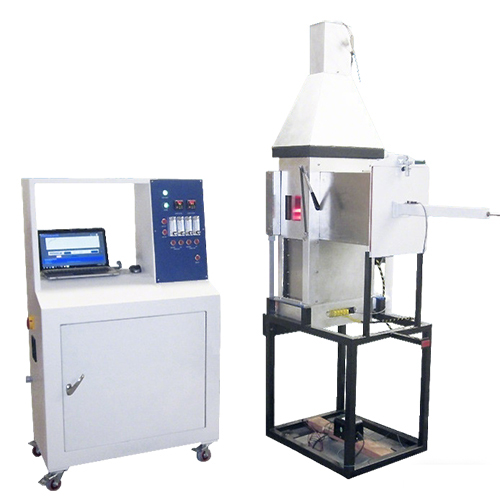
Functions and Applications of the Rate of Heat Release Apparatus
The Rate of Heat Release Apparatus is an experimental device used to measure the amount of heat released per unit time during the combustion of materials. Its core function is to evaluate the fire hazard of materials, and it is widely applied in fields such as fire protection engineering, materials science, and aviation safety.
Main Functions
Quantification of Heat Release Rate:
By measuring parameters such as oxygen consumption, mass loss, or flue gas composition during combustion, the device calculates the heat released per unit time (commonly expressed in kW or kW/m²).
Determination of Key Fire Parameters:
Including Peak Heat Release Rate (PHRR), Total Heat Release (THR), Time to Ignition, and Smoke Production Rate.
Support for Standardized Test Methods:
For example, methods based on the oxygen consumption principle (approximately 13.1 MJ of heat released per 1 kg of oxygen consumed), complying with international standards such as ISO 5660 and ASTM E1354.
Common Types and Applications
OSU Heat Release Rate Apparatus:
Featuring a rectangular reaction chamber approximately 1.4 m in length, with a conical exhaust chimney at the top, and equipped with cooling channels and a radiant heating system.
It is mainly used for evaluating the fire performance of aircraft interior materials (such as seats, carpets, and insulation materials), meeting regulatory requirements such as FAA FAR 25.853.
Cone Calorimeter:
Based on GB/T 16172—XXXX (equivalent to ISO 5660-1:2015).
It is suitable for testing the combustion characteristics of building materials, textiles, and composite materials under different heat flux conditions, and is widely used in the development of building fire safety standards.
Battery Fire Heat Release Measurement:
Used for full-scale or medium-scale battery pack fire testing (such as electric vehicle battery packs), to evaluate heat release rate (HRR) characteristics during thermal runaway.
Applicable Industries of the Heat Release Rate Test Apparatus
The Heat Release Rate (HRR) Test Apparatus is widely used across multiple industries, primarily for evaluating the combustion performance of materials in fire scenarios.
Aerospace:
Used to test the fire safety performance of aircraft interior materials (such as seats, carpets, and composite materials), meeting stringent requirements of standards such as Airbus ABD0031 for heat release rate and toxic gas emissions.
Construction and Building Materials:
Based on international standards such as ISO 5660-1 and ASTM E1354. as well as Chinese national standards like GB/T 16172. it is used to evaluate the fire reaction properties of building materials, including walls, flooring, and insulation materials.
Transportation:
Covers industries such as automotive, high-speed rail, and marine applications. It is used to test the heat release behavior of interior materials, cables, and composite materials in fire conditions to ensure passenger safety.
Fire Protection and Safety Engineering:
Applied in the development and validation of flame-retardant materials and fire risk assessment, supporting the formulation of fire safety codes and fire modeling.
Energy and Battery Safety:
Particularly for battery electric vehicles (BEVs) and energy storage systems, HRR testing is used to evaluate the fire hazards associated with battery thermal runaway.
Chemical Industry and Materials R&D:
Used to study the combustion characteristics of new materials such as polymers, composites, and silicone rubber, guiding the development of flame retardants and material optimization.
The core principle of such apparatus is primarily based on the oxygen consumption method, which states that approximately 13.1 kJ of heat is released per gram of oxygen consumed during combustion. This principle ensures high comparability and repeatability, making it a globally recognized and widely adopted tool for fire hazard assessment.
Test Principle of the Rate of Heat Release Apparatus
The core principle of the Rate of Heat Release Apparatus is based on the oxygen consumption method, in which the heat released per unit time is determined by measuring the amount of oxygen consumed during the combustion process.
Fundamental Theory
During combustion, there is an approximately constant relationship between the mass of oxygen consumed and the heat released. For most organic materials, approximately 13.1 MJ of heat is released for every 1 kg of oxygen consumed. Although this value may vary slightly depending on the type of fuel, 13.1 MJ/kg is generally used as a standard constant.
Measurement Method
The apparatus collects combustion products (flue gases) and precisely measures the reduction in oxygen concentration as well as the exhaust gas flow rate. Based on these measurements, the actual oxygen consumption is calculated. By multiplying the oxygen consumption by the conversion factor mentioned above, the heat release rate (HRR) can be determined.
Operating Procedure of the Rate of Heat Release Apparatus
Sample Preparation
Cut the specimen into standard dimensions (typically 100 mm × 100 mm, or according to relevant standards). Record the specimen’s mass, thickness, and initial condition. Mount the specimen on the sample holder, ensuring proper alignment with the radiant heat source.
Equipment Calibration
Calibrate the heat flux of the radiation cone (commonly 25 kW/m², 50 kW/m², etc.).
Calibrate the gas sampling system, including sensors for oxygen (O₂), carbon dioxide (CO₂), and carbon monoxide (CO).
Calibrate the exhaust flow meter and ensure the system is properly sealed.
Environmental Setup
Set the experimental environmental parameters, such as ventilation rate, ambient temperature, and humidity.
For OSU apparatus, ignition flame or radiant heating parameters must also be configured.
Ignition and Combustion
Start the radiant heating (for cone calorimeter) or ignition flame (for OSU apparatus).
Record the Time to Ignition (TTIG).
Data Acquisition
Continuously monitor and record the following data in real time:
Concentrations of O₂, CO₂, and CO in the exhaust gases
Exhaust flow rate
Mass loss of the specimen (for systems equipped with a weighing module)
Heat Release Rate (HRR) as a function of time
The HRR is calculated based on the oxygen consumption principle: approximately 13.1 MJ of heat is released per 1 kg of oxygen consumed.
Test Termination
After reaching the preset test duration (e.g., 10 minutes) or when the specimen is completely burned, stop the heating.
Shut down the system and clean any residual materials.
Data Analysis
Output key parameters, including:
Peak Heat Release Rate (PHRR, kW/m²)
Total Heat Release (THR, MJ/m²)
Average Heat Release Rate
Smoke Production Rate (if applicable)
Maintenance Recommendations for the Rate of Heat Release Apparatus
To ensure the accuracy and reliability of measurement data, as well as the long-term stable operation of the equipment, a systematic maintenance procedure must be followed.
Routine Maintenance and Calibration
Regular Calibration Procedures
Oxygen Analyzer Calibration:
The cone calorimeter is fundamentally based on the oxygen consumption method. Therefore, the oxygen analyzer must be regularly calibrated using standard gases to ensure measurement accuracy. This is essential for obtaining reliable heat release rate data.
Flow Meter Calibration:
Inspect and calibrate the exhaust flow meter to ensure accurate measurement of gas flow volume.
Heat Flux Calibration:
Calibrate the heat flux output of the radiant heat source (such as the cone heater used for ignition). Ensure that the radiant heat intensity applied to the sample surface meets standard requirements (commonly 25 kW/m² or 35 kW/m² in typical tests).
Sensor and Key Component Inspection
Temperature Sensors:
Regularly check the response and accuracy of temperature sensors (such as thermocouples) to ensure correct monitoring of ambient and exhaust temperatures.
Gas Sampling System:
Clean gas sampling lines and filters regularly to prevent blockage caused by dust or condensation, which could affect the accuracy and timeliness of gas composition analysis.
Ignition System:
Inspect the reliability of the automatic ignition system (e.g., spark igniters) to ensure proper operation under preset conditions.
Operational Environment and Sample Preparation Maintenance
Test Environment Control
Laboratory Conditions:
Maintain a stable laboratory environment and avoid drastic temperature fluctuations or excessive humidity, which may affect electronic components and sample conditions.
Exhaust System:
Ensure that the exhaust duct is unobstructed and the exhaust fan operates properly. A stable airflow environment is essential for accurate heat release rate calculations.
Sample Installation and Cleaning
Sample Holder Cleaning:
After each test, thoroughly clean the sample holder and residue collection tray to prevent contamination from previous tests, which may affect subsequent test conditions or cause cross-contamination.
Sample Preparation Compliance:
Samples must be prepared strictly according to test standards (including size, thickness, and encapsulation). Improper sample preparation may distort heat release curves, affecting results such as peak heat release rate and ignition time.
Importance of the Rate of Heat Release Apparatus
The importance of the Rate of Heat Release (HRR) Apparatus is mainly reflected in its critical role in fire safety assessment, material combustion performance testing, and engineering design. Its significance is demonstrated in the following aspects:
1. Core Indicator for Quantifying Fire Hazard
The heat release rate (HRR) is the most direct and reliable parameter for evaluating the rate at which a material or system releases energy during combustion. Compared with total heat release, HRR more accurately reflects the rate of fire growth and potential hazard.
Experimental studies have shown that the Peak Heat Release Rate (PHRR) is highly correlated with fire size, flame spread rate, and evacuation difficulty, making it a core indicator for assessing material fire risk.
2. Support for Regulations and Standards Development
The apparatus is widely used in fire performance certification across industries such as aerospace, construction, and transportation. For example:
The OSU heat release rate apparatus is used by the Federal Aviation Administration (FAA) to evaluate the flammability of aircraft interior materials, in compliance with aviation standards such as FAR 25.853(a-1).
The Cone Calorimeter, based on ISO 5660-1. is used for HRR testing of building materials, carpets, textiles, and other products.
3. Guidance for Material Development and Fire-Resistant Design
By comparing HRR curves of different materials (e.g., silicone vs. organic polymers), materials with lower heat release and higher flame resistance can be identified.
For instance, silicone-based materials exhibit significantly lower HRR than conventional plastics, making them suitable for high fire-safety applications. In battery fire research, HRR data is used to evaluate the fire risk of electric vehicles (BEVs) and to support the design of battery thermal management and fire suppression systems.
4. Validation of Fire Models and Safety Strategies
HRR data serves as a fundamental input for computational fluid dynamics (CFD) fire simulations, enabling the prediction of fire growth and smoke propagation in buildings.
Full-scale fire tests (such as BEV combustion experiments) rely on HRR systems to obtain real fire source intensity, thereby improving the accuracy of simulation models.
5. Standardization and Data Comparability
Devices such as the OSU apparatus and cone calorimeter use standardized test conditions (e.g., heat flux and airflow) to ensure repeatability and comparability of results across different laboratories.
New measurement techniques (such as point sampling methods) have also been developed based on HRR systems, improving the accuracy of complex fire scenarios such as pool fires.
In summary, the Rate of Heat Release Apparatus is not only a precise laboratory instrument for measuring material combustion behavior, but also a key device for ensuring public safety and advancing fire-resistant materials and technologies.It plays an indispensable role in fire science research and fire safety evaluation. Through accurate and reliable data, it provides essential technical support for the development of fire safety standards, new material innovation, and fire risk prevention and control.We sincerely welcome inquiries from anyone interested in this equipment. Please feel free to contact us at any time for more detailed technical specifications, application scenarios, and customized solutions.
Previous: FAQs About Automated HEPA/ULPA Filter Scanning Test System
N e x t : How do you operate a Hydrostatic Pressure Tester?
