





How do you operate a Hydrostatic Pressure Tester?
2026/04/23
Share:

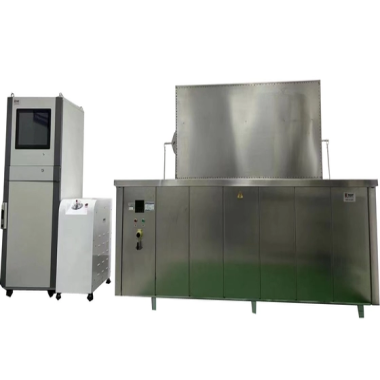
Functions and Applications of the Hydrostatic Pressure Tester
The Hydrostatic Pressure Tester is a precision instrument used to evaluate the sealing performance, pressure resistance, and permeability resistance of materials or equipment under water pressure. Its core function is to apply controlled hydrostatic pressure to a specimen and observe its response, thereby determining whether it meets relevant standards or application requirements.
Main Functions
Controlled Hydrostatic Pressure Application:
The device can increase water pressure step-by-step or at a constant rate until a preset value is reached or the specimen fails.
Leakage and Burst Point Detection:
It records the pressure at which the material first shows signs of seepage, leakage, or rupture.
Pressure Resistance Time Measurement:
Used for long-term constant pressure testing to evaluate the stability of materials under sustained pressure, such as plastic pipes.
Data Recording and Output:
Most modern systems can automatically record pressure–time curves and generate detailed test reports.
Safety Protection Mechanism:
Equipped with overpressure alarm, automatic pressure relief, and leakage detection functions to ensure safe operation.
Typical Applications
Textiles and Protective Clothing Testing:
Used to evaluate the liquid penetration resistance of medical protective clothing, cleanroom garments, and firefighting suits. Results are typically expressed in cmH₂O (centimeters of water column).
Plastic Pipe Testing:
Applied to thermoplastic pipes (such as PE and PVC) for burst pressure and long-term hydrostatic pressure resistance testing. It is widely used by pipe manufacturers and quality inspection institutions.
Pressure Vessel and Pipeline Inspection:
Used for hydrostatic testing before installation or commissioning to verify structural integrity and sealing performance, in compliance with standards such as GB and ASME.
Firefighting Equipment Testing:
Specifically used for pressure resistance testing of firefighting hoses, indoor fire hydrants, and related equipment.
Hydraulic Component Testing:
Used for testing hydraulic pumps, valves, cylinders, and hoses for pressure resistance, burst strength, and leakage detection, with test pressures reaching up to 300 MPa.
Building Waterproof Material Evaluation:
Used to test the impermeability of geotextiles, waterproof membranes, and similar materials under static water pressure.
Industries Applicable to the Hydrostatic Pressure Tester
The Hydrostatic Pressure Tester has a wide range of applications across multiple industries, mainly including the following sectors:
Textile and Protective Clothing Industry:
Used to test the waterproof performance of fabrics, coated materials, medical protective clothing, and similar products.
Firefighting Equipment Manufacturing Industry:
Used to evaluate the pressure resistance of products such as fire hoses, indoor fire hydrants, and related firefighting equipment.
Plastic and Fluid Transport Pipe Industry:
Used to test long-term constant hydrostatic pressure resistance and instantaneous burst performance of plastic pipes such as PPR, PE, and PVC. The maximum test pressure can reach up to 10 MPa.
Oil, Chemical, and Energy Industry:
Used to test pressure-bearing components such as drilling tools, hoses, casings, and valves. The testing pressure range typically covers 0–100 MPa.
Automotive and Air Conditioning Manufacturing:
Used to test the pressure resistance and burst strength of automotive hoses and air-conditioning pipelines, with test pressures reaching up to 300 MPa.
Construction and Water Supply & Drainage Engineering:
Used for pressure and leakage testing of household and commercial piping systems (such as underfloor heating and water supply pipelines). It supports both hydrostatic and pneumatic testing modes.
GRP/FRP Pipe Manufacturing (Glass Fiber Reinforced Plastics):
Used to test the sealing performance and leakage of large-diameter pipes (DN250–DN4000 mm), in compliance with international standards such as BS, EN, and ASTM.
Public Utilities and Industrial Pipelines:
Used for on-site pressure testing of gas, water, and oil pipelines. Some equipment is designed to be portable for field operations.
In summary, the Hydrostatic Pressure Tester is widely used in key industries such as textiles, firefighting, plastic piping, oil and petrochemicals, automotive manufacturing, construction, pipeline engineering, and public utilities. It plays an essential role in ensuring product safety, structural integrity, and compliance with international standards.
Test Principle of the Hydrostatic Pressure Tester
The core test principle of the Hydrostatic Pressure Tester is based on the concept of hydrostatic pressure in fluid mechanics. It evaluates the water penetration resistance of a material or structure by applying controlled water pressure to one side of the specimen.
Fundamental Principle
The hydrostatic pressure is described by the formula:
P = \rho g h
Where:
P: Hydrostatic pressure (kPa or mbar)
ρ: Density of water (approximately 1000 kg/m³)
g: Acceleration due to gravity (9.8 m/s²)
h: Height of the water column (m)
This relationship indicates that the pressure applied to the material increases with the height of the water column.
Main Testing Methods
1. Dynamic Test (Pressurization Method)
The water pressure increases at a constant rate (e.g., 60 mbar/min or 10 mm/s).
End condition: The test is stopped when three leakage points appear on the opposite side of the specimen, or when the preset pressure or time limit is reached.
2. Static Test (Holding Pressure Method)
The water pressure is rapidly increased to a target value and maintained for a specified period (ranging from 1 minute to several hours).
Evaluation criterion: If no leakage occurs during the holding period, the specimen is considered qualified.
The Hydrostatic Pressure Tester determines the water resistance performance of materials by applying controlled hydrostatic pressure and observing leakage behavior under dynamic or static conditions. This makes it a reliable tool for evaluating waterproofness, sealing integrity, and structural durability across various materials and industrial applications.
Operating Procedure of the Hydrostatic Pressure Tester
1. Preparation
Inspect the equipment to ensure all components are securely connected and the power supply is functioning normally. Confirm that key components such as pressure sensors, seals, and pipelines are in good working condition.
Prepare test specimens according to relevant standards (e.g., containers, pipes, textiles), ensuring that the sample surface is clean, dry, and free from damage.
2. Sample Installation
Properly install the specimen into the test chamber or fixture, ensuring a tight and secure seal (using dedicated connectors, O-rings, etc.) to prevent leakage.
For externally tested samples such as gas cylinders, air inside the water jacket and pipelines must be fully removed, and the electronic scale should be calibrated if required.
3. Parameter Setting
Set test parameters according to relevant standards such as GB, ASME, or AATCC:
Test Pressure: For internal pressure vessels, typically 1.25 times the design pressure
Pressurization Rate: Common range is 0.1–10 MPa/min, depending on the equipment (e.g., fire hydrant testers: 5–10 MPa/min)
Holding Time: Generally not less than 30 minutes; complex systems may require 60–120 minutes
Temperature: Some standards require the medium temperature to be controlled at 21 ± 2°C
4. Pressurization and Pressure Holding
Slowly fill the system with water and remove all trapped air. Apply pressure in stages (e.g., first increase to 30% of test pressure to check for initial leaks, then gradually increase to the target pressure).
Once the target pressure is reached, begin the holding phase while continuously monitoring pressure stability and specimen condition.
5. Process Monitoring
Observe whether the specimen shows leakage, abnormal noise, sudden pressure drops, or deformation.
If any abnormal condition is detected, immediately stop the test and slowly release the pressure to zero for inspection.
6. Depressurization and Drainage
After the holding period, slowly release the pressure to zero and open the drain valve to discharge the test water.
Special attention is required when using seawater or circulating water systems to ensure proper drainage handling.
7. Result Evaluation and Recording
The specimen is considered qualified if there is no leakage, no visible deformation, no abnormal noise, and stable pressure maintenance.
The system automatically records the pressure–time curve and generates a test report. Some devices support Excel export and printing functions.
Maintenance Recommendations for the Hydrostatic Pressure Tester
To ensure long-term stable operation, accurate test results, and extended service life of the Hydrostatic Pressure Tester, a systematic maintenance and servicing procedure must be strictly followed.
Daily and Periodic Maintenance
Cleaning and Hygiene
After each test / daily:
Clean the workbench, sample clamps, and surrounding areas promptly to remove dust, metal debris, oxide residues, and testing remnants. This prevents contamination, component wear, and blockage or damage to hydraulic/water systems.
Periodic cleaning:
Perform thorough cleaning of internal components and hard-to-reach areas to ensure no residue accumulation.
Mechanical and Structural Maintenance
Sample Clamp Inspection:
For clamps made of high-strength aluminum alloy or similar materials, check for deformation or wear. Ensure uniform clamping force to avoid affecting test accuracy.
Fastener Inspection:
Vibrations during specimen failure may loosen fasteners. Conduct regular inspections (e.g., every 30 working days) and retighten all bolts, nuts, and screws.
Lubrication:
Regularly lubricate lead screws, transmission components, and other moving parts to prevent dry friction and ensure smooth operation.
Sealing Components:
Check seals in pressure adjustment systems and sealing chambers to prevent leakage, pressure instability, or measurement errors.
Electrical and Control System Maintenance
Connection Check:
Ensure all electrical connections are secure, free of corrosion, and not loose.
Control Unit Inspection:
Verify that touch screens, buttons, and control keys are responsive and functioning properly.
Sensor and Instrument Calibration:
Check the accuracy of pressure sensors, temperature sensors, and timers. Recalibrate when necessary.
Common Fault Prevention and Troubleshooting
1. Unstable Pressure or Failure to Reach Maximum Pressure
Possible causes:
Air in the hydraulic or water system; contaminated or improper viscosity fluid; clogged filters; improper adjustment or wear of control valves; pump failure; significant leakage.
Preventive measures:
Regular air removal, use clean and appropriate media, clean or repair valves, adjust clearances, and inspect for leaks.
2. Gauge or Indicator Does Not Return to Zero After Pressure Release
Possible causes:
Mechanical transmission jamming or disengagement; sensor zero drift.
Preventive measures:
Re-engage transmission components, adjust spring elements, and perform regular zero calibration.
3. Abnormal Noise or Vibration
Possible causes:
Loose or worn mechanical parts; insufficient lubrication; pump or coupling malfunction; pressure fluctuations in the hydraulic system.
Preventive measures:
Strengthen fastener inspection, maintain lubrication, inspect pump condition, and remove air from the system.
4. Professional Maintenance and Calibration
Predictive Maintenance:
It is recommended to establish quarterly or annual maintenance plans. Qualified technicians should conduct comprehensive inspections of the main unit, safety systems, and control system performance.
Professional Service:
For complex hydraulic systems or precision testing units, maintenance by the manufacturer or certified service engineers is recommended. These services typically include full system inspection, adjustment, replacement of key components, and detailed maintenance reports with optimization suggestions.
Regular Calibration:
To ensure measurement accuracy, pressure and temperature measurement systems should be periodically calibrated by professional metrology services.
Proper maintenance of the Hydrostatic Pressure Tester is essential to ensure measurement accuracy, operational stability, and equipment longevity. A well-structured maintenance program not only reduces downtime but also significantly improves testing reliability and overall equipment performance.
Importance of the Hydrostatic Pressure Tester
The importance of the Hydrostatic Pressure Tester is mainly reflected in its ability to quantitatively evaluate the waterproof performance, structural safety, and product quality of materials across multiple industrial fields.
1. Ensuring Reliable Waterproof Performance of Materials
The hydrostatic pressure tester applies controlled water pressure to simulate the material’s resistance to water penetration under real-world conditions. It is widely used in fields such as textiles (e.g., protective clothing), construction materials, and geosynthetics to accurately evaluate waterproof performance.
2. Ensuring the Safety of Pressure Vessels and Pipeline Systems
In industries such as energy, chemicals, and firefighting, the equipment is used for hydrostatic burst tests and pressure tests on pipelines, gas cylinders, fire hoses, and related components. These tests verify structural integrity and sealing performance, ensuring safe operation under high-pressure conditions.
3. Supporting Industry Standards and Quality Control
Hydrostatic pressure testing is a fundamental method in many international and national standards, including AATCC, ISO, and GB/T. Manufacturers use this equipment for pre-shipment quality inspection to ensure products meet regulatory and customer compliance requirements.
4. Improving R&D and Material Selection Efficiency
During new material development, the hydrostatic pressure tester allows rapid comparison of waterproof performance among different materials, coatings, or structures. This provides valuable data for formulation optimization and process improvement.
In summary, the Hydrostatic Pressure Tester is not only a precision laboratory testing instrument but also a critical device for ensuring product safety, promoting industry standardization, and supporting technological innovation in related fields.We sincerely welcome inquiries and invite you to contact us at any time for more detailed information about technical specifications, application scenarios, and customized solutions.
Previous: What is a Rate of Heat Release Apparatus?
N e x t : FAQs About 6 Station Pilling Tester
