





What is a Surface Flame Spread Test Apparatus?
2026/04/24
Share:

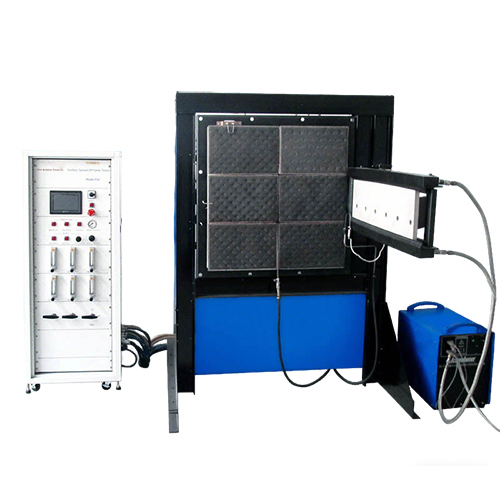
Functions and Applications of Surface Flame Spread Test Apparatus
The Surface Flame Spread Test Apparatus is a dedicated device used to evaluate the surface flame propagation characteristics of building materials under controlled ignition conditions. Its core function is to determine flame spread rate and combustion behavior during fire exposure, providing a scientific basis for building fire safety assessment.
Main Functions
Measurement of surface flame spread index:
By exposing the material to a standardized ignition source, the device observes the relationship between flame travel distance and time along the material surface, enabling calculation of flame spread characteristics.
Smoke density evaluation:
In accordance with certain test standards, the apparatus can also quantify the concentration of smoke generated during combustion, which is an important parameter for assessing fire hazard levels.
Simulation of real fire scenarios:
Under controlled conditions of heat flux, airflow, and ignition source, the device replicates combustion behavior of materials in real architectural environments such as walls and ceilings.
Material classification support:
Based on test results, materials can be classified into different fire resistance or flame spread rating categories, supporting standardized safety grading systems.
Practical Applications
Selection of building materials:
Assists architects and engineers in selecting interior materials that comply with fire safety regulations, particularly in environments such as shopping malls, hospitals, and high-rise buildings.
Product certification and compliance:
Provides essential test data required for regulatory compliance and certification processes before materials are marketed or exported, such as GB (China), UL (USA), and CE (EU) standards.
Fire modeling input data:
Supplies surface combustion behavior data used as input parameters for computational fluid dynamics (CFD) fire simulation software, improving model accuracy and reliability.
Scientific research and new material development:
Used to evaluate the effectiveness of flame retardants, coatings, and composite structures in suppressing flame spread, supporting the development of advanced fire-resistant materials.
Applicable Industries of Surface Flame Spread Test Apparatus
The Surface Flame Spread Test Apparatus is primarily used to evaluate the lateral flame propagation characteristics of materials under controlled ignition and heat radiation conditions. It is widely applied across industries with stringent fire safety requirements.
Building and Construction Industry
Used to test the combustion performance of exposed surface materials such as wall panels, ceiling systems, boards, composite materials, and coatings. The results are essential for ensuring compliance with building fire safety regulations and design standards.
Transportation Industry
Aviation:
Used for airworthiness certification of aircraft interior materials, including sidewall panels, ceiling linings, and cargo compartment liners, ensuring compliance with strict aviation fire safety requirements.
Marine (Shipbuilding):
Applied to evaluate the surface flammability of materials used in bulkheads, decks, and interior ship structures to ensure fire safety in marine environments.
Rail Transit:
Used for fire performance assessment of interior materials in high-speed trains, metro systems, and other rail vehicles to ensure passenger safety during fire incidents.
Fire Safety and Product Certification Industry
Provides combustion performance data for fire-retardant coatings, treated materials, and flame-resistant products. The test results support compliance with classification systems such as Euroclass and other international fire rating standards.
Research and Testing Institutions
Widely used in universities, research centers, and third-party laboratories for studying material combustion mechanisms, validating new fire safety standards, and conducting standardized material fire performance testing.
Testing Principle of Surface Flame Spread Test Apparatus
The testing principle of the Surface Flame Spread Test Apparatus is primarily based on internationally recognized standards such as ASTM and BS methods. The core objective is to evaluate the rate and extent of flame propagation along the surface of a material when exposed to a controlled ignition source, thereby determining its combustion performance classification.
Simulation of Real Fire Conditions
The test specimen is installed either horizontally or vertically inside a fire-resistant test chamber. One end of the sample is exposed to a standardized flame source, typically generated by a propane or natural gas burner. By controlling airflow velocity and thermal radiation conditions within the chamber, the apparatus ensures that the flame propagates steadily along the material surface under reproducible and standardized conditions.
Observation of Flame Spread Distance and Time
During testing, the flame front movement along the material surface is continuously recorded. The distance traveled by the flame front over a defined time period is measured, allowing calculation of the flame spread rate. This provides a quantitative description of how quickly fire can propagate across the material surface.
Quantification of Combustion Characteristics
Based on observed flame spread behavior and smoke generation characteristics, key parameters such as the Flame Spread Index (FSI) and smoke development index are calculated. These values are typically compared with reference materials, such as red oak (representing high combustibility) and cement board (representing low combustibility), to establish a standardized performance benchmark.
Material Classification Basis
According to the obtained FSI values and related combustion indicators, materials are classified into different fire performance grades (such as Class A, B, or C). These classification results serve as an important basis for material selection in building fire safety codes and regulatory compliance systems.
Operating Procedure of Surface Flame Spread Test Apparatus
The Surface Flame Spread Test Apparatus is commonly used to evaluate the flame surface propagation characteristics of building materials or products under controlled laboratory conditions. Typical standards include ASTM, GB/T, and other relevant international specifications.
General Operating Procedure
1. Preparation
Inspect the testing system to ensure it is in proper working condition, including the burner, gas supply system, airflow (wind speed) control system, temperature sensors, and exhaust/smoke extraction system.
Ensure that the specimen dimensions comply with the relevant standard requirements (for example, ASTM E84 specifies specimen sizes such as 24 in × 24 in or 20 in × 20 in).
Mount the specimen securely inside the test tunnel, ensuring that all edges are properly sealed to prevent gas leakage during testing.
2. Calibration and Preheating
Calibrate all measuring instruments, including thermocouples, flow meters, and pressure gauges.
Preheat the burner until it reaches a stable operating condition. Propane or natural gas is typically used as the fuel source.
3. Ignition and Test Initiation
Start the forced ventilation system and adjust the airflow to the required standard wind speed.
Ignite the burner so that the flame is applied to the lower end of the specimen.
Record the flame spread over time, including the progression distance and duration of flame propagation.
4. Data Acquisition
Continuously record the movement of the flame front along the specimen surface over time, which is used to calculate the flame spread rate.
Monitor and record additional parameters such as temperature distribution, heat release rate, and smoke density, depending on the specific testing standard being applied.
5. Test Termination and Cooling
After the specified test duration is reached, turn off the gas supply and shut down the ventilation system.
Allow the equipment to cool down completely before removing the specimen. Document the condition and morphology of the burned residue.
6. Result Analysis
Calculate the Flame Spread Index (FSI) based on the flame spread distance–time curve.
Compare the obtained results with standard threshold values to determine the fire performance classification of the material.
Precautions
Testing must be conducted in a well-ventilated laboratory that meets relevant safety standards.
Operators must wear appropriate personal protective equipment (PPE) and be familiar with emergency procedures.
Different international or regional standards may vary in specimen size, airflow rate, and ignition method; therefore, the selected standard must be strictly followed during testing.
Maintenance Recommendations for Surface Flame Spread Test Apparatus
The maintenance of the Surface Flame Spread Test Apparatus should strictly follow the official safety and operating guidelines provided by the equipment manufacturer. Proper maintenance is essential to ensure long-term stable operation, guarantee user safety, and prevent potential equipment damage. The following are comprehensive maintenance recommendations:
Daily Cleaning and External Maintenance
Power isolation before cleaning:
Before any cleaning operation, all cables must be unplugged and the equipment power must be completely turned off.
Cleaning method:
Only the exterior housing of the equipment should be cleaned. A dry, soft cloth must be used for wiping. The use of any liquid cleaners is strictly prohibited.
Ventilation openings and air outlets:
Regularly and gently clean the external surfaces of fans, ventilation ports, and other openings to remove dust accumulation. This helps maintain proper airflow and prevents overheating.
Port cleaning:
Do not use sharp objects (such as paper clips, screwdrivers, or similar tools) to clean any ports or internal/external components of the device.
Connector maintenance:
All connectors must be kept dry and should only be wiped gently using a clean, dry cloth.
Contamination prevention:
Avoid contamination from food residues, dust, dirt, oil, or chemical substances, as these may affect equipment performance and safety.
Operating Environment and Storage Requirements
Ventilation and heat dissipation:
The equipment should not be placed in confined or narrow spaces. No objects should be placed on top of the device to avoid obstructing heat dissipation and causing overheating.
Temperature control:
The device should be operated within the temperature range defined by international safety standards (typically 0°C to 35°C). If the equipment overheats and displays a temperature warning icon, it must be powered off immediately and moved to a cooler environment for cooling.
Humidity protection:
Keep the equipment dry at all times. Avoid exposure to rain, snow, or high humidity environments. Do not use or store the device near water sources or excessively damp locations.
Avoid heat sources and direct sunlight:
Do not operate or store the equipment near heat sources or under strong direct sunlight, as this may affect performance and lifespan.
Magnetic component precautions:
Some components of the equipment may contain magnetic elements, which could interfere with medical devices or damage magnetically sensitive items such as credit cards. Users with medical devices should consult the equipment manufacturer before use, and magnetically sensitive objects should be kept away from the device.
Explosion-risk environments:
The equipment must never be used in areas where explosive gases may be present (such as gas stations or chemical storage facilities), nor should it be stored together with flammable substances in the same compartment.
Proper maintenance of the Surface Flame Spread Test Apparatus—including routine cleaning, controlled operating conditions, and strict environmental compliance—is essential to ensure accurate test results, stable performance, and long service life of the equipment.
Importance of Surface Flame Spread Test Apparatus
The importance of the Surface Flame Spread Test Apparatus is primarily reflected in its critical role in building fire safety, material evaluation, and regulatory compliance. Its core value can be summarized as follows:
Ensuring Building and Personnel Safety
Evaluating material combustion characteristics:
This apparatus is used to measure the flame spread rate and smoke development of building materials (such as wall panels and ceiling finishes) under controlled ignition conditions, thereby determining their fire hazard classification.
Predicting real fire behavior:
By simulating flame propagation along the surface of materials, the device helps predict how materials will behave in actual fire scenarios. This is particularly important for upward or ceiling-directed flame spread, which may lead to flashover conditions and poses significant safety risks.
Guiding material selection:
Building codes and fire safety regulations (such as NFPA and IBC standards) rely on test results to restrict the use of combustible materials in high-risk environments, including public buildings and high-rise structures.
Promoting Fire-Retardant Material Development
Quantifying flame-retardant performance:
By comparing parameters such as flame spread rate and heat release before and after the addition of flame retardants, the effectiveness of new formulations can be accurately evaluated.
Optimizing material design:
Test data help material scientists understand how factors such as density, moisture content, and surface emissivity influence flame propagation, thereby guiding the development of high-performance composite and fire-resistant materials.
Supporting Regulatory Compliance and Market Access
Basis for mandatory certification:
In many countries and regions, building materials must pass surface flame spread testing before being approved for market entry or use in specific engineering projects.
Ensuring standardized evaluation:
The apparatus provides consistent and repeatable test data, supporting compliance with international fire safety standards and certification systems.
In summary, the Surface Flame Spread Test Apparatus is far more than a laboratory testing instrument for material science. It plays an indispensable technical role in public safety protection, regulatory enforcement, and product innovation. By ensuring that materials meet fire safety requirements, it supports the strict implementation of building codes and provides reliable technical assurance for industrial research and development.We sincerely welcome further inquiries and discussions. Please feel free to contact us for more detailed information, technical specifications, or application cases of this equipment, and explore how it can contribute to improving safety standards and innovation capabilities.
Previous: What is a Zipper Slippage Tester?
N e x t : What is a Catheter Sliding Performance Tester?
