





What is a Zipper Slippage Tester?
2026/04/24
Share:

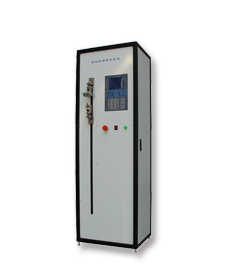
Functions and Applications of Zipper Slippage Tester
The Zipper Slippage Tester is a specialized testing device used to evaluate whether a zipper experiences slippage, loosening, or connection failure during repeated opening/closing cycles or under applied force conditions. It is widely applied in quality control processes across industries such as textile and apparel manufacturing, luggage production, and footwear.
Main Functions
Simulating repeated opening and closing actions:
By setting a defined number of cycles (e.g., 10.000 cycles), the device simulates the fatigue process that zippers undergo during real-life use.
Measuring slippage displacement:
It measures whether the zipper teeth or slider shift during operation, allowing assessment of anti-slippage performance.
Evaluating connection strength:
It tests the bonding strength between the zipper and fabric tape or garment end to ensure secure attachment and prevent detachment during use.
Compliance with international standards:
Testing is typically conducted in accordance with ISO, GB/T, and other relevant standards, ensuring result consistency, traceability, and comparability.
Automatic data recording and reporting:
Most modern equipment is equipped with digital displays and data storage systems, enabling automatic generation of test reports for quality documentation and traceability.
Typical Applications
Factory quality inspection:
Garment manufacturers and zipper producers conduct sampling inspections before mass production to ensure product reliability and consistency.
Research and development validation:
Used during product development to verify the durability and structural performance of new zipper designs.
Brand compliance assurance:
Helps brands reduce the risk of product recalls caused by zipper failure, thereby improving customer trust and brand reputation.
Applicable Industries of Zipper Slippage Tester
The Zipper Slippage Tester is primarily used to evaluate the slippage performance of zippers under applied force conditions. Its application is concentrated in industries where strict requirements are placed on zipper quality and safety, particularly within textile and apparel-related sectors. The main application areas are as follows:
Apparel manufacturing:
Used to test the anti-slippage performance of zippers in garment components such as trouser fly closures, jackets, backpacks, and other clothing products, ensuring overall durability and functional reliability.
Luggage and footwear:
Applied to verify the reliability of zippers used in handbags, suitcases, sports shoes, and similar products under repeated opening/closing operations or load-bearing conditions.
Outdoor equipment:
Used for products such as tents, mountaineering gear, and other outdoor applications where zipper strength, stability, and environmental resistance are critical performance requirements.
Testing institutions and research organizations:
Utilized to perform zipper performance testing in accordance with international and national standards such as ASTM and BS, supporting quality control, product certification, and research validation activities.
Testing Principle of Zipper Slippage Tester
The core testing principle of the Zipper Slippage Tester is to simulate the mechanical loads applied to a zipper slider during real-world usage and quantitatively evaluate its anti-slippage capability and locking performance. Based on high-precision mechanical sensing and automated control technology, the device enables objective measurement of zipper slippage behavior under static or dynamic conditions.
Core Testing Principles
Simulation of real usage scenarios:
The instrument replicates the longitudinal or transverse tensile forces applied to the zipper slider during actual use (such as when wearing sleeping bags, garments, or similar products), thereby reproducing the mechanical environment in which slider slippage may occur.
High-precision sensing and data acquisition:
The system employs high-sensitivity force sensors (with ranges from several Newtons to several hundred Newtons) and displacement sensors to capture, in real time, the critical point at which slippage begins, as well as the force–displacement relationship throughout the slippage process.
Programmable loading modes:
The tester supports multiple test programs, including constant load holding, progressive loading, and cyclic loading, allowing it to meet different testing standards and application requirements.
Automated analysis and report generation:
An integrated computer system automatically calculates key parameters such as initial slippage force, maximum slippage force, slippage displacement, and energy absorption, and generates standardized test reports.
Main Test Items
Static anti-slippage test:
A constant or gradually increasing tensile force is applied to record the initial slippage force of the zipper slider, as well as the force required to reach a specified displacement (e.g., 5 mm or 10 mm). This is used to evaluate locking stability under sustained load conditions.
Dynamic fatigue test:
The zipper slider is subjected to hundreds or even thousands of cyclic tensile movements to simulate repeated opening, closing, or shaking during actual use. After testing, the slider position is checked for deviation and the teeth are inspected for damage to assess long-term durability.
Maximum locking force test:
The applied force is continuously increased until irreversible slippage of the slider or complete system failure occurs. The maximum force value is recorded as the ultimate safety performance indicator.
Slippage displacement measurement:
Under a specified load, the actual displacement of the zipper slider along the zipper tape within a defined time period is measured, in order to evaluate positional stability and resistance to movement.
Operating Procedure of Zipper Slippage Tester
The Zipper Slippage Tester is mainly used to evaluate whether the zipper slider experiences abnormal movement or locking failure during use. Its operation procedure is primarily based on international standards such as ASTM methods related to zipper operability and strength testing.
The following procedure is compiled according to authoritative testing standards:
Sample Preparation
A specified number of zipper samples are randomly selected from batch production (for example, at least 47 samples are required for top stop stickiness testing). The samples must be in an unused or standardized pre-conditioning state, free from obvious wear, stains, or other visible defects.
Equipment Calibration and Setup
A force indicator is used (range: 50 N / 10 lbf, accuracy: 0.5 N / 0.1 lbf, equipped with peak hold function). A hook is used to connect the zipper slider to the force indicator. If necessary, spacing blocks are used to simulate partial insertion of the pin.
Test Types and Procedures
Top/Bottom Stop Point Stickiness Test
(This test evaluates whether the slider abnormally slips at the stop positions)
The zipper is fixed so that the slider is positioned tightly against the top or bottom stop block. A constant tensile force of 18 N is applied, and the slider is slowly pulled. The maximum resistance force (peak force) at the moment the slider detaches from the stop block is recorded, with a measurement accuracy of 0.5 N.
Opening and Closing Slippage Test
Opening test:
The upper end of the zipper is fixed. The slider is positioned 12 mm away from the top stop. The slider is pulled downward at a speed of 125 mm / 3 s, and the maximum operating force is recorded.
Closing test:
The lower end of the zipper is fixed. The slider is pushed upward at the same speed, and the closing force is recorded.
During both processes, observe whether abnormal phenomena occur, such as irregular slippage, jamming, or locking failure.
Separation Device Functionality Test
(This evaluates whether the slider moves properly when the pin is not fully inserted)
The pin is partially positioned using spacing blocks to simulate incomplete insertion. The force required for the slider to pass over the separation device is measured. The acceptance criterion is that the slider must not close when the pin is not fully engaged (within 50 mm of the separation device).
Data Recording and Evaluation
All maximum force values are recorded in Newtons (N) or pounds-force (lbf). The testing standard used must be clearly indicated. Any abnormal phenomena (such as improper closure or tooth deformation) must be reported.
For inter-laboratory comparison, the coefficient of variation should be calculated and documented.
Equipment Maintenance and Environmental Requirements
Testing should be conducted under standard environmental conditions, typically 23±2°C and 50±5% relative humidity (RH). The equipment must be calibrated regularly to ensure force measurement accuracy meets required specifications.
Maintenance Recommendations for Zipper Slippage Tester
The Zipper Slippage Tester is a key piece of equipment used to evaluate the anti-slippage performance of zippers. Proper maintenance and servicing are essential to ensure the accuracy of test data and to extend the service life of the equipment. Based on general maintenance principles for testing instruments and relevant industry experience, the following maintenance recommendations are provided:
1. Standardized Operating Procedures
Strictly follow the operation manual provided by the equipment manufacturer during use. Before testing, ensure that the samples (zipper and fabric) are correctly and evenly installed, and that fixtures are securely and uniformly clamped. Improper installation should be avoided, as it may lead to deviations in test results or abnormal wear of equipment components.
After testing, promptly clean the fixtures and worktable to remove any residual materials such as threads, fabric fibers, or debris, preventing contamination or mechanical interference in subsequent tests.
2. Regular Calibration and Verification
According to equipment specifications and usage frequency, regularly calibrate key measuring components such as the force sensor and displacement measurement system. After each calibration, record the calibration date, results, and the next scheduled calibration plan.
During routine use, the overall accuracy of the equipment can be verified by testing standard samples with known performance values to ensure measurement reliability and consistency.
3. Software and Data Maintenance
Keep the test control software updated to the latest stable version, and promptly install official updates or patches when available. Regularly back up test data, configuration parameters, and calibration records to prevent data loss.
If software malfunction or data transmission issues occur, check system compatibility, software dependencies, and network connections. In addition, system log files should be reviewed to diagnose and troubleshoot potential problems effectively.
Importance of the Zipper Slippage Tester
The Zipper Slippage Tester is a critical piece of equipment in the quality control of textile products such as apparel and luggage. Its importance is reflected in the following key aspects:
1. Ensuring Product Safety and Durability
Zippers are essential fastening components in products such as garments, backpacks, and tents. If slippage or detachment occurs during use, it may lead to safety risks (e.g., unexpected garment opening or equipment detachment). By conducting zipper slippage testing, the stability of the zipper under repeated opening/closing cycles or applied loads can be evaluated, effectively preventing product failure caused by slippage.
2. Compliance with International Quality Standards and Buyer Requirements
Many international brands and buyers impose strict requirements on zipper performance. For example, zipper tensile strength may be required to reach above 90 N; otherwise, entire batches may be rejected. Test results are also an important reference for third-party inspection agencies such as SGS and BV, directly affecting customs clearance and payment settlement in export trade.
3. Reducing After-Sales Risk and Brand Loss
Zipper slippage is a typical “visually and functionally perceptible defect” that can easily trigger customer complaints, returns, or negative reviews. Industry data shows that even a 1% defect rate entering the market may lead to a 4.5% decrease in repurchase rates. Strict pre-shipment testing can significantly reduce return rates, repair costs, and damage to brand reputation caused by zipper-related failures.
4. Supporting Material and Process Optimization
Test data can be fed back into product design and manufacturing processes, helping optimize zipper types (such as metal, plastic, or invisible zippers), tooth structure, tape materials, and stitching processes. This contributes to continuous improvement in product performance and manufacturing quality.
5. Meeting Regulatory and Certification Requirements
In markets such as Europe, the United States, and Japan, textile products must comply with standards such as ASTM, ISO, and GB regarding zipper performance. Zipper slippage testing is therefore an essential part of compliance verification and certification processes.
In summary, the Zipper Slippage Tester is an indispensable device for evaluating zipper durability and reliability. Its application in the textile, apparel, luggage, and quality inspection industries is highly valuable and deserves significant attention and in-depth study.We sincerely welcome inquiries regarding technical parameters, testing standards, operating procedures, or any related questions. Please feel free to leave a message or contact us directly. We are also happy to provide detailed product information, demonstration videos, or customized solutions to help you fully understand the functions and advantages of this equipment.
Previous: FAQs About 6 Station Pilling Tester
N e x t : What is a Surface Flame Spread Test Apparatus?
