





What is a Catheter Sliding Performance Tester?
2026/04/24
Share:

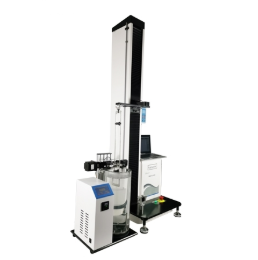
Functions and Applications of Catheter Sliding Performance Tester
The Catheter Sliding Performance Tester is a precision instrument specifically designed to evaluate the sliding performance of medical catheters under simulated physiological conditions. It is widely used in the research and development, manufacturing quality control, and testing and certification processes of medical devices.
Main Functions
Measurement of friction force and coefficient of friction:
The instrument uses high-precision force sensors to collect real-time friction force during catheter movement. The coefficient of friction is calculated using the formula:
\mu = \frac{f}{N}
where μ represents the coefficient of friction, f is the friction force, and N is the normal force.
Simulation of physiological environment:
Temperature control range from room temperature up to 80°C, with an accuracy of ±0.1°C, capable of simulating human body temperature (e.g., 37°C).
Humidity control typically within 40%–60%.
Some systems support immersion in physiological saline to simulate tissue fluid lubrication conditions.
Multi-mode testing capability:
Supports single-pass pull testing, reciprocating friction testing, and cyclic testing modes.
Enables evaluation of static friction force, dynamic friction force, and coating wear resistance (e.g., changes in friction after 25–50 reciprocating cycles for hydrophilic coatings).
Data visualization and analysis:
Automatically generates friction force–displacement curves and friction coefficient–time curves.
Supports multi-batch data comparison for quality consistency evaluation.
Automation and safety control:
Equipped with touchscreen interface and PLC or Windows-based control systems.
Features automatic clamping, automatic return, and safety limit protection functions.
Core Applications
Product quality control:
Ensures that medical products such as urinary catheters, endotracheal tubes, balloon catheters, and guidewires comply with relevant standards such as YY/T specifications.
Research and development optimization:
Used to compare sliding performance of different materials, coatings, or structural designs, providing guidance for product improvement.
Clinical safety evaluation:
Sliding performance directly affects insertion smoothness and patient comfort. Lower friction coefficients help reduce tissue damage risk during clinical use.
Third-party testing and certification:
Provides standardized and internationally compliant test data for medical device inspection institutions and certification bodies.
Applicable Industries of Catheter Sliding Performance Tester
The Catheter Sliding Performance Tester is primarily used in the following industries, where precise evaluation of catheter surface sliding performance is critical for safety, functionality, and regulatory compliance:
Medical Device Manufacturing Industry
This instrument is widely used to evaluate the sliding performance of urinary catheters, endotracheal tubes, balloon catheters, guidewires, and other interventional medical devices. It ensures that products comply with relevant standards such as YY/T and ISO requirements, helping manufacturers maintain consistent product quality and safety performance.
Medical Testing and Research Institutions
The device is extensively applied in third-party testing laboratories, hospital medical engineering departments, as well as university and corporate R&D centers. It is used for analyzing key performance indicators such as friction coefficient, wear resistance, and sliding stability of catheter materials and surface coatings (e.g., hydrophilic coatings), providing scientific data for material evaluation and product optimization.
Clinical Training and Simulation Education
By simulating catheter insertion processes under conditions close to the human body environment, the tester helps medical personnel become familiar with the handling characteristics of different catheter types. This supports improved procedural training, enhances surgical safety, and contributes to better patient comfort and clinical outcomes.
Core Value
The core value of the Catheter Sliding Performance Tester lies in its ability to quantitatively measure the frictional interaction between catheters and contact media. This enables optimization of product design, ensures clinical safety during use, and supports compliance with domestic and international regulatory requirements for medical devices.
Testing Principle of Catheter Sliding Performance Tester
The core testing principle of the Catheter Sliding Performance Tester is to simulate the actual in vivo environment of catheter use and accurately measure the friction force or coefficient of friction generated during movement, thereby evaluating the surface sliding performance of the catheter.
Simulation of Physiological Environment
Catheters are typically immersed in 37°C physiological saline to activate hydrophilic coatings and simulate human body temperature and lubrication conditions. Some devices also allow humidity control (e.g., 40%–60%) to accommodate different types of non-vascular catheters, such as urinary catheters and endotracheal tubes.
Clamping and Motion Mechanism
The catheter is vertically fixed between two clamping fixtures. The surface of the fixtures is usually covered with silicone rubber pads or biomimetic membranes to simulate the inner wall of blood vessels or biological tissue.
A precision torque motor or similar drive system applies a constant normal force (N), while the catheter is driven to move longitudinally at a fixed speed (e.g., 100 mm/min), simulating clinical insertion or withdrawal motion.
Data Acquisition and Calculation
High-precision sensors continuously record the friction force (f) during movement. The coefficient of friction (μ) is calculated using the following formula:
\mu = \frac{f}{2N}
The denominator includes “2” due to the double-sided clamping structure of the test system.
At the same time, the system records friction force–displacement curves and friction coefficient–time curves, which are used to analyze key performance characteristics such as initial peak force (static friction), dynamic friction stability, and coating durability.
Key Evaluation Parameters
Average dynamic friction force:
Represents the smoothness of continuous sliding during movement.
Initial peak force:
Indicates the force required to initiate motion from a static state, directly affecting insertion smoothness in clinical use.
Friction coefficient variation trend:
Through repeated cyclic testing (typically 25–50 cycles), evaluates whether hydrophilic coatings degrade, peel off, or lose performance over time.
Operating Procedure of Catheter Sliding Performance Tester
The operating procedure of the Catheter Sliding Performance Tester is designed to simulate the in vivo environment of catheter use and evaluate its surface friction coefficient and sliding performance. This process follows relevant medical device standards to ensure accuracy and repeatability. The main steps are as follows:
Sample Preconditioning
Conditioning:
Catheter samples (including guidewires, if applicable) are conditioned in a controlled environment, typically at (23 ± 2)°C for at least 24 hours, to ensure stable material properties.
Cutting preparation:
The catheter is cut to a specified test length (e.g., 30 cm) to ensure consistency across tests.
Coating activation:
For hydrophilic-coated intravascular catheters, the sample is immersed in 37°C physiological saline or water for a defined period (e.g., 3 minutes) to activate the coating functionality.
Instrument Preparation and Sample Installation
Fixture installation:
Clamping fixtures covered with silicone rubber pads or biomimetic films are installed on the tester. The fixture position is adjusted to ensure the catheter remains centered during testing.
Sample mounting:
The preconditioned catheter is passed upward through the fixture. The remaining portion is placed into a water-filled cylinder and allowed to hang freely, simulating a humid physiological environment.
Application of clamping force:
The fixture holding one end of the catheter is secured, and a constant normal force (e.g., 3 N) is applied via the instrument settings.
Test Parameter Setup and Execution
Parameter configuration:
The testing program is set via the control software, including:
Test speed: typically 100 mm/min or 200 mm/min
Test mode: upward (pulling) and downward (pushing) friction tests
Cycle count: 25–50 reciprocating cycles for coating durability evaluation
Start testing:
The system is activated to drive the catheter through the fixture at the preset speed. The standard test stroke is generally not less than 150 mm.
Data Acquisition and Result Recording
Real-time monitoring:
High-precision force and displacement sensors record the friction force (f) during catheter movement, generating real-time force–displacement curves.
Key Performance Indicators
Initial peak force:
The maximum force required to initiate movement from a static state.
Average dynamic friction force:
The mean friction force during steady-state movement, including both upward and downward strokes.
Friction coefficient (μ):
Calculated using the formula:
\mu = \frac{f}{2N}
(The denominator includes “2” due to the double-sided clamping structure.)
Coating durability evaluation
Changes in friction force over multiple cycles are analyzed to determine whether the hydrophilic coating is degrading, peeling, or losing performance.
Result Analysis and Reporting
The calculated parameters are compared with product specifications or predefined acceptance thresholds to generate a final test report. This report is used to determine whether the catheter’s sliding performance meets clinical application requirements.
This operating procedure is applicable to a wide range of interventional medical devices, including intravascular catheters, guidewires, and non-vascular catheters, ensuring comprehensive evaluation of sliding performance under simulated physiological conditions.
Maintenance Recommendations for Catheter Sliding Performance Tester
The maintenance recommendations for the Catheter Sliding Performance Tester are designed to ensure long-term operational stability and accuracy of test data. Proper maintenance also helps extend equipment service life and maintain measurement reliability.
Daily Operation and Cleaning Maintenance
The following maintenance tasks should be performed before and after daily testing:
Equipment cleaning:
Use a soft, lint-free cloth to clean the exterior housing, workbench, and fixtures of the equipment. This prevents the accumulation of dust and residual sample materials that may affect test accuracy.
Fixture inspection:
Before each sample change, inspect testing fixtures (such as sliding performance fixtures and tensile fixtures) to ensure they are intact, free from wear, deformation, or contamination. The cleanliness of clamping surfaces (e.g., silicone rubber pads) directly affects test results.
Sensor and transmission system check:
After operation, inspect the screw drive system for foreign objects. Confirm that the automatic return function and limit protection system are operating normally.
Environmental control:
Ensure the equipment operates in a clean, dry, and vibration-free environment. Avoid exposure to extreme temperature or humidity conditions, which may affect system stability.
Regular Calibration and Functional Inspection
It is recommended to establish a monthly or quarterly maintenance schedule:
Sensor calibration:
High-precision force sensors are critical to measurement accuracy. Regular calibration should be performed according to the manufacturer’s manual or in cooperation with the supplier, using standard weights or calibration tools to verify force measurement accuracy.
Speed and displacement verification:
Check whether the set drive speed (e.g., 200 mm/min) matches the actual running speed of the screw drive system, and verify the accuracy of displacement measurement.
Clamping force validation:
Calibrate or verify whether the applied normal force (e.g., 3 N) meets the set value to ensure consistency of testing conditions.
Comprehensive functional testing:
Run the built-in self-check program or perform tests using standard reference samples to verify that all functional modules (such as tensile testing and puncture force testing) are operating correctly and producing accurate outputs.
Regular cleaning, systematic calibration, and functional verification are essential for maintaining the performance of the Catheter Sliding Performance Tester. Proper maintenance ensures reliable test data, stable system operation, and extended equipment lifespan, thereby supporting accurate evaluation of medical device sliding performance.
Importance of Catheter Sliding Performance Tester
The importance of the Catheter Sliding Performance Tester is reflected in multiple aspects, including medical device quality control, clinical safety improvement, and technological innovation in product development. Through high-precision measurement, multi-environment simulation, and intelligent data analysis, the instrument provides a scientific and objective basis for evaluating catheter performance.
Ensuring Medical Device Quality and Regulatory Compliance
The Catheter Sliding Performance Tester is a core tool for quality control in medical device manufacturing enterprises. Its testing process follows relevant industry standards such as YY/T, enabling precise measurement of key performance parameters, including friction coefficient and initial peak force, under simulated physiological conditions.
Equipped with high-precision sensors (measurement accuracy up to class 0.5) and precise environmental control systems (temperature accuracy ±0.1°C, humidity range 40%–60%), the instrument ensures high reliability and repeatability of test results.
This enables manufacturers to perform consistency checks across different production batches, promptly identify process deviations, ensure compliance with regulatory requirements, and enhance market competitiveness.
Improving Clinical Safety and Patient Comfort
The sliding performance of catheters during insertion, withdrawal, or in-body movement directly affects surgical success rates, tissue damage risk, and patient experience. The tester simulates real physiological conditions—such as using 37°C physiological saline to activate hydrophilic coatings and biomimetic materials to simulate tissue interaction—to evaluate catheter performance in actual clinical scenarios.
By providing objective performance data, the instrument helps ensure smoother catheter operation, reduced insertion force, and minimized tissue trauma, thereby improving both procedural safety and patient comfort.
Supporting Product R&D and Material Innovation
The tester provides a critical evaluation platform for the development of new catheter materials, coatings (such as hydrophilic coatings), and structural designs. Its multi-environment simulation capabilities allow researchers to test product performance under varying conditions of temperature, humidity, and lubrication.
Advanced data analysis functions generate curves such as friction force–displacement and friction coefficient–time relationships. Through repeated friction testing, the system can assess coating durability and detect potential coating degradation or detachment.
These results enable researchers to clearly compare different design solutions, optimize product performance, and accelerate the development of safer and more comfortable medical devices.
In summary, the Catheter Sliding Performance Tester plays an essential role throughout the entire lifecycle of medical devices, including research and development, manufacturing, clinical application, and regulatory supervision. By converting subjective operational experience into objective quantitative data, it fundamentally ensures the safety, effectiveness, and reliability of catheter products, making it an indispensable instrument in modern medical quality management systems.We warmly welcome further inquiries and discussions. Please feel free to contact us for more detailed information about this equipment, including technical specifications and application cases.
Previous: What is a Surface Flame Spread Test Apparatus?
N e x t : What is an Air Intake Filter Test System?
