





What is a Cleanable Filter Media Test System?
2026/04/28
Share:

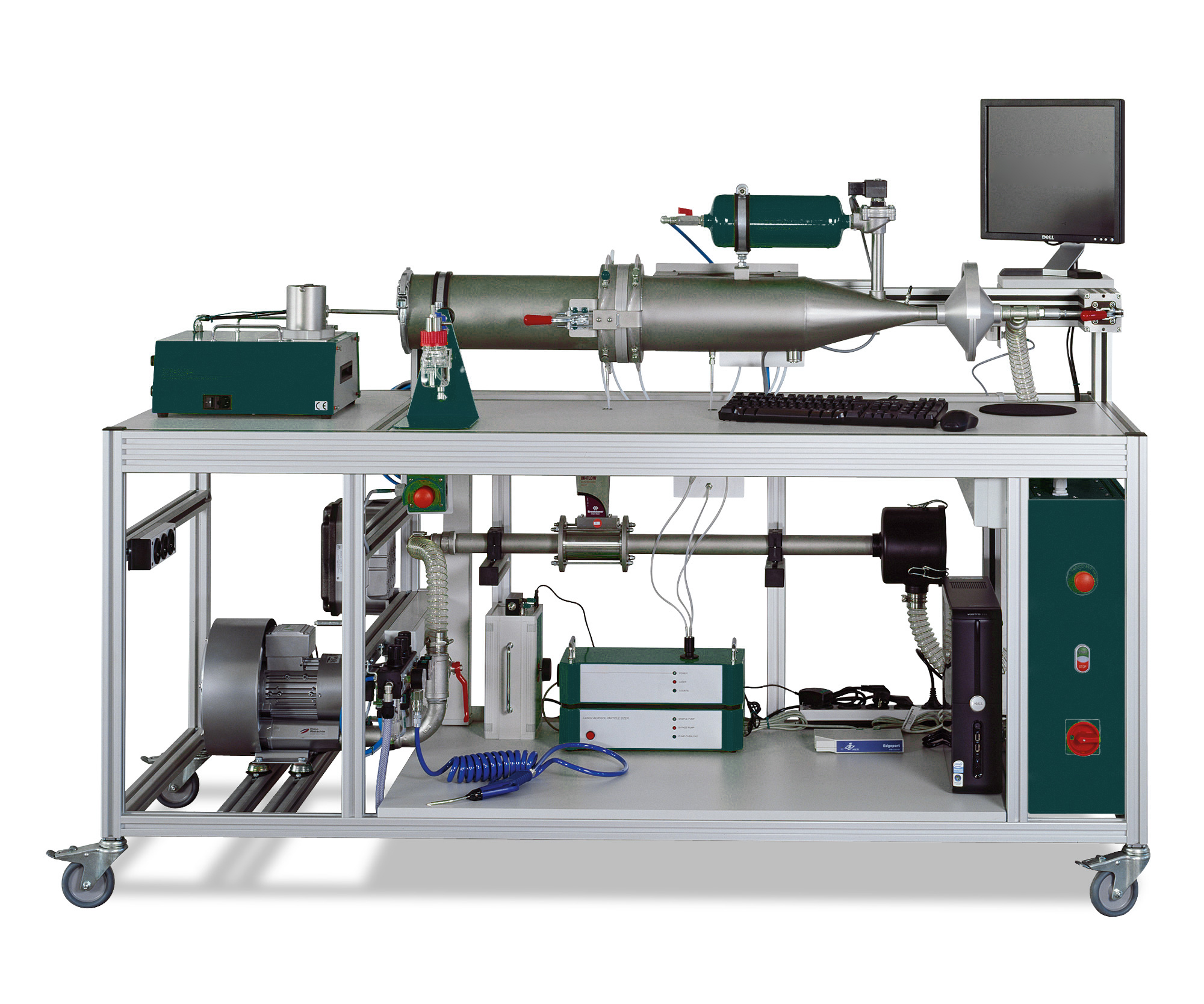
Functions and Applications of the Cleanable Filter Media Test System
The Cleanable Filter Media Test System is a standardized testing device designed to evaluate the filtration performance and cleaning characteristics of cleanable filter media (such as bag, cartridge, or pocket filters) under simulated industrial operating conditions. Its core functions and applications are as follows:
Main Functions
1. Pressure Drop Curve Testing
Measures the variation of differential pressure across the filter media during continuous dust loading, reflecting its resistance characteristics over time.
2. Residual Pressure Drop Determination
After pulse-jet cleaning, measures the residual pressure drop caused by dust that cannot be completely removed, indicating cleaning effectiveness.
3. Fractional and Overall Efficiency Analysis
Uses a laser aerosol particle size spectrometer to determine collection efficiency for particles of different sizes, and combines this with gravimetric methods to calculate overall mass separation efficiency.
4. Dust Penetration Monitoring
Detects peak particle concentrations on the clean air side during pulse cleaning, evaluating the risk of dust re-entrainment during the cleaning process.
5. Dust Loading Capacity Evaluation
Determines the total dust mass the filter can hold before reaching a specified pressure drop, reflecting its dust-holding capacity.
6. Automated Test Sequences
Supports fully automated testing cycles of up to 14 hours in accordance with international standards, minimizing the need for manual intervention.
7. Multi-Standard Compatibility
Compatible with a variety of international standards, including ISO, VDI, ASTM, EN, and DIN.
Typical Applications
1. Filter Media R&D and Optimization
Provides performance data for developing advanced cleanable filter media, such as high-temperature-resistant, hydrophobic, or anti-static materials.
2. Production Quality Control
Ensures consistency and reliability of filter media in mass production.
3. Selection and Comparative Verification
Enables comparison of filter media from different manufacturers or materials under identical operating conditions, supporting engineering selection decisions.
4. Standards Compliance Certification
Generates authoritative test reports in accordance with standards such as ISO and VDI.
5. Specialized Application Scenarios
Widely used in industrial flue gas dust collection (e.g., cement, steel, and power industries), cleanroom HVAC filtration, and automotive air intake filtration systems.
Applicable Industries of the Cleanable Filter Media Test System
The Cleanable Filter Media Test System is a specialized device used to evaluate the performance of cleanable filter media—such as pressure drop, filtration efficiency, and cleaning/regeneration capability—under simulated operating conditions. It is mainly applicable to the following industries:
Industrial Dust Collection and Air Pollution Control
Widely used in industries such as cement, steel, power generation, and chemical processing. It evaluates the performance stability of filter media in baghouse systems under pulse-jet cleaning conditions.
Cleanrooms and Semiconductor Manufacturing
Used to test cleanroom garments, fabrics, and high-efficiency air filter materials for their ability to capture fine particles (≤0.5 μm), ensuring compliance with stringent cleanliness requirements.
Pharmaceutical and Biological Laboratories
Supports critical processes such as sterile filtration and solvent fine filtration, verifying retention efficiency and chemical compatibility of small-scale filters or filter media.
Food and Beverage Processing
Applied in clarification and sterilization filtration of liquid raw materials to ensure compliance with hygiene and safety standards.
Compressed Air Treatment
Evaluates the performance of air filters across different grades (such as Class C, T, and A), ensuring the quality and purity of compressed air systems.
Environmental Protection and Water Treatment
Used in fine filtration applications for wastewater and industrial effluent, assessing the removal efficiency of suspended solids, oil contaminants, and other pollutants.
Research and Standards Development
Supports testing and validation in accordance with international and industry standards such as ISO, VDI, and ASTM, serving material development and quality control purposes.
Overall, these applications rely on the system’s capability to evaluate filter media under controlled conditions—such as regulated temperature and humidity, pressure pulses, and standardized dust loading—ensuring repeatable and reliable performance analysis.
Technical Features of the Cleanable Filter Media Test System
The Cleanable Filter Media Test System is a key instrument for evaluating the performance of cleanable/regenerable filter media, widely used in industrial dust collection and air filtration fields. Based on the latest available information, its core technical features are as follows:
High Level of Automation
The system supports fully automated test procedures of up to 14 hours without manual intervention. It is equipped with dedicated control software (such as PAFWin), enabling automatic operation, manual debugging, data acquisition, and statistical analysis.
Comprehensive Multi-Parameter Evaluation
It can measure a wide range of critical performance indicators, including:
Pressure drop curve (ΔP)
Residual pressure drop curve
Fractional efficiency
Gravimetric separation efficiency
Dust penetration rate
Dust loading capacity of filter media
Flexible Aerosol Compatibility
The system supports various types of aerosols, including solid particles (e.g., Pural NF) and liquid aerosols (e.g., DEHS). It is equipped with a laser aerosol particle size spectrometer (such as LAP 322), capable of accurately measuring particle size distribution within the range of 0.2–40 μm.
Pulse-Jet Cleaning Simulation
An integrated pulse-jet cleaning unit simulates real operating cleaning conditions:
Pulse duration: typically 50–200 ms (or 50–150 ms for some models)
Nozzle diameter: 3 mm
Pressure tank range: 2–6 bar
Modular and Expandable Design
The test channel structure allows for quick replacement of filter media samples. The system also includes reserved interfaces for future upgrades or customized testing requirements.
High-Precision Weighing System
The test filter media and backup filters are weighed using balances with accuracies of 0.01 g and 0.01 mg, respectively, ensuring precise efficiency calculations based on the mass balance method.
Wide Range of Applications
Suitable not only for industrial filter media such as bag filters, cartridge filters, and pleated filters, but also for HVAC filters, automotive air intake filters, and related products in both R&D and quality control applications.
Operating Procedure of the Cleanable Filter Media Test System
The core objective of a Cleanable Filter Media Test System is to verify whether a filter can effectively remove target contaminants while maintaining stable performance over time. The following outlines the general operating procedures, applicable to water filters, air filters, and certain industrial filtration systems.
1. Preparation Stage
Clean the Workspace
Ensure the test area is clean and free from dust to prevent contamination of the test media.
Prepare Test Materials
Filter samples: Ensure samples are intact and prepare sufficient quantities as required
Test fluid or gas: Select appropriate media based on application (e.g., water for liquid filtration, air for gas filtration)
Standard substances: If necessary, prepare substances with known concentrations for calibration and validation
2. Filter Installation
Install the Filter
Properly install the filter into the test system. Ensure all components are tightly connected without leakage. Check all seals and connection points to maintain system integrity.
3. Testing Procedure
Initial Testing
Flow rate test: Verify that the filter operates within its designed flow range
Initial resistance test: Measure the pressure difference between the inlet and outlet to determine initial resistance
Contaminant Loading Test
Introduce contaminants: Add target contaminants based on the application scenario
Time monitoring: Observe system performance over a defined period (e.g., hours or days)
Performance Evaluation
Pressure drop measurement: Regularly measure differential pressure across the filter to track resistance changes
Contaminant removal efficiency: Compare inlet and outlet concentrations using instruments such as photometers or gas analyzers
4. Data Recording and Analysis
Data Recording
Record key parameters such as time, temperature, pressure drop, and flow rate
Capture photos or videos if necessary to document physical or structural changes
Data Analysis
Trend analysis: Evaluate performance trends (e.g., increasing resistance, decreasing efficiency)
Benchmark comparison: Compare results with initial performance and relevant standards to assess long-term behavior
5. Cleaning and Maintenance
Filter Cleaning
Clean or replace the filter as needed to restore performance. Use appropriate cleaning methods and agents to avoid damaging the filter media.
System Check
After cleaning, repeat flow rate and resistance tests to confirm the system has returned to normal operation.
6. Reporting
Prepare a detailed test report including:
Test objectives
Methods and procedures
Results and recorded data
Data analysis and conclusions
Recommended improvements
By following these steps, the performance of cleanable filter media can be effectively evaluated to ensure stable and reliable operation. Since different applications and filter types may require specific adjustments, always refer to the manufacturer’s guidelines to optimize the testing process.
Importance of the Cleanable Filter Media Test System
The importance of the Cleanable Filter Media Test System lies in its role as an indispensable scientific and quantitative tool for standardized performance evaluation, R&D optimization, and quality control of filter media. Its key significance is reflected in the following aspects:
1. Standardized Performance Evaluation and Comparison
This system conducts tests in accordance with international standards, generating a series of critical performance parameters that provide a unified basis for comparing different filter media.
Core Performance Parameters: The system accurately measures pressure drop curves, residual pressure drop curves, fractional efficiency, gravimetric separation efficiency, dust penetration rate, and dust loading capacity. These parameters serve as quantitative indicators for comprehensive evaluation of filtration performance and cleaning capability.
Standardized Procedures: By following standardized processes such as cyclic dust loading and pulse-jet cleaning, the system ensures repeatability and traceability of test results, enabling comparability across different laboratories and production batches.
2. Supporting Filter Media R&D and Performance Optimization
The system is a core tool for filter media development and iterative improvement, enabling in-depth analysis of filter behavior under simulated real-world conditions.
Characterizing “Aging” or Conditioning Behavior: During repeated dust loading and cleaning cycles, residual pressure drop may change—this “conditioning” behavior directly impacts long-term performance. Through extensive cleaning cycles (including accelerated testing with tens of thousands of pulses), the system provides critical data for optimizing filter design.
Evaluating Performance Degradation: Specialized test methods assess degradation caused by thermal or chemical factors. The system can simulate such conditions, supporting durability research and development.
3. Ensuring Quality Control in Production
The system plays a crucial role in maintaining quality consistency during filter media manufacturing.
Batch Consistency Verification: Standardized testing of production samples ensures that filter media meet design specifications and quality standards, enabling effective quality monitoring.
Customizable Testing Procedures: The system allows configuration of customized test workflows based on internal enterprise standards, meeting specific product quality control requirements.
4. Simulating Real Operating Conditions and Predicting Performance
Advanced systems can replicate complex operating environments, allowing more accurate prediction of real-world performance.
Simulation of Diverse Conditions: The system supports various aerosols (solid and liquid), testing performance under different flow rates, dust types, and cleaning pressures.
Evaluation under Extreme Conditions: For example, it can assess cleaning performance and residual pressure drop under high-temperature conditions, providing a basis for filter selection in applications such as high-temperature flue gas filtration.
5. Driving Standardization and Industry Development
The application of cleanable filter media test systems, along with adherence to testing standards, promotes the standardization of testing methods and advances technological progress within the filtration industry.
In summary, the Cleanable Filter Media Test System serves as a critical bridge connecting filter media R&D, manufacturing, and practical application by providing standardized, quantifiable, and repeatable testing methods. It not only ensures the quality and reliability of filter products but also provides a solid experimental foundation and data support for the continuous advancement of filtration technology.We sincerely welcome any inquiries regarding technical specifications, testing standards, operating procedures, or related questions. We also invite you to leave a message or contact us directly so that we can provide more detailed product information, demonstration videos, or customized solutions tailored to your specific needs.
Previous: What is a Fire-Resistant Cable Burning Test Apparatus?
N e x t : What is the Blanket Flammability Test Machine?
