





FAQs About Heat Extension Tester
2026/05/06
Share:

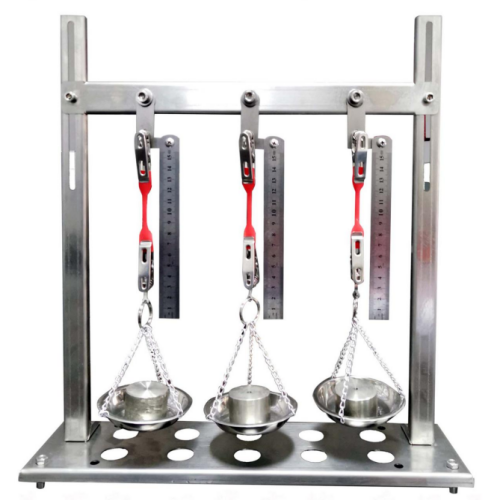
What are the functions and applications of a Heat Extension Tester?
The Heat Extension Tester is a key instrument specifically used to evaluate the thermoplastic deformation behavior of polymer materials—especially wire and cable insulation and sheathing materials—under high temperature and constant load conditions. Its functions and applications are as follows:
Core Functions
Heat elongation measurement:
Measures the elongation of materials under a specified temperature (typically 200°C) and constant load (such as 10 N/cm²), reflecting the material’s ductility.
Permanent deformation measurement:
Evaluates the elastic recovery performance of materials after unloading and cooling, determining their resistance to permanent deformation.
Stress relaxation test (advanced models):
Analyzes the variation trend of heat elongation performance over time at elevated temperatures.
Multi-sample simultaneous testing:
Some models support 3–6 stations, significantly improving testing efficiency.
Automated control:
Equipped with a high-precision temperature control system (±1°C), automatic loading device, displacement sensors, and an intelligent control system, enabling one-click parameter setting, automatic data storage, and export.
Safety protection mechanisms:
Includes over-temperature alarms, overload protection, and other safety features to ensure the safety of both equipment and operators.
Main Applications
Quality control:
Used by manufacturers of wires and cables, rubber, and thermoplastics to inspect raw materials and finished products, ensuring compliance with standards such as GB/T, IEC, and UL.
Crosslinking degree evaluation:
Indirectly determines the crosslinking degree of polymer materials (e.g., XLPE, PVC) through heat elongation and permanent deformation values. Insufficient crosslinking can lead to deformation at high temperatures.
R&D and process optimization:
Provides data support for new material formulation development and process improvement, helping enhance heat resistance and mechanical stability.
Third-party testing and certification:
Utilized by authoritative testing organizations (e.g., national inspection institutes) to issue credible thermal performance test reports.
Education and research:
Applied in university laboratories (such as cable engineering departments) for experimental teaching and research on material performance.
Which industries are Heat Extension Testers suitable for?
A Heat Extension Tester is typically used to measure the dimensional changes of materials when exposed to heat, with a particular focus on thermal expansion or shrinkage behavior. This type of equipment is widely applied across the following industries:
Packaging Industry
Used to test the thermal stability and shrinkage performance of plastic films, heat-shrink films, and label films, ensuring reliable sealing during transportation and storage.
Food and Pharmaceutical Industry
Evaluates the heat-sealing quality of blister packaging, food bags, and similar products, helping optimize heat-sealing process parameters to ensure product safety and shelf life.
Electronics and Electrical Industry
Tests the dimensional stability and thermal performance of insulation materials, wires and cables, and battery encapsulation materials under high-temperature conditions.
Automotive Manufacturing
Applied to thermal deformation testing of interior plastic components, composite materials, and rubber seals, ensuring functionality and safety in high-temperature environments.
Aerospace and Advanced Manufacturing
Used for analyzing the thermal expansion behavior of high-temperature-resistant materials, prepregs, and laminated composites under extreme temperature conditions.
Textile and Fiber Industry
Assesses dimensional changes of synthetic fibers, heat-shrink yarns, and coated fabrics when exposed to heat.
New Energy Sector
Applied in testing the heat-sealing performance and thermal stability of battery pouch materials, ensuring battery safety and durability.
Building Materials and Refractory Industry
Studies the expansion characteristics of ceramics, concrete, and coatings under temperature variations for quality control and research purposes.
All these applications rely on the Heat Extension Tester’s ability to accurately quantify material dimensional changes under controlled temperature conditions, providing critical data support for process optimization, quality control, and product development.
What are the technical features of a Heat Extension Tester?
The Heat Extension Tester is a key instrument used to evaluate the deformation behavior of wire and cable insulation and sheathing materials under high temperature and constant load. Its technical features mainly focus on precision, compliance, automation, stability, and scalability.
Core Technical Features
High-precision temperature control system
Equipped with temperature control accuracy of ±1°C or better, ensuring a stable test environment and compliance with standard requirements (such as 200°C ±3°C), meeting strict specifications from standards like GB/T and IEC.
High-accuracy force and displacement measurement
Incorporates high-precision load sensors and displacement measurement devices to accurately control tension (e.g., 10 N/cm² or 20 N/cm²) and record elongation changes, ensuring excellent data repeatability and accuracy.
Automation and intelligent operation
Supports one-click setting of parameters such as temperature, load, and time. The system automatically performs heating, temperature holding, timing, loading, and data recording. Advanced models feature touchscreens, USB data export, and network connectivity for integration with laboratory management systems.
Stable structure and safety protection
Designed with an independent chamber to minimize external interference. Specimen clamping is firm to prevent slipping or uneven force distribution. Built-in safety features include over-temperature alarms and overload protection to ensure operator and equipment safety.
Multi-station capability and strong scalability
Configurable with 3–6 specimen positions for batch testing. Some models are compatible with various sample specifications (thickness, diameter), meeting the needs of specialized cable research and development.
Application of non-contact measurement technology
Advanced systems may use laser displacement sensors or video extensometers to achieve non-contact, high-resolution deformation measurement (up to 0.01 mm), improving accuracy while avoiding interference with the specimen.
What is the operating procedure of a Heat Extension Tester?
The Heat Extension Tester is used to evaluate the plastic deformation performance of cable insulation materials (such as cross-linked polyethylene, XLPE) under high temperature and load conditions. Its operation must strictly comply with national standards such as GB/T.
1. Pre-Test Preparation
Equipment calibration:
Ensure that the heat extension test frame, aging oven (temperature control accuracy ±2°C), ruler (minimum scale 1 mm), thickness gauge, and other equipment are within valid calibration status.
Specimen preparation:
Cut dumbbell-shaped specimens from the cable insulation layer (large type gauge length: 20 mm; small type: 10 mm). The specimen thickness should be 0.8–2.0 mm; if not achievable, a minimum of 0.6 mm is acceptable. Prepare at least three valid specimens per sample to ensure representativeness.
Load calculation:
Load (including lower clamp) = cross-sectional area of specimen × 20.4 g/mm² (equivalent to 0.20 N/mm²).
Preheating the aging oven:
Set the temperature to 200°C (for XLPE) and preheat for at least 30 minutes to ensure temperature uniformity.
2. Test Procedure
Specimen installation:
Clamp the dumbbell specimen between the upper and lower grips, and apply the calculated weight to the lower clamp.
Placement into the aging oven:
Quickly suspend the specimen inside the oven near the thermocouple and close the door promptly to minimize heat loss.
Constant temperature loading:
Once the oven temperature recovers to 200°C (preferably within 5 minutes), start timing. Maintain for 15 minutes:
The first 10 minutes are used to measure elongation under load
The last 5 minutes are for measuring permanent deformation after load removal
Measurement of elongation:
Measure the distance between gauge marks through the observation window (or within 30 seconds after opening the door).
Elongation under load = (measured length − 20) / 20 × 100%
Load removal and cooling:
Cut the specimen at the lower clamp to remove the weight. Keep the specimen in the oven for an additional 5 minutes (to recover to 200°C), then remove and allow it to cool naturally to room temperature.
Measurement of permanent deformation:
After cooling, measure the distance between gauge marks again.
Permanent elongation = (length after cooling − 20) / 20 × 100%
3. Acceptance Criteria
Elongation under load ≤ 175% and permanent elongation after cooling ≤ 15%.
Both conditions must be satisfied for the result to be considered qualified.
4. Precautions
Safety protection:
Wear heat-resistant gloves when operating the high-temperature aging oven.
Environmental control:
Avoid frequent opening and closing of the oven door during the test to prevent temperature fluctuations.
Data recording:
Record all relevant data, including specimen ID, temperature, time, and elongation values, to ensure traceability.
Why is the Heat Extension Tester so important?
The Heat Extension Tester is critically important because it plays an irreplaceable role in evaluating the heat resistance, crosslinking degree, and mechanical stability of polymer materials—especially wire and cable insulation and sheathing materials. Its importance is reflected in the following aspects:
Core Roles and Importance
Evaluation of crosslinking quality
For materials such as cross-linked polyethylene (XLPE), the heat extension test directly indicates whether the degree of crosslinking meets requirements. Insufficient crosslinking can cause materials to soften, deform, or even melt at high temperatures, leading to insulation failure, short circuits, and other safety hazards.
Simulation of real service conditions
By testing elongation and permanent deformation under high temperatures (typically 200°C or 250°C) and specified loads, the instrument simulates the thermal aging and mechanical stress conditions that cables experience during actual operation.
Ensuring public safety
Cables are widely used in critical sectors such as construction, power systems, and rail transportation. If the heat extension performance of insulation materials is inadequate, it can easily lead to fires, electrical leakage, and other serious accidents.
Compliance with standards and trade requirements
This test is a mandatory requirement under national standards such as GB/T and is also essential for exported products to meet international standards like EN and UL.
In summary, the Heat Extension Tester serves as a crucial “gatekeeper” in quality control systems and is also a core tool for advancing material technology and ensuring the safe and stable operation of power systems. Through precise testing and analysis, it provides a scientific basis for evaluating and optimizing material performance, playing an indispensable role in improving product quality and driving technological innovation.We sincerely welcome your inquiries and invite you to contact us or leave a message for more detailed product information and professional support.
Previous: What is a Shoe Peeling Strength Tester?
N e x t : What is a Fabric Downproof Tester (Rolling Box)?
