





What does it mean to be a crash test dummy?
2026/05/07
Share:

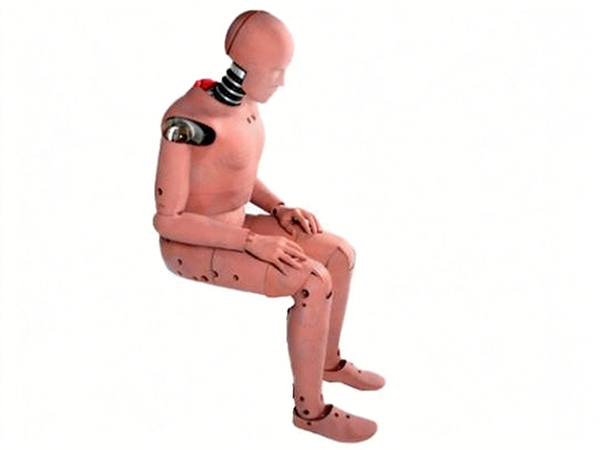
What Are the Functions of a Crash Test Dummy?
A Crash Test Dummy is a highly realistic engineering device primarily used in automotive safety testing. Its core function is to simulate the human body's response during vehicle collisions and provide critical data for vehicle safety design and optimization. Its main functions include the following:
1. Recording Collision Mechanics Data
Crash test dummies are equipped with a large number of built-in sensors, such as accelerometers, load cells, and potentiometers. These sensors can accurately measure the forces, acceleration, displacement, and impact responses experienced by key body parts including the head, neck, chest, abdomen, and limbs during a collision.
2. Evaluating the Effectiveness of Safety Systems
By simulating occupant movement trajectories and body loads during crashes, crash test dummies help engineers optimize the design and performance of passive safety systems such as:
Seat belts
Airbags
Head restraints
Dashboard and interior structures
Vehicle body structures
This ensures better occupant protection in real-world accidents.
3. Supporting Regulatory and Certification Testing
Major global automotive safety assessment programs and regulatory organizations, such as C-NCAP, Insurance Institute for Highway Safety (IIHS), and Euro NCAP, all use standardized crash test dummies to conduct vehicle safety evaluations and safety rating tests.
4. Reflecting Collision Risks for Different Population Groups
Traditional crash test dummies were primarily designed based on average male body characteristics, such as the Hybrid III Crash Test Dummy. However, newer-generation dummies are specifically developed to simulate female anatomical characteristics, including differences in the pelvis, neck structure, and clavicle shape, enabling more accurate assessment of the higher injury risks women may face in vehicle accidents.
5. Promoting the Development of Vehicle Safety Technologies
Advancements in crash test dummy technology have directly contributed to the evolution of both active and passive vehicle safety systems, including:
Airbag deployment algorithms
Seat belt pretensioners
Automatic emergency braking systems
Occupant detection systems
Intelligent restraint technologies
These innovations continuously improve overall vehicle safety performance and occupant protection.
What industries are suitable for using the Crash Test Dummy?
Crash Test Dummies are widely used in multiple industries that require the analysis of human biomechanical responses under impact conditions. Their main application fields include the following:
1. Automotive Industry
The automotive industry is the primary application field for crash test dummies. They are used to evaluate vehicle crash safety performance and optimize passive safety systems such as:
Seat belts
Airbags
Vehicle body structures
Head restraints
Interior safety components
Crash test dummies provide critical data for improving occupant protection and enhancing vehicle safety ratings.
2. Aerospace Industry
Crash test dummies were originally developed by the United States Air Force to study occupant protection during aircraft crashes and high-impact scenarios involving airplanes, spacecraft, and rockets. They are still widely used in aerospace safety research and crew protection analysis.
3. Military and Defense Industry
In military applications, crash test dummies are used to simulate human biomechanical responses in scenarios such as:
Explosions
Ejection seat testing
Armored vehicle collisions
Blast impact studies
Protective equipment evaluation
These tests help improve personnel survival and protection systems.
4. Sports Rehabilitation and Ergonomics
By analyzing impact and movement data, crash test dummies assist in the development of:
Protective sports equipment
Rehabilitation devices
Ergonomic seating systems
Human-centered product designs
This contributes to injury prevention and improved user comfort.
5. Forensic Science and Accident Reconstruction
Crash test dummies are used in traffic accident investigations and forensic studies to analyze possible injury mechanisms experienced by occupants in real-world collisions. They help researchers and investigators reconstruct accident scenarios with greater accuracy.
6. Scientific Research and Standards Development
Crash test dummies provide important technical support for the development of vehicle safety regulations and testing procedures worldwide, including standards such as:
Federal Motor Vehicle Safety Standards (FMVSS)
United Nations Economic Commission for Europe (ECE Regulations)
Their high-precision simulation capability of human biomechanical behavior under impact conditions makes them essential tools for safety research, regulatory development, and engineering validation across multiple industries.
What are the technical features of the Crash Test Dummy?
Crash test dummies are core instruments in automotive safety testing. Their technical characteristics focus on high biofidelity, precise sensing systems, and standardized calibration, as detailed below:
Core Technical Features
1. High Biofidelity (Biological Simulation Accuracy)
Crash test dummies are designed to closely replicate human geometry, mass distribution, and biomechanical response.
The thorax typically uses high-strength steel ribs combined with polymer damping materials to simulate chest deformation during impact.
The “skin” is made of silicone or rubber materials.
Internal skeletal structures include aluminum shoulder blades, steel sternum, and plastic pelvis components.
These materials and structures collectively reproduce the stiffness, flexibility, and mechanical response of the human body.
2. Multi-Channel Sensor System
Crash test dummies are equipped with a large number of embedded sensors to capture real-time crash data.
Each dummy may include approximately 60 sensors, such as accelerometers, six-axis force/torque sensors, and displacement transducers.
Up to 288 measurement channels can be used for detailed data acquisition from areas such as the face, neck, and spine.
Side-impact dummies may integrate around 144 sensors, enabling measurement of 3D rib displacement and pubic load data.
These sensors allow highly detailed biomechanical analysis during crash events.
3. Modular Structure and Calibratability
Crash test dummies are designed with a modular architecture, making maintenance, replacement, and configuration easier.
Each component must undergo strict calibration to ensure consistent mechanical response.
For example:
Ribs are validated using a 7.78 kg aluminum mass drop test to measure displacement.
The abdomen is tested using a 4.0 m/s impact pendulum to simulate seated impact conditions.
This ensures repeatability and accuracy across different test setups.
4. Efficient Data Acquisition and Transmission
Modern crash test dummies integrate advanced data transmission systems to improve testing efficiency.
Internal thoracic Ethernet-based wiring systems allow one-click data export.
This eliminates the complexity of traditional wiring harnesses.
It significantly improves data collection speed, accuracy, and overall test workflow efficiency.
Overall, crash test dummies combine advanced biomechanics, high-density sensor networks, modular engineering, and modern data systems to accurately simulate human injury responses in vehicle collisions, making them indispensable tools in automotive safety development.
Why Are Crash Test Dummies More Expensive Than Cars?
Crash test dummies used in vehicle safety testing are extremely expensive, in some cases even costing more than a car itself. This is due to several key reasons:
1. Extremely Complex Engineering and Manufacturing
Although crash test dummies are made from materials such as aluminum, steel, copper, plastics, polyurethane, and vinyl, the real complexity lies in how these materials are engineered and combined.
They are designed to replicate the structure and response of the human body, including:
Skeletal structure (bones)
Internal organs
Muscle-like mechanical response systems
This is achieved through a highly advanced concept known as material bioequivalence engineering, which ensures that the dummy behaves mechanically like a real human under impact.
As a result, a crash test dummy is not just a model—it is a precision biomechanical measurement system.
2. Extremely Long Research and Development Cycle
The development of a full crash test dummy system typically takes 20 years or more.
The process includes:
Medical anatomy and cadaver research
Collection of human biomechanical response data
Continuous prototype testing and refinement
Validation under multiple crash scenarios
This long-term development significantly increases overall cost.
3. Very Low Production Volume
Crash test dummies are produced in extremely small quantities.
Global annual demand is only around 300 units
They are mainly used in automotive safety testing, aerospace, medical research, and radiation testing
The global market size is approximately 70 million USD
A major manufacturer such as Humanetics Innovative Solutions (historically a dominant supplier) accounts for a large share of the global market
Because demand is so limited, manufacturers do not invest in large-scale automated production lines. Many components are still produced and assembled manually, which further increases cost.
4. High Precision and Long Service Life
Despite low production volume, crash test dummies are reusable and highly durable:
Individual components can be replaced or recalibrated
Designed service life can reach up to 30 years
Each unit must maintain strict calibration accuracy throughout its lifecycle
This long-term usability justifies the high initial investment cost.
5. Global Standardization and Safety Requirements
Crash test dummies are required for regulatory compliance in automotive safety testing worldwide. They are essential for evaluation programs such as:
National Highway Traffic Safety Administration (NHTSA testing systems)
Euro NCAP
C-NCAP
Because of strict international standards, every dummy must meet extremely precise biomechanical and calibration requirements.
Crash test dummies are expensive not because of raw materials, but because they combine:
Advanced biomechanical engineering
Long-term scientific research
Extremely low production volume
High-precision sensor systems
Strict global safety certification requirements
In essence, they are not simple models—they are highly specialized scientific instruments used to protect human life.
Why Are Crash Test Dummies So Important?
Crash test dummies are essential because they serve as the core tools for evaluating vehicle safety performance and protecting human life. Their importance can be understood from several key perspectives:
1. Replacing Humans in High-Risk Testing (Ethics & Safety)
Early automotive safety research relied on cadavers, animals, and even human volunteers for crash experiments, which raised serious ethical concerns and produced limited, inconsistent data.
Crash test dummies provide a standardized and repeatable testing platform, eliminating the need for live subjects. They form the ethical foundation of modern vehicle safety development by ensuring no living beings are harmed during testing.
2. Providing Precise, Quantifiable Injury Data
Crash test dummies are equipped with a wide range of sensors, including accelerometers, force sensors, and displacement transducers. These allow real-time measurement of:
Head impact forces
Chest compression
Neck loading
Limb acceleration and movement
This data is used to calculate injury criteria such as the Head Injury Criterion (HIC) and chest deflection values, which directly guide the optimization of:
Seat belts
Airbags
Vehicle body structures
Interior safety designs
3. Driving Global Automotive Safety Standards
Since the introduction of the Hybrid series dummies in the 1970s by General Motors, crash test dummies have become the foundation of global vehicle safety regulations.
They are widely used in certification systems such as:
National Highway Traffic Safety Administration (NHTSA)
Euro NCAP
C-NCAP
These organizations rely on dummy data to assess and rate vehicle safety performance.
4. Reducing Gender Bias and Improving Female Protection
For many years, crash test dummies were primarily based on male body structures, which led to insufficient protection for women in crashes.
Studies have shown that women may face significantly higher injury risks in frontal collisions. New-generation female dummies now incorporate:
Pelvic geometry differences
Neck stiffness variations
Body mass distribution differences
This improves the fairness and accuracy of vehicle safety design.
5. Supporting Child and Special Population Safety Research
Child dummies (such as the Q-series: Q3. Q6. Q10) simulate the biomechanical characteristics of children at different ages. They are critical for:
Child safety seat design
Rear-seat protection systems
Injury prevention research
They are also used alongside virtual models to study low-speed rear-end collisions and whiplash injuries, particularly in vulnerable populations.
6. Enabling the Development of Active and Passive Safety Systems
Crash test dummy data supports not only passive safety systems but also modern active safety technologies, such as:
Airbag deployment timing optimization
Seatbelt pretensioner systems
Automatic Emergency Braking (AEB) validation
Pre-collision sensing systems
For electric vehicles, dummy testing also verifies:
High-voltage system shutdown safety
Battery pack structural integrity during crashes
Crash test dummies are far more than substitutes for humans—they are critical engineering tools that transform safety concepts into measurable data. They enable continuous improvement in vehicle safety technologies and have played a major role in significantly reducing traffic-related injuries and fatalities worldwide.By turning human injury risk into quantifiable engineering parameters, crash test dummies remain one of the most important innovations in automotive safety development.
Previous: What is a Fabric Downproof Tester (Rolling Box)?
N e x t : What is the flooring radiant panel test?
