





What is a Fabric Downproof Tester (Rolling Box)?
2026/05/07
Share:

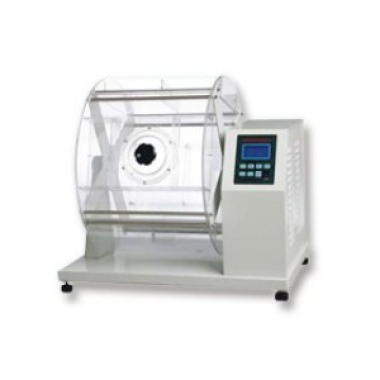
Functions and Applications of the Fabric Downproof Tester (Tumbling Box Method)
The Fabric Downproof Tester is a professional testing instrument used to evaluate the downproof performance of fabrics for down-filled products. It is widely applied in the quality control process of down jackets, down quilts, and other padded textile products.
Main Functions
Simulation of Actual Usage Conditions
Through the impact and rubbing action of rubber balls inside the testing box on the specimen, the instrument simulates the friction, compression, and other external forces that down products experience during wearing or use.
Intelligent Control and Display
The tester supports rotation count settings from 1 to 9999 cycles. It automatically stops and sounds an alarm once the preset value is reached. An LED digital display screen is equipped to show the current rotation count in real time.
Safe and Visible Design
The instrument adopts a transparent polymethyl methacrylate (PMMA) safety cover, allowing operators to observe the entire testing process conveniently and safely.
Compliance with National Standards
The testing process is strictly conducted in accordance with GB/T standards for “Textiles — Testing Method for Downproof Properties — Tumbling Box Method.”
Core Applications
Evaluation of Fabric Downproof Performance
The down-filled specimen is placed into the testing chamber and rotated for a specified number of cycles. The number of protruding down fibers or feathers is then counted to determine the fabric’s downproof rating.
Quality Control and R&D Support
The tester assists down product manufacturers and quality inspection institutions in conducting consistency inspections on raw materials and finished products, while also providing reliable data support for product performance optimization.
Meeting Market Access Requirements
The equipment can fulfill mandatory or recommended testing requirements for down garments, bedding products, and other related products in both domestic and international markets.
Applicable Industries of the Fabric Downproof Tester (Rolling Box Method)
The Fabric Downproof Tester is mainly used to evaluate a fabric’s ability to resist the penetration of down or feathers under simulated usage conditions. Its applications are highly concentrated in the manufacturing and quality inspection fields of down products and related textiles.
The core application industries and scenarios of this equipment include:
Manufacturers of Down-Filled Products
Enterprises producing down jackets, down quilts, down pillows, and other padded products use this tester to evaluate fabric downproof performance and ensure product quality meets relevant standards.
Textile Fabric Manufacturers
Especially manufacturers of high-density downproof fabrics, which require this test to verify and validate the performance of their materials.
Third-Party Testing Institutions and Quality Supervision Authorities
These organizations conduct product compliance inspections based on GB/T and other national standards using the instrument.
Research Institutes and University Laboratories
The tester is widely used for textile material performance research, experimental analysis, and educational laboratory applications.
The equipment performs testing in accordance with GB/T and related standards. During the test, rubber balls inside the rotating chamber apply repeated impact and friction to the specimen, simulating compression, rubbing, and other actions encountered in actual use, thereby quantitatively evaluating the fabric’s downproof performance grade.
Technical Features of the Fabric Downproof Tester (Rolling Box Method)
Core Technical Features
Rotating Mechanism
The instrument adopts a rotating chamber with alternating forward and reverse rotation at a speed of 45 r/min, simulating the compression, friction, and collision conditions experienced by down products during actual use.
Simulation of Real Testing Conditions
Ten butyl rubber balls (hardness: 45 ± 10; weight: 140 ± 5 g each) are placed inside the chamber. During operation, the rubber balls repeatedly fall and impact the specimen, realistically reproducing the mechanical actions encountered during normal wearing and use.
Intelligent Control System
The tester supports programmable rotation settings from 1 to 9999 cycles and is equipped with an LED digital display, automatic stop function, and alarm system, ensuring testing accuracy and repeatability of results.
Structural Materials
The entire machine is manufactured from 316 stainless steel, offering excellent corrosion resistance and structural durability. The rotating chamber is made of transparent acrylic (polymethyl methacrylate, PMMA), allowing operators to clearly observe the testing process.
Safety and Operational Design
The equipment is fitted with a transparent polyacrylonitrile safety cover to ensure safe operation. It complies with domestic standards such as GB/T 12705. and some models are additionally certified to CE and ISO9001:2000 standards.
Testing Principle3
The specimen bag filled with down is placed into the rotating chamber. After the tester starts operating, the rubber balls continuously impact the specimen during rotation. Upon completion of the test, the number of down fibers or feathers protruding through the fabric is counted to evaluate the fabric’s downproof performance.
Operating Procedure of the Fabric Downproof Tester (Rolling Box Method)
The operating method of the Fabric Downproof Tester is mainly established according to its working principle and relevant testing standards.
Operating Steps
1. Specimen Preparation
Cut the fabric specimen into the required dimensions (usually circular or square) and sew it into a small bag shape. Fill the bag with a specified mass of down or feathers (such as 10 g), ensuring that the filling is evenly distributed.
2. Instrument Setup
Place 10 hard rubber balls into the rolling chamber (material: butyl rubber; hardness: 45 ± 10; weight: 140 ± 5 g each).
Put the specimen bag filled with down into the rolling chamber.
Close the transparent polymethyl methacrylate (PMMA) safety cover securely to ensure proper sealing.
3. Parameter Setting
Set the required number of rotation cycles (commonly 500 cycles, 1000 cycles, or 1000 cycles according to GB/T 12705 and other standard requirements).
Confirm that the rotation speed is 45 r/min and that the equipment operates with alternating forward and reverse rotation.
Start the instrument to begin counting the rotation cycles.
4. Test Operation
The equipment automatically stops and issues an alarm after reaching the preset number of cycles.
During the test, the rubber balls repeatedly fall from a certain height and impact the specimen, simulating the compression, friction, and collision experienced by down products during actual use.
5. Result Evaluation
Remove the specimen and inspect whether any down or feathers have penetrated through the fabric surface.
The number of down fibers or feathers protruding from the outside of the specimen is used as the evaluation criterion:
The fewer the protruding fibers or feathers, the better the downproof performance.
Some standards also classify the results according to standard reference photographs, typically using a grading scale from Level 1 to Level 5. where Level 5 represents the best performance.
Maintenance Recommendations for the Fabric Downproof Tester (Rolling Box Method)
Daily Maintenance and Inspection
This is the core of preventive maintenance, aimed at identifying and eliminating potential problems in a timely manner.
Cleaning Procedures
After each test, immediately clean the inside of the rolling chamber to remove residual down, fibers, and dust, preventing contamination of subsequent specimens and ensuring the free-fall movement of the rubber balls is not affected.
Use a soft dry cloth to regularly clean the transparent acrylic safety cover and the outer surface of the rolling chamber to maintain a clear observation window.
Regularly clean the equipment housing and the ventilation openings of the control cabinet to prevent dust accumulation from affecting heat dissipation.
Operational Inspection
After powering on each day, check whether the rolling chamber rotates smoothly in both forward and reverse directions, whether there is any abnormal noise, and whether the rotation speed remains stable at 45 r/min.
Verify that the preset counting function and automatic stop function of the counter (LED digital display) are accurate and responsive.
Check whether any fasteners (such as screws and panels) are loose.
Inspection of Key Components
Rubber Balls
Regularly inspect the quantity, integrity, and surface cleanliness of the rubber balls.
If any rubber ball is damaged, severely deformed, or excessively contaminated and cannot be properly cleaned, it should be replaced immediately to ensure the impact force complies with standard requirements (hardness: 45 ± 10; weight: 140 ± 5 g).
Electrical Safety
Inspect the power cable and plug for any damage and ensure reliable grounding.
Confirm that the power supply voltage is AC 220V ± 10%.
Periodic Preventive Maintenance
A periodic maintenance schedule should be established according to the frequency of equipment use. It is recommended to conduct a comprehensive inspection at least once every quarter and perform deep maintenance once a year.
Mechanical System Maintenance
Inspect the transmission system of the rolling chamber (such as the motor, belts, and gears), and lubricate necessary moving parts to ensure smooth operation without jamming.
Check the sealing performance and structural integrity of the rolling chamber (450 × 450 × 450 mm), paying particular attention to whether the transparent acrylic parts have cracks or severe scratches.
Calibrate the horizontal level of the equipment to ensure stable operation during testing.
Electrical and Control System Maintenance
Clean dust inside the control cabinet and inspect whether all electrical terminals are secure and free from looseness or oxidation.
Verify the functionality of electronic components such as the counter and rotational speed sensor, and calibrate them if necessary.
Check the effectiveness of safety devices such as the emergency stop switch and safety door lock.
Performance Verification
Conduct tests using standard calibration fabrics or reference specimens with known performance characteristics.
Compare the test results with historical data or standard reference values to verify the repeatability and accuracy of the equipment.
Maintenance Records
Record all inspection items, identified issues, corrective actions taken, and replaced spare parts during each maintenance session.
Prepare and archive a “Maintenance Record Sheet” for future reference and traceability.
Importance of the Fabric Downproof Tester (Rolling Box Method)
The importance of the Fabric Downproof Tester (Rolling Box Method) is mainly reflected in its critical role in the quality control of down-filled products, specifically in the following aspects:
Simulation of Real Usage Conditions
The instrument repeatedly impacts and rubs the specimen using rubber balls inside the rotating chamber, simulating the compression and friction that down jackets, down quilts, and similar products experience during wearing, washing, and storage. This allows manufacturers to evaluate whether the fabric is prone to down leakage under actual usage conditions.
Ensuring Product Durability and Comfort
Down leakage not only affects the appearance of the product but may also reduce its thermal insulation performance and cause discomfort to users. Through this test, manufacturers can identify insufficient downproof performance in advance and optimize fabric structures or finishing processes accordingly.
Compliance with National and Industry Standards
The equipment is designed in accordance with standards such as GB/T 12705. ensuring that test results are authoritative, reliable, and comparable. It is an essential tool for factory inspection, product quality certification, and compliance testing, including certifications such as CE and ISO9001.
Enhancing Brand Reputation and Market Competitiveness
Strict quality control through standardized testing helps reduce after-sales disputes and strengthens consumer confidence in the brand. This is especially important in the highly competitive high-end down apparel market.
Supporting Research, Development, and Material Selection
The tester provides objective evaluation data for new fabric materials, sewing technologies, and downproof coating processes, thereby accelerating product development, technological innovation, and material optimization.
In summary, the Fabric Downproof Tester (Rolling Box Method) plays an indispensable role in the down products industry. It is not only a core “gatekeeper” for ensuring product quality and maintaining strict production control, but also a key tool for driving technological innovation, improving manufacturing standards, and ultimately gaining consumer trust and market recognition.We are always committed to providing our customers with the most professional support and services. You are sincerely welcome to leave a message or contact us directly at any time. We would be delighted to provide you with more comprehensive technical information and customized solutions tailored to your specific requirements.
Previous: FAQs About Heat Extension Tester
N e x t : What does it mean to be a crash test dummy?
