





What is a Bus Seat Tester?
2026/05/08
Share:

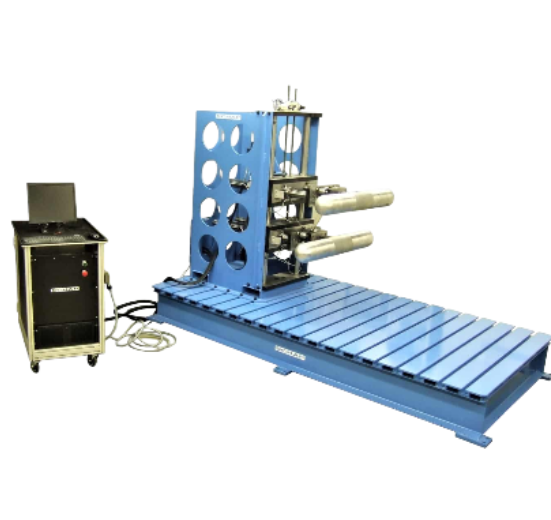
Functions and Applications of the Bus Seat Tester
The Bus Seat Tester is a specialized testing system designed to evaluate the structural strength, durability, safety performance, and ergonomic characteristics of bus seats under both static and dynamic conditions. Its core functions and applications are as follows:
Main Functions
Dynamic strength testing
Simulates collision conditions to verify the protective capability of bus seats during high-speed impacts, including limiting occupant displacement and preventing component detachment.
Fatigue durability testing
Evaluates the long-term reliability of seat structures by applying repeated cyclic loads to seat cushions and backrests, simulating prolonged real-world usage.
Static load testing
Applies specified static forces in designated directions to assess the deformation behavior and load-bearing capacity of seat frames, fasteners, and mounting points.
Mechanical parameter acquisition
Accurately measures parameters such as load, displacement, and acceleration. Load accuracy can reach 0.5% FS, while displacement, speed, and acceleration accuracy can reach 1% FS.
Electric drive and automation
Utilizes a fully electric drive system without hydraulic components. The equipment supports PC-based programmable control, allowing users to set extension speed, loading modes, and test cycle parameters.
Data recording and output
Automatically generates testing curves and reports, supports saving data in standard PC-compatible formats, and can output results through a built-in color inkjet printer.
Core Applications
Compliance verification
Meets national and industry testing standards, such as the dynamic testing requirements specified in Chinese GB standards, including collision speeds up to 50 km/h and injury criteria limits such as:
HIC < 1000
ThAC < 60g
Product development and optimization
Helps identify structural weak points during the design phase through limit and durability testing, providing guidance for material selection and structural improvement.
Quality control
Used on production lines for sampling inspection or full inspection of bus seats to ensure product consistency and reliability.
Safety performance evaluation
Verifies the performance of safety-related components such as seat belt anchorage points, headrests, and ISOFIX interfaces under loading conditions.
Environmental adaptability testing (for certain systems)
Can be integrated with environmental simulation systems such as temperature, humidity, and vibration chambers to evaluate seat functionality and stability under extreme conditions.
Industries Applicable to the Bus Seat Tester
The Bus Seat Tester is primarily used to verify the safety, durability, comfort, and compliance performance of bus seats and their anchorage systems. It is widely applied in the following industries:
Automotive Manufacturing Industry
Particularly used by manufacturers and component suppliers of commercial vehicles such as buses, school buses, and public transit vehicles for seat testing during the stages of product development, production, and quality control.
Transportation Equipment Manufacturing
Applied in the development and certification of seating systems for long-distance coaches, tour buses, city buses, school buses, and other specialized passenger vehicles.
Third-Party Testing and Certification Institutions
Used by laboratories and certification organizations such as SGS that provide automotive component compliance testing services. Seat performance verification is conducted according to national standards (such as GB standards) and international regulations including ECE and ADR requirements.
Safety and Standards Research Institutions
Supports research activities related to the formulation and revision of passive safety standards for buses. For example, it contributes technical validation for updated standards such as GB 13057-2023. where collision test speeds were increased from 30 km/h to 50 km/h.
Public Transportation Safety Supervision and Evaluation
Provides occupant protection testing data for government agencies and industry organizations, helping improve overall transportation safety and passenger protection performance.
These tests generally include multiple evaluation aspects such as dynamic crash testing, fatigue durability testing, strength and stiffness testing, and environmental adaptability testing, ensuring that bus seats can effectively protect passengers under various operating conditions.
Technical Features of the Bus Seat Tester
The Bus Seat Tester is a specialized testing system designed to evaluate the safety, durability, comfort, and overall performance of bus seats. According to the latest publicly available technical information, its main technical features are reflected in the following aspects:
1. Core Testing Functions and Technical Features
Dynamic crash simulation testing
In accordance with GB standards, the system uses a sled collision speed of 50 km/h ±1 km/h to simulate severe frontal collision conditions and evaluate the occupant protection capability of bus seats.
The tester measures key injury criteria, including:
Head Injury Criterion (HIC) < 1000
Thoracic Acceleration (ThAC) < 60g
Thoracic Compression (ThCC) ≤ 76 mm
Femur Axial Compression Force (FAC) < 10 kN
Durability and fatigue testing
Supports million-cycle durability tests for seat functions such as:
Backrest adjustment
Sliding rails
Seat lifting systems
Headrests
Easy-Entry mechanisms
The system can also perform vibration and creep fatigue simulations to reproduce long-term vibration loads experienced under actual road conditions.
Comfort and ergonomic evaluation
Utilizes SPI pressure distribution acquisition systems and H-point manikins to analyze seating pressure distribution and passenger posture.
Modal testing and 3D point-cloud scanning technologies are used to evaluate vibration characteristics and geometric compatibility of the seat structure.
Environmental adaptability testing
Integrated high-low temperature and humidity environmental chambers (including walk-in chambers for certain systems) allow performance verification under extreme environmental conditions ranging from -40°C to +85°C.
Testing Principle of the Bus Seat Tester
The testing principles of the Bus Seat Tester mainly focus on evaluating mechanical performance, durability, safety, and comfort characteristics of bus seating systems.
Main Testing Principles
Static compression mechanical testing
This test simulates the vertical pressure applied to the seat during passenger seating. A tensile/compression testing machine equipped with a specified loading indenter compresses the seat at a constant speed while continuously recording the force-displacement curve. Force data at key compression points are collected to evaluate the support characteristics and deformation behavior of seat materials.
Vibration durability testing
According to aviation and commercial vehicle standards such as SAE AS 8049 and GB/T 35465.2-2020. multi-axis vibration test systems are used to simulate vehicle operating conditions including road bumps, acceleration, and deceleration.
The vibration chamber typically supports:
X/Y/Z three-axis vibration
Frequency range: 5 Hz–2000 Hz
Acceleration up to 100g
This testing evaluates:
Structural integrity of the seat
Tightness of fastening components
Functional stability under long-term vibration loads
Recliner and mechanical component strength testing
Dedicated testing instruments apply precisely controlled forces or torques to seat recliners and mechanical components while simultaneously collecting parameters such as load, displacement, and angle.
Load-displacement curves are generated to analyze:
Structural stiffness
Yield strength
Ultimate failure strength
Fatigue durability life
Safety system response testing
Includes tests such as the Whiplash Test, where a sled system simulates rear-end collision conditions with a velocity change of approximately 15.65 km/h.
Anthropomorphic test devices (dummies) are used to measure neck injury criteria and evaluate the effectiveness of the head restraint system in protecting occupants.
Occupancy and pressure sensing tests
Some seats integrate pressure sensors or resistive occupancy sensors. These systems detect changes in resistance or voltage caused by applied loads (for example, identifying loads above 5 kg as an occupied state), supporting intelligent systems such as airbag control modules.
Electronic system functional testing (such as ATE test benches)
For seats equipped with intelligent electronic control units (ECUs), Automatic Test Equipment (ATE) may be used. By inputting test signals, collecting response data, and executing preset test scripts, the system verifies electrical performance and functional logic accuracy.
Importance of the Bus Seat Tester
The importance of the Bus Seat Tester is primarily reflected in its critical role in ensuring passenger safety, maintaining product compliance, and promoting the advancement of industry standards. Its significance can be summarized as follows:
Core Purposes of Bus Seat Testing
Verifying structural strength and crash safety
Through dynamic and static testing, the system simulates real accident conditions to ensure that bus seats do not experience fracture, excessive displacement, or anchorage failure during collisions.
Evaluating occupant protection capability
The tester measures critical injury parameters such as:
Head Injury Criterion (HIC)
Thoracic Acceleration (ThAC)
This ensures that passengers are protected from severe injuries during impact events.
Meeting mandatory regulatory requirements
Both Chinese and international regulations impose strict testing and limit requirements on bus seats. Seats that fail compliance testing are not permitted for vehicle installation or market release.
Specific Importance
Improving road safety and reducing casualties
The increase of collision test speed from 30 km/h to 50 km/h—equivalent to a full stop from an 80 km/h frontal collision scenario—has significantly increased testing severity.
Seats that pass these stricter tests can effectively:
Limit passenger displacement
Protect critical body regions
Reduce fatality and serious injury rates during accidents
Ensuring market compliance and reducing recall risks
Since January 1. 2024. newly approved bus models in China must comply with updated GB standards. Non-compliant vehicles may lose type approval certification, exposing manufacturers to substantial legal and financial risks.
Promoting technological advancement and industry progress
Testing requirements drive manufacturers to optimize:
Seat frame structures
Anchorage systems
Energy-absorbing and cushioning designs
This continuously improves the overall safety level of the industry.
Supporting the “Vision Zero” safety objective
As emphasized by initiatives such as the London Bus Safety Standard, modern vehicle design should aim for “zero fatalities and serious injuries.” Reliable seat testing is one of the fundamental steps toward achieving this goal.
Supporting full life-cycle quality control
Bus Seat Testers can be used throughout product development, manufacturing, and after-sales stages to verify:
Durability performance
Material reliability
Product consistency
This helps ensure long-term operational safety throughout the product life cycle.
In summary, the Bus Seat Tester is far more than a simple compliance-testing instrument. It is a critical core system within modern public transportation safety engineering, dedicated to protecting passenger lives while continuously driving technological innovation in bus seat manufacturing and testing.As safety regulations for public transportation vehicles become increasingly strict worldwide, the importance of this equipment in verifying seat structural strength, durability, and crashworthiness continues to grow, making it an indispensable part of the transportation safety industry chain.We sincerely welcome you to contact us or leave a message for more comprehensive technical information, application cases, and customized testing solutions. Our professional team will be pleased to assist you in making more informed and effective decisions.
Previous: What is a shoe tester?
N e x t : How to calculate tensile strength of fabric?
