





What is an air filter system?
2026/05/11
Share:

Functions and Applications of the Air Filter System
The core function of an Air Filter System is to filter impurities and pollutants from the air in order to protect equipment, improve performance, or safeguard human health. Depending on the application scenario, its functions and applications can generally be divided into the following two categories:
Automotive Air Filter Systems
In vehicles, the air filtration system usually includes the engine air filter and the cabin air filter, which together form an essential part of the vehicle’s air filtration system.
1. Engine Air Filter
Blocks solid contaminants such as dust, sand, and pollen, preventing them from entering the engine cylinders and causing wear to precision components such as pistons and cylinder walls, thereby avoiding serious failures such as cylinder scoring.
Improves combustion efficiency:
By supplying cleaner intake air, the filter helps optimize the air-fuel mixture ratio, potentially improving fuel economy by approximately 5%–10% while reducing exhaust emissions.
Reduces intake noise:
Through optimized airflow paths, engine intake noise can be reduced by approximately 3–5 dB.
Protects sensors:
Prevents dust contamination of sensitive electronic components such as the mass airflow sensor (MAF sensor).
2. Cabin Air Filter
Filters PM2.5. pollen, bacteria, odors, and other pollutants from the cabin air, improving the health and comfort of the driving environment.
HEPA cabin filters used in premium vehicles can filter ≥99.97% of 0.3-micron particles.
Maintenance recommendations:
Engine air filters are generally recommended for inspection or replacement every 10.000–15.000 km or once per year. Cabin air filters are typically replaced every 10.000–20.000 km depending on the operating environment.
General Air Filter Systems (Residential / Industrial)
These systems are widely used in indoor air purification, cleanrooms, medical environments, and industrial applications.
1. Multi-Stage Composite Purification
Pre-filter:
Captures hair, fibers, and large dust particles.
HEPA filter:
Efficiently removes PM2.5. bacteria, and viruses. H13-grade HEPA filters achieve filtration efficiency of ≥99.97%.
Activated carbon filter:
Adsorbs formaldehyde, TVOCs, and other harmful gases.
Photocatalytic / plasma active purification technologies:
Used to decompose pollutants or deactivate microorganisms (while considering potential ozone generation risks).
2. Key Performance Indicators
CADR (Clean Air Delivery Rate):
Indicates the speed and efficiency of air purification.
CCM (Cumulative Clean Mass):
Reflects the service life and pollutant holding capacity of the filter.
3. Application Areas
Air filter systems are widely used in:
Homes
Offices
Hospital cleanrooms
Laboratories
Electronics manufacturing facilities
Other environments requiring clean air control
Technical Features of the Air Filter System
The technical characteristics of an Air Filter System can be summarized from multiple aspects, including working principles, core components, performance indicators, application scenarios, and development trends.
Core Working Principles
1. Mechanical Filtration
Uses porous filter media such as fiberglass and composite nonwoven materials to physically intercept particulate matter. This principle is widely used in high-efficiency filters such as HEPA filters.
2. Electrostatic Adsorption
Utilizes an electrostatic field to charge airborne particles, which are then captured by dust collection electrodes. This technology is commonly applied in electrostatic dust collection modules.
3. Adsorption Technology
Employs high-specific-surface-area materials such as activated carbon and MOFs (Metal-Organic Frameworks) to remove gaseous pollutants including formaldehyde and VOCs.
4. Photocatalytic Oxidation
Uses catalysts such as TiO₂ (titanium dioxide) under ultraviolet light to generate hydroxyl radicals that decompose organic pollutants.
5. Inertial / Oil-Bath Filtration
Mainly used in industrial pneumatic systems, where centrifugal force or oil capture mechanisms remove large particles and oil droplets.
Key Performance Indicators
1. Filtration Efficiency
Primary Filters:
Capture particles ≥5 μm with an efficiency of approximately 20%–70%.
Medium-Efficiency Filters (F5–F8):
Capture particles ranging from 1–5 μm with efficiencies between 45%–95%.
HEPA Filters (H13 Grade):
Achieve filtration efficiency ≥99.97% for 0.3 μm particles.
ULPA Filters (Ultra-Low Penetration Air):
Provide filtration efficiency above 99.9999%, commonly used in cleanroom environments.
2. Clean Air Delivery Rate (CADR)
Measures the volume of purified air delivered per unit time, typically expressed in m³/h, reflecting the purification speed and capacity of the system.
3. Cumulative Clean Mass (CCM)
Represents the total purification capacity and service life of the filter. It is generally classified into:
P1–P4 grades for particulate matter
F1–F4 grades for formaldehyde purification
4. Resistance (Initial Pressure Drop)
Flat-panel primary filters typically have an initial resistance of ≤50 Pa.
Automotive filter elements generally have an initial pressure differential below 0.5 kPa.
Structural and Material Innovations
1. Separator-Free Design
Uses hot-melt adhesive instead of aluminum foil separators, increasing filtration area while reducing airflow resistance and overall filter size.
2. Composite Filter Media
For example, automotive filter elements often combine electrostatic adsorption with mechanical interception, achieving filtration efficiencies greater than 99.90%.
3. Modular Combination Structure
A common three-stage configuration includes:
Primary filter for large particles
Activated carbon filter for gaseous pollutants
HEPA filter for ultrafine particles
4. Intelligent Integration
Built-in sensors can monitor PM2.5. CO₂ concentration, temperature, and humidity in real time, while supporting APP control and automatic operating adjustments.
Operating Procedure of the Air Filter System
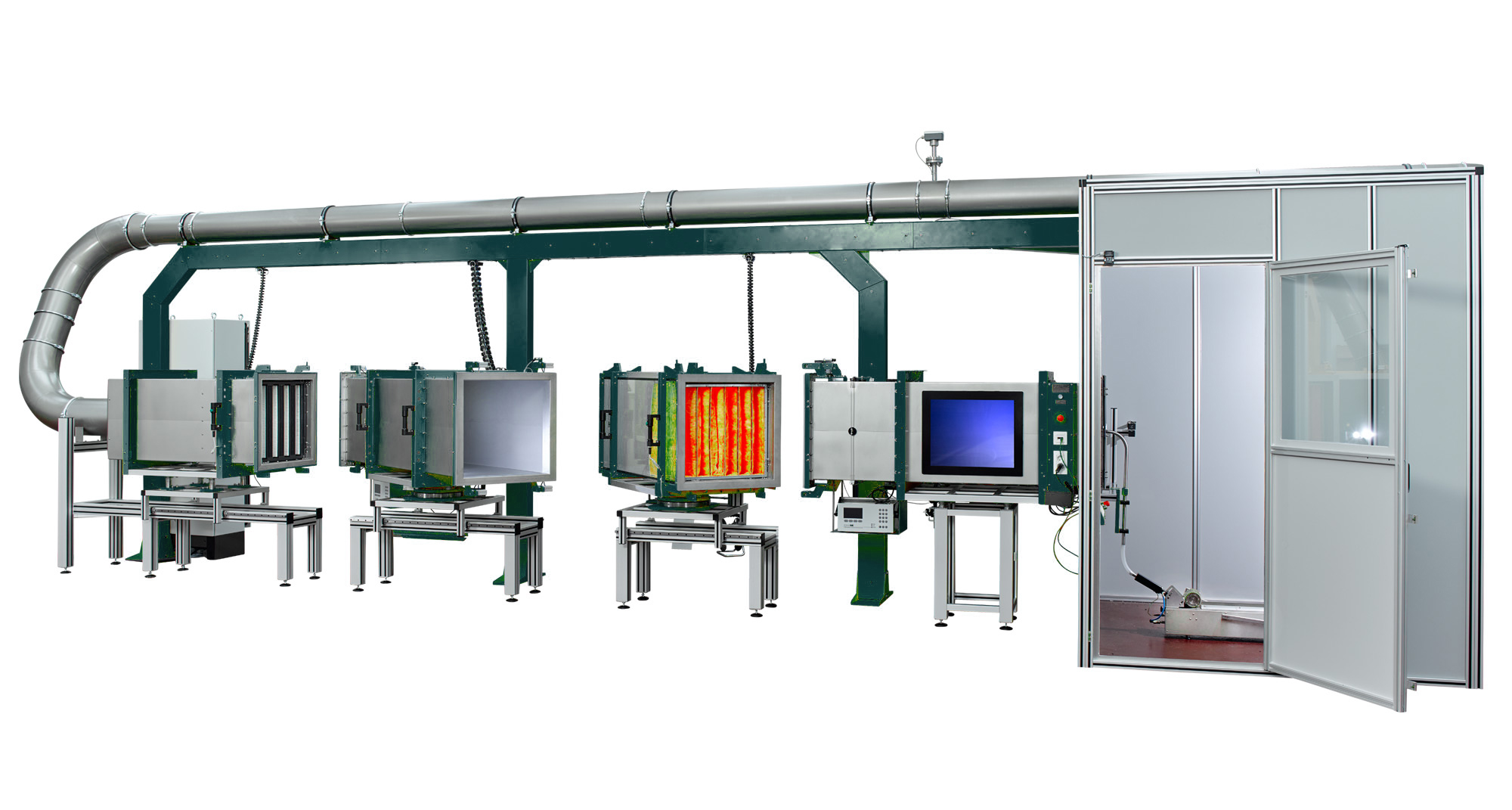
Air filters are commonly used devices for improving indoor air quality. Understanding their testing procedures helps users gain a deeper understanding of the operating principles and performance characteristics of the equipment. The following provides a detailed introduction to the testing process of air filter systems.
Preparation Before Testing
Before testing begins, sufficient preparation must be completed to ensure that the testing environment meets standard requirements.
The testing area should maintain stable temperature and humidity conditions while avoiding interference from external airflow. Testing is typically conducted in an enclosed room to simulate actual operating conditions. The required testing equipment includes:
Air filter samples
Particle generators
Particle counters
Anemometers
Data acquisition and recording systems
All instruments must be calibrated to ensure the accuracy of measurement results.
In addition, the installation condition of the air filter must be checked to ensure that it is correctly mounted in the testing apparatus without air leakage or looseness.
Particle Filtration Testing Procedure
Particle filtration testing is a critical step in evaluating air filter performance and generally includes the following stages:
First, a specified concentration of particulate matter is generated inside the test chamber. Standard test dust or aerosol particles are commonly used, with particle sizes typically ranging from 0.3 μm to 10 μm to simulate pollutants found in real environments. The particle generator uniformly disperses particles until the initial concentration in the test area reaches the preset value.
The air filter system is then activated, and changes in particle concentration are recorded. Particle counters positioned at different locations monitor concentration levels in real time, while the data recording system simultaneously collects the information.
The test usually lasts from 30 minutes to 1 hour. After stable data is obtained, the collected information is analyzed by comparing the initial and final particle concentrations to calculate filtration efficiency, which represents the percentage of particles removed by the filter.
To verify consistency, the testing process is repeated multiple times.
Airflow Testing Procedure
Airflow testing is used to measure the air handling capacity of the filter system.
The procedure includes measuring the air velocity at the filter outlet using an anemometer. Measurements are taken at multiple points, and the average value is calculated to improve accuracy.
The outlet area is then recorded, and the airflow rate is calculated using the formula:
Airflow Rate = Air Velocity × Outlet Area
The unit is typically expressed in cubic meters per hour (m³/h).
At the same time, the airflow resistance characteristics of the filter are evaluated. Airflow resistance refers to the pressure loss generated when air passes through the filter, which directly affects equipment energy consumption and operating noise. During testing, a pressure gauge measures the pressure differential before and after the filter, and the resistance performance is evaluated together with airflow data.
Airflow testing should also be repeated under different airflow conditions to comprehensively evaluate the filter’s performance under various operating scenarios. The final results are compiled into reports including airflow curves and resistance curves.
Noise Testing Procedure
Noise testing is performed to evaluate the sound level generated during filter operation.
The test should be conducted in a quiet environment where background noise remains below specified limits. The air filter system is placed at the center of the testing area, ensuring that no reflective objects nearby interfere with sound measurements.
A sound level meter is positioned 1 meter away from the equipment at the same height as the air outlet.
The air filter is operated at different speed settings, such as low, medium, and high speeds. Each operating mode runs for at least 5 minutes before the sound level (measured in decibels, dB) is recorded after stabilization.
Multiple tests are conducted and averaged to ensure compliance with relevant standards. If excessive noise is detected, the internal structure or fan balance of the equipment should be inspected.
Durability Testing Procedure
Durability testing evaluates the long-term operating performance of the air filter system by simulating actual operating conditions over an extended period.
The filter is installed in the testing apparatus and operated continuously for hundreds of hours. During operation, the physical condition of the filter is regularly inspected, including checks for filter deformation and seal integrity.
Performance tests, including particle filtration efficiency and airflow measurements, are typically conducted approximately every 50 hours. Data changes are recorded to observe performance degradation over time.
After testing is completed, the filter is disassembled to inspect the wear condition of internal components. Durability testing results help determine the service life and maintenance intervals of the filter system.
Energy Efficiency Testing Procedure
Energy efficiency testing focuses on evaluating the power consumption performance of the air filter system.
A power meter is connected to the filter’s power supply line to record real-time power consumption during operation. Testing is conducted under multiple operating modes to simulate different usage scenarios.
The energy efficiency ratio is then calculated using airflow data. This ratio represents the amount of air processed per unit of energy consumption and is typically expressed in m³/h·W. Higher values indicate better energy-saving performance.
The test data is analyzed to determine the energy efficiency grade of the filter system, providing users with useful reference information for selecting energy-efficient products.
Test Report Preparation
After testing is completed, a detailed report should be prepared. The report generally includes:
Testing objectives
Environmental conditions
Equipment list
Testing procedures
Data records
Analysis results
The report should present data objectively without subjective evaluation. All results should include charts and graphs, such as filtration efficiency curves and airflow variation diagrams, to facilitate intuitive understanding.
Finally, the report should summarize the testing findings, highlighting both the advantages and areas for improvement of the air filter system.
The testing report serves as an important basis for evaluating product quality and should be properly archived for future reference.
Through the above procedures, the performance of air filter systems can be comprehensively evaluated. These tests not only help manufacturers improve product quality, but also provide users with reliable guidance for product selection. By understanding these testing procedures, users can operate and maintain air filter systems more scientifically, thereby extending equipment service life and improving overall performance.
Importance of the Air Filter System
The importance of the Air Filter System is mainly reflected in its critical role in protecting the engine and safeguarding the health of drivers and passengers.
Protection of the Engine
Preventing Wear of Precision Components
If dust, sand, and other airborne impurities enter the engine cylinders, they can accelerate the wear of precision components such as pistons, cylinder walls, and valves. In severe cases, this may lead to major failures such as cylinder scoring. Air filters can remove more than 99.5% of airborne particles, significantly extending engine service life.
Ensuring Combustion Efficiency
Clean intake air ensures an accurate air-fuel mixture ratio, promoting more complete combustion. This helps improve engine power output, reduce fuel consumption by approximately 5%–10%, and lower exhaust emissions.
Protecting Sensors and the Intake System
Modern engines are equipped with sensitive electronic components such as mass airflow sensors and intake air temperature sensors. Air filters prevent dust contamination of these components, avoiding inaccurate data signals that may cause abnormal engine performance or excessive emissions.
Reducing Intake Noise
By optimizing airflow paths and reducing turbulence, air filters can lower engine intake noise by approximately 3–5 dB, improving vehicle NVH (Noise, Vibration, and Harshness) performance and enhancing cabin comfort.
Protection of Driver and Passenger Health
Improving Cabin Air Quality
As an important component of the air filtration system, the cabin air filter effectively blocks harmful substances such as pollen, PM2.5. bacteria, and mold, reducing allergens and respiratory irritants inside the vehicle.
Reducing Allergy Symptoms
For allergy-sensitive individuals, regular replacement of the cabin air filter can significantly reduce symptoms such as sneezing and runny nose, improving driving comfort and safety.
Adsorbing Harmful Gases
Some high-end filter elements contain activated carbon layers capable of adsorbing gaseous pollutants such as formaldehyde and carbon monoxide, further improving in-cabin air safety.
Economic Benefits and Maintenance Recommendations
Cost-Effective Maintenance
The replacement cost of air filters is relatively low, typically ranging from several tens to a few hundred yuan, which is far lower than the cost of major engine repairs caused by component wear. Some vehicle models also support simple DIY replacement.
Recommended Replacement Intervals
Engine Air Filter:
Replace every 10.000–20.000 km or once per year. In dusty or heavily polluted environments, replacement intervals should be shortened to approximately 8.000 km or less.
Cabin Air Filter:
Replace every 10.000 km or every six months, depending on operating conditions and environmental factors.
Self-Inspection Methods
Engine Air Filter:
If the filter element becomes blackened, heavily clogged with dust, or releases visible dust when lightly tapped, it should be replaced immediately.
Cabin Air Filter:
If airflow is noticeably reduced or unpleasant odors appear, the filter should be replaced as soon as possible.
In conclusion, although the Air Filter System is relatively compact in size, it is a critical component for ensuring vehicle performance, extending service life, and protecting occupant health. Its importance should never be overlooked.We sincerely welcome you to leave a message or contact us directly so that we can provide you with more detailed product information and professional support.
Previous: What is a Nonwovens Liquid Loss Tester?
N e x t : Do you know about Automotive HVAC Manikin?
