





Do you know about Automotive HVAC Manikin?
2026/05/11
Share:

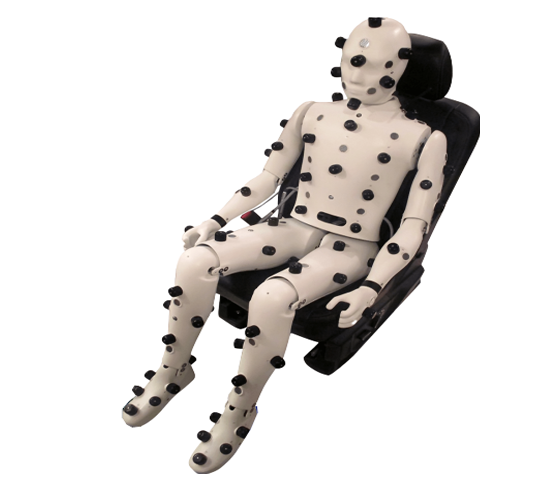
Functions and Applications of the Automotive HVAC Manikin
The Automotive HVAC Manikin is a professional testing device used to evaluate the thermal environment inside vehicles and occupant thermal comfort. It is widely applied in automotive research and development, HVAC system optimization, and ergonomic studies.
Main Functions
High-Precision Environmental Data Acquisition
The manikin surface is integrated with multiple sensor modules capable of simultaneously measuring key thermal environment parameters such as:
Temperature
Air velocity
Relative humidity
Radiant heat flux
This enables comprehensive and accurate thermal environment analysis inside the vehicle cabin.
Simulation of Human Thermal Response
By heating the manikin surface to simulated human skin temperatures (typically 33–35°C), the system can realistically reproduce human thermal sensations under different climate conditions.
Support for Complex Operating Conditions
The system is suitable not only for steady-state environments but also for non-uniform and transient cabin thermal conditions, such as:
Solar radiation exposure
HVAC start-stop cycles
Uneven airflow distribution
Flexible Posture Adjustment
The manikin joints provide multi-degree-of-freedom adjustment, enabling simulation of different occupant postures such as standing and seated positions, thereby improving the realism of test scenarios.
Real-Time Data Monitoring and Analysis
Supporting software platforms (such as Manikin Monitor) can display thermal comfort indicators including:
PMV (Predicted Mean Vote)
PPD (Predicted Percentage Dissatisfied)
in real time, while also supporting integration with simulation software such as THESEUS-FE.
Core Applications
HVAC System Development and Validation
Used to evaluate the heating and cooling efficiency, airflow uniformity, and zonal temperature control performance of automotive HVAC systems.
Thermal Comfort Optimization
Helps engineers optimize:
Air duct design
Vent outlet layout
Temperature control strategies
thereby improving overall driver and passenger comfort.
Cross-Platform Applicability
The system can also be applied to thermal environment evaluations in enclosed cabins such as:
Automobiles
Aircraft
High-speed trains
Customized Testing Support
The equipment can be customized according to testing requirements, including:
Number of sensors
Human body dimensions (such as Chinese 50th percentile male models with heights of 168–171 cm)
Environmental testing ranges from -20°C to 70°C
Compliance with International Standards
The sensors are calibrated by authoritative European institutions to ensure high data reliability, making the system suitable for testing procedures based on international standards such as ISO and SAE.
Application Scenarios of the Automotive HVAC Manikin
The Automotive HVAC Manikin is widely used by automobile manufacturers, automotive HVAC component suppliers, automotive research and development institutions, and third-party testing laboratories. It is suitable for air-conditioning system testing of various vehicle types, including conventional fuel vehicles, pure electric vehicles, and hybrid vehicles.
Its main application scenarios include the following:
1. HVAC System Development Stage
Thermal comfort simulation and validation
HVAC control strategy optimization
Component selection and performance evaluation
During the early development stage, the manikin helps engineers quantitatively analyze cabin thermal comfort performance and optimize HVAC system design.
2. Vehicle Testing Stage
Cabin cooling and heating performance testing
Air outlet airflow distribution analysis
Thermal comfort verification under different operating conditions
The system can simulate real occupant thermal responses under various environmental conditions, including solar radiation, different blower settings, and dynamic climate changes.
3. Benchmarking and Competitive Analysis Stage
Comparative testing of competitor vehicle HVAC performance
Data comparison and analysis
Identification of product optimization opportunities
Manufacturers can use the manikin system to benchmark their HVAC performance against competing vehicle models and identify areas for improvement in comfort and energy efficiency.
4. Quality Validation Stage
Pre-production quality inspection of HVAC systems
Reliability and durability testing
Verification of compliance with design specifications
Before mass production, the Automotive HVAC Manikin helps ensure that HVAC products meet required performance standards and maintain stable thermal comfort performance throughout vehicle operation.
Technical Features of the Automotive HVAC Manikin
The Automotive HVAC Manikin is a high-precision testing device designed to simulate human thermal responses and evaluate vehicle cabin thermal environments and HVAC system performance. Its technical features are mainly reflected in structural design, sensor configuration, environmental adaptability, and data acquisition capability.
I. Core Structure and Human Simulation
Human Body Dimensions and Weight
Typical manikins have a height of approximately 168–175 cm and a weight of about 25–35 kg. Some models are specifically designed based on the anthropometric characteristics of the Chinese 50th percentile male body standard.
Materials and Durability
The outer shell is commonly manufactured from reinforced fiberglass nylon or advanced 3D-printed polymer materials, offering excellent thermal stability and mechanical strength. The structure can withstand extreme environmental conditions ranging from -40°C to +85°C.
Modular Structure and Joint Flexibility
The manikin is generally divided into three main sections:
Head
Upper body
Lower body
It supports flexible adjustment of multiple joints, including:
Neck
Shoulders
Elbows
Wrists
Hips
Knees
Ankles
This enables simulation of various seated and standing occupant postures.
II. High-Precision Sensor System
Multi-Type Integrated Sensors
Each sensor module typically integrates four types of sensors:
Temperature sensors
Omnidirectional airflow sensors
Relative humidity sensors
Dual-spectrum radiation sensors
Some advanced manikins are equipped with more than 124 independent sensors.
Measurement Ranges
Temperature: -20°C to +70°C
Air Velocity: 0–5.0 m/s
Relative Humidity: 5%–95% RH (non-condensing)
Radiant Heat Flux: 0–2000 W/m²
III. Environmental Adaptability and Communication Capability
Operating Environment
The system can operate in complex climate chambers or wind tunnel environments with conditions ranging from:
Temperature: -20°C to +70°C
Humidity: 5%–95% RH
Communication Methods
Supports multiple communication methods, including:
Wired communication
4G wireless communication
Wi-Fi
CAN bus
Sampling frequencies can typically reach 1 Hz or higher.
Multi-Manikin Synchronized Testing
Some systems support synchronized real-time data acquisition from up to four manikins simultaneously, covering multiple seating positions such as:
Driver seat
Front passenger seat
Rear passenger seats
IV. Data Processing and Software Support
Supporting Software
Software platforms such as Manikin Monitor or ManikinPC can display thermal comfort indicators in real time, including:
PMV (Predicted Mean Vote)
PPD (Predicted Percentage Dissatisfied)
EHT (Equivalent Homogeneous Temperature)
Simulation Interfaces
Some systems support integration with thermal simulation software such as THESEUS-FE, facilitating collaborative optimization between physical testing and CAE simulation models.
V. Customization and Expandability
The system supports customization according to customer requirements, including:
Adjusting the number of sensors
Modifying body dimensions and proportions
Adapting to special testing scenarios such as electric vehicles and autonomous driving cabins
It can also be used for extreme weather simulation tests, including:
Heavy rain
Intense solar radiation
Snowstorm environments
meeting the demanding requirements of advanced automotive thermal management development.
In conclusion, the Automotive HVAC Manikin is an advanced testing tool that integrates highly biomimetic structures, multi-physics sensing technology, wide environmental adaptability, and intelligent data analysis capabilities. It is widely used in automotive HVAC system development, thermal comfort evaluation, and thermal management optimization for new energy vehicles.
Importance of the Automotive HVAC Manikin
The Automotive HVAC Manikin plays a critical role in modern automotive development. Its importance is mainly reflected in the following aspects:
I. Improving the Objectivity and Accuracy of Thermal Comfort Testing
Replacing Subjective Human Evaluation
Traditional thermal comfort testing relies heavily on human volunteers, making results highly affected by individual differences such as age, heat tolerance, and regional habits. Feedback is often subjective, inconsistent, and difficult to reproduce. The Automotive HVAC Manikin overcomes these limitations by simulating human thermal physiological responses through high-precision sensors, providing quantifiable and repeatable objective data.
Multi-Parameter Synchronous Monitoring
The manikin can integrate more than 50 sensors across the body to simultaneously collect key thermal environment parameters, including:
Temperature (-20°C to +70°C)
Air velocity (0.1–5.0 m/s)
Humidity (0–95% RH)
Thermal radiation
Sensitive human body regions such as the head, neck, chest, and limbs can all be comprehensively monitored.
II. Supporting Thermal Management Optimization for New Energy Vehicles
Direct Impact on Driving Range
In electric vehicles (EVs) and hybrid vehicles, HVAC system energy consumption is second only to the powertrain and is one of the key factors affecting driving range. The HVAC manikin can accurately evaluate the balance between energy consumption and thermal comfort under different temperature control strategies, helping optimize the efficiency of components such as heat pumps and PTC heaters.
Validation Under Extreme Environmental Conditions
The system can perform testing in extreme environments such as:
Ultra-low temperatures of -30°C
High-temperature conditions above 40°C
This enables verification of cabin cooling/heating speed, defrosting, and defogging performance, ensuring reliable operation under real-world usage conditions.
III. Promoting Intelligent Cockpit Development and Personalized Comfort Experience
Enabling Intelligent HVAC Systems
Based on large volumes of data collected by the manikin and combined with AI algorithms, manufacturers can achieve personalized climate control functions, such as:
Automatically adjusting rear-seat temperature zones for children
Preventing direct airflow toward the driver
Supporting Zoned Comfort Validation
Through synchronized multi-manikin testing, engineers can evaluate thermal environment differences between:
Front and rear seats
Left and right passenger positions
This helps optimize air duct structures and vent outlet layouts for improved passenger comfort.
IV. Accelerating Development Processes and Reducing Development Costs
Shortening Development Cycles
Using HVAC manikins in climate chambers for benchmarking tests allows manufacturers to quickly identify the strengths of competitor vehicles and the weaknesses of their own products, reducing the number of time-consuming and expensive road tests.
Compliance with International Standards
Test results can be evaluated according to international thermal comfort models and standards such as ISO specifications, facilitating product certification for global markets.
V. Adapting to Chinese User Characteristics and Enhancing Localization Competitiveness
Some systems, such as HVAC manikins designed according to Chinese anthropometric characteristics, are developed based on the physiological and body-size data of Chinese 50th percentile males (height 168–171 cm, weight ≤25 kg). These designs better match the thermal comfort preferences of local users and improve product adaptability in the domestic market.
In conclusion, the Automotive HVAC Manikin is not only an essential scientific tool for HVAC system development and precise thermal comfort evaluation, but also an increasingly important strategic asset for automotive manufacturers as the industry rapidly evolves toward electrification, intelligence, and enhanced comfort. It plays an irreplaceable role in helping manufacturers build technological advantages and create differentiated competitiveness in the global automotive market.We sincerely invite industry professionals and interested partners to leave messages or contact us directly. We will be pleased to provide you with more comprehensive technical information and customized solution support.
Previous: What is an air filter system?
N e x t : How to operate a manual tear strength tester?
