





How to operate a manual tear strength tester?
2026/05/12
Share:

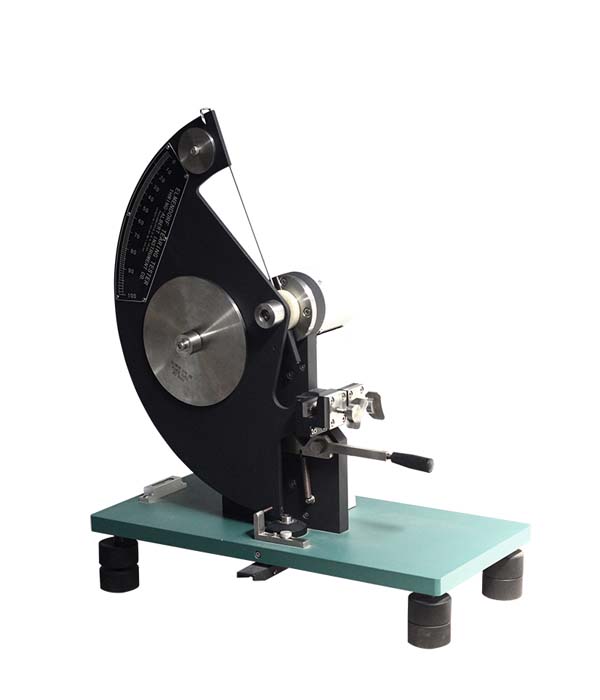
What are the functions and applications of a Manual Tear Strength Tester?
A Manual Tear Strength Tester is a mechanical testing instrument used to determine the tear resistance of materials. It mainly adopts the Elmendorf pendulum method (falling pendulum type) for testing. Its core function is to measure the average force required to tear a material under controlled conditions. The instrument is widely used in industries such as textiles, packaging, paper, and nonwoven materials.
Main Functions
Tear Strength Determination:
The pendulum releases potential energy to tear a pre-cut specimen, and the tearing force is calculated based on the energy loss of the pendulum during the tearing process.
Compliance with International Standards:
Supports major testing standards such as ASTM, ISO, and GB/T.
Manual Operation:
Requires manual specimen placement, pendulum release, and result reading, distinguishing it from fully automatic models.
Suitable for Various Materials:
Applicable to paper, paperboard, plastic films, textiles, nonwoven fabrics, and other flexible materials.
Basic Configuration:
Typically includes a pendulum, pneumatic or mechanical clamps, and an angle/force indicator (pointer type or digital display).
Typical Applications
Quality Control:
Used in factories and laboratories for routine testing of the tear resistance performance of raw materials and finished products.
Research and Development:
Evaluates the influence of different formulations and manufacturing processes on the tear resistance of materials.
Compliance Certification:
Meets the mechanical performance requirements of export regulations and industry standards, especially in packaging and textile applications.
What industries is the Manual Tear Strength Tester suitable for?
The Manual Tear Strength Tester is mainly used to evaluate the tear resistance of materials under controlled conditions. Its core testing principle is generally based on the Elmendorf pendulum method, which calculates tear force by measuring the energy loss of the pendulum during the tearing process. It is widely suitable for the following industries:
Textile Industry:
Used for testing the tear resistance of woven fabrics, nonwoven fabrics, coated fabrics, silk, cotton fabrics, and other textile materials.
Paper and Packaging Industry:
Applied to determine the tear strength of paper, paperboard, and single-wall or multi-wall corrugated cardboard.
Plastic and Film Industry:
Suitable for evaluating the tear resistance performance of plastic films, sheets, electronic carrier tapes, and similar materials.
Printing and Adhesive Products Industry:
Used for testing the peeling and tearing properties of adhesives, adhesive tapes, self-adhesive labels, composite films, and related products.
Leather, Footwear Materials, and Flexible Packaging Industry:
Some models can also be used for tear testing of leather, synthetic leather, woven bags, and flexible packaging materials.
What is the working principle of a Tear Strength Tester?
A Tear Strength Tester is a reliable instrument used to determine the tear strength of fabrics, plastic films, and similar materials. It measures the tensile force required to tear a pre-cut specimen under controlled testing conditions.
Its working principle is based on measuring the internal tear resistance of a material. When a sudden force is applied, the instrument determines the force required to propagate a single tear of a specified length from an existing cut in the material, perpendicular to the plane of the fabric or specimen. By measuring the work done to tear the material over a fixed distance, the force required to continue tearing the material can be accurately determined.
How to Operate a Manual Tear Strength Tester?
The testing process strictly follows international or national standards such as ASTM, ISO, or GB/T to ensure the comparability and accuracy of test results. The detailed operating procedure is as follows:
I. Environmental and Equipment Preparation
1. Laboratory Environment Control
Testing should be carried out under stable environmental conditions, typically at a temperature of 23 ± 2°C and a relative humidity of 50 ± 5%, to eliminate the potential influence of environmental factors on material performance.
2. Instrument Condition Inspection
Before testing, ensure that the instrument base is level, the pendulum pointer is reset to zero, and the upper and lower specimen clamps are clean and free from residue or damage.
3. Range Selection
According to the expected tear force of the material, select an appropriate pendulum capacity in advance (such as 16 N, 32 N, or 64 N) to ensure that the test reading falls within 20%–80% of the full scale, thereby achieving optimal measurement accuracy.
II. Sample Preparation
1. Standard Cutting
According to the selected testing standard, cut the material into rectangular specimens of specified dimensions and prepare a standard initial slit or notch in advance (for example, 43 mm long and 20 mm wide).
2. Notch Accuracy
The initial notch length must strictly comply with the standard requirements (such as 20 ± 0.2 mm), as this is critical for ensuring the repeatability of test results.
3. Number of Specimens
To ensure statistical reliability, each group should normally contain no fewer than five valid specimens. It is also recommended to sample from different areas of the material to better represent overall performance.
III. Installation and Calibration
1. Pendulum Installation
Install the selected pendulum correctly onto the instrument shaft, ensuring that it can swing freely without friction or sticking.
2. System Calibration
Use certified calibration weights for zero-point calibration, or utilize the instrument’s built-in automatic calibration function if available, ensuring that the force reading is zero before testing. This is the basis for accurate measurement results.
IV. Clamping the Specimen
1. Center Alignment
Place the prepared specimen between the upper and lower clamps, ensuring that the pre-cut notch is precisely aligned with the centerline of the clamps.
2. Secure Clamping
Tighten the specimen using a manual clamping knob or pneumatic device (if equipped). The clamping force should be sufficient to prevent slippage while avoiding excessive pressure that may damage the specimen or cause stress concentration.
V. Conducting the Test
1. Releasing the Pendulum
Use the manual release mechanism or press the test button to release the pendulum from its starting position, allowing it to swing freely downward.
2. Tearing and Reading
As the pendulum falls, its potential energy is converted into kinetic energy, tearing the specimen from the pre-cut notch. The energy consumed during tearing slows the pendulum, and the tear force value is then directly read or automatically recorded via a dial indicator, photoelectric encoder, or digital display.
VI. Recording Data
1. Data Recording
Accurately record the tear force result for each individual test. Units are commonly expressed in centinewtons (cN), newtons (N), or gram-force (gf).
2. Repeat Testing
Repeat the clamping and testing procedures for the remaining specimens. Particular attention should be paid to maintaining consistency in clamping position, alignment, and clamping force throughout all tests.
VII. Result Calculation
1. Average Value Calculation
Calculate the arithmetic mean of all valid tear force values to obtain the average tear strength of the specimen group.
2. Derived Index Calculation
For materials such as paper, the tear index may also be calculated if required. This is determined by dividing the average tear force by the basis weight (grammage) of the material, allowing comparison of tear resistance among materials with different weights.
VIII. Cleaning and Maintenance
1. Post-Test Cleaning
After each test, promptly remove residual specimen fragments or fibers remaining on the clamps.
2. Regular Inspection and Maintenance
Inspect key components such as the pendulum, shaft, and clamps for wear or damage. If the instrument will remain unused for an extended period, apply appropriate anti-rust treatment to exposed metal and moving parts.
IX. Important Precautions
1. Safe Operation
When releasing the pendulum during testing, operators must maintain a safe distance. Hands or any part of the body must never be placed within the pendulum swing path to prevent personal injury.
2. Standard Applicability
Testing standards may vary among industries and applications, such as textiles, paper, and plastics. Testing procedures and result evaluations must strictly follow the latest applicable standard for the specific material type.
3. Metrological Calibration
To ensure long-term measurement accuracy and traceability, it is recommended that the instrument be fully calibrated at least once a year by a qualified third-party calibration institution, and that calibration reports be properly maintained.
Why is the Manual Tear Strength Tester So Important?
The importance of the Manual Tear Strength Tester is mainly reflected in its critical role in material quality control, research and development, and standardized testing. Although automated equipment is becoming increasingly popular, manual testers are still widely used across many industries due to their simple structure, low cost, intuitive operation, and convenient maintenance.
Fundamental Quality Control Tool
It is used to evaluate the tear resistance of materials such as paper, textiles, plastic films, and nonwoven fabrics, serving as a basic method for ensuring product consistency and reliability during production.
Compliance with International Standards
The instrument supports a variety of mainstream testing methods and standards, ensuring that test results are comparable, accurate, and internationally recognized.
Suitable for a Wide Range of Materials
It can test a broad range of materials, including paper, paperboard, fabrics, plastic films, rubber, and nonwoven materials, making it highly versatile for different industries.
Easy Operation Without Complex Training
Manual testers usually adopt a purely mechanical structure and can often operate without electricity, making them suitable for resource-limited environments or rapid on-site testing applications.
Cost-Effective Solution
Compared with electronic or fully automatic equipment, manual tear testers are more affordable and require lower maintenance costs, making them ideal for small and medium-sized enterprises as well as educational laboratories.
Direct and Reliable Results
The tearing force is determined by measuring the pendulum energy loss during tearing. The testing principle is straightforward, and the results are stable and widely accepted by the industrial sector.
In summary, the Manual Tear Strength Tester is an important material performance testing instrument. Its precise measurement capability and reliable operational stability enable it to demonstrate unique value across multiple industries, making it well worth deeper attention and understanding.We sincerely welcome interested customers and partners to leave a message or contact us directly. Based on your specific requirements, we can provide more detailed product technical information, application solutions, and professional consultation services.
Previous: Do you know about Automotive HVAC Manikin?
N e x t : What is a notching machine used for?
