





How Does Seatbelt Fabric Pilling Tester Work?
2026/05/14
Share:

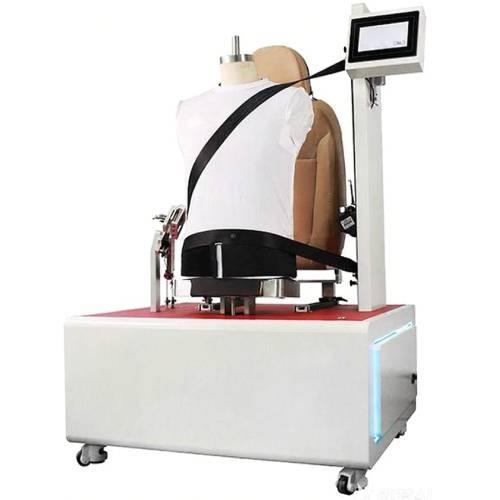
Functions and Applications of the Seatbelt Fabric Pilling Tester
The Seatbelt Fabric Pilling Tester is a specialized testing instrument designed to evaluate the anti-pilling performance of fabrics under simulated seat belt friction conditions. Its core functions and applications are as follows:
Functions
1. Simulates Real Friction Conditions
Through a mechanical system, the tester simulates the repeated friction process between seat belts and fabric surfaces, accelerating the appearance of pilling.
2. Controls Testing Parameters
The instrument allows users to set parameters such as friction cycles, pressure, and stroke length to ensure standardized testing conditions.
3. Automatic Operation and Stop Function
The tester automatically stops once the preset number of test cycles is reached, improving operational efficiency and data consistency.
4. Visual Evaluation of Results
After testing, samples can be compared with standard pilling rating photographs to evaluate the anti-pilling grade, usually according to ISO or AATCC standards.
Applications
1. Quality Control
Widely used for anti-pilling performance testing of automotive interior fabrics, garment fabrics such as sweaters and knitted textiles, and other textile products before shipment.
2. Research and Development Support
Helps material developers optimize fiber blending ratios, fabric structures, and finishing processes to improve pilling resistance.
3. Compliance Verification
Ensures that products comply with international textile abrasion and pilling test standards such as ISO, AATCC, and GB/T standards.
4. Improvement of Consumer Experience
By identifying pilling-prone materials at an early stage, manufacturers can reduce customer complaints caused by fabric pilling and extend the aesthetic service life of products.
Industries Applicable to the Seatbelt Fabric Pilling Tester
The Seatbelt Fabric Pilling Tester is mainly used to evaluate the anti-pilling performance of seat belts and other fabrics under repeated friction conditions. This type of testing equipment, together with related testing methods such as the Martindale method and random tumble method, is widely applied in the following industries:
1. Automotive Manufacturing Industry
Used for testing the abrasion resistance and anti-pilling performance of automotive interior fabrics such as seat belts, seat upholstery, headliner fabrics, and door panel textiles, ensuring long-term safety and appearance retention during use.
2. Textile and Garment Industry
Applicable to workwear, protective clothing, outdoor apparel, and other products with high durability requirements, especially in areas frequently exposed to friction from seat belts, such as shoulder straps and waist sections.
3. Luggage and Footwear Industry
Used for evaluating the pilling tendency of fabrics in high-friction areas such as backpack straps, luggage shoulder belts, and sports shoe uppers.
4. Testing, Certification, and Trade Industry
Third-party testing organizations such as SGS and CTTC use relevant standards such as ASTM and ISO to conduct import and export inspections, quality arbitration, and technical specification verification.
Technical Features of the Seatbelt Fabric Pilling Tester
The Seatbelt Fabric Pilling Tester is a specialized instrument designed to evaluate the anti-pilling performance of seat belt fabrics under simulated friction conditions. Its technical features mainly focus on reproducing real friction behavior during practical use, quantifying pilling tendencies, and complying with relevant industry standards.
The main technical features are as follows:
1. Simulation of Real Friction Mechanisms
During use, seat belts are repeatedly extended and retracted, continuously rubbing against the inner wall of the retractor, which can cause fiber breakage and entanglement, resulting in fabric pilling. The tester simulates this process through controlled reciprocating or rotational friction movements.
2. High-Precision Friction Control
The instrument uses standard friction heads, such as fabric pads or specific materials, to apply constant pressure (commonly 8.9 N or 17.8 N according to ASTM standards), ensuring excellent test repeatability.
3. Multi-Mode Testing Capability
Supports multiple testing modes including dry rubbing and wet rubbing. Different friction speeds (such as 21. 42. 85. and 106 cycles per minute) and test cycle counts can be set to meet the evaluation requirements of different materials.
4. Compliance with International Standards
Most models comply with standards such as ASTM standards for abrasion resistance and ISO standards for fabric wear resistance. Some models are also compatible with friction-related requirements in AATCC color fastness testing standards.
5. Dual-Station Design
Certain models are equipped with dual testing stations, allowing comparative testing to be carried out simultaneously and improving testing efficiency.
6. PLC Control and Touchscreen Operation
Modern equipment commonly adopts Programmable Logic Controllers (PLC) and Human-Machine Interfaces (HMI), enabling convenient parameter setting, data recording, and automatic alarm functions.
7. Suitable for High-Strength Industrial Yarns
Seat belt yarns, such as HT PET fibers, typically feature high denier values (11–24 dpf). The tester is specially designed to accommodate the unique friction characteristics of these high-tension and low-elongation materials.
Operating Procedure of the Seatbelt Fabric Pilling Tester
Seat belt fabrics are high-strength textiles commonly used in safety-critical fields such as automotive and aviation industries. Their pilling performance testing must follow specific standards. According to publicly available information, seat belt fabric pilling tests are generally conducted using the Circular Locus Method or the Martindale Method. The operating procedure is as follows:
1. Applicable Standards and Method Selection
Recommended Standard
GB/T — Textiles — Determination of Fabric Pilling Performance — Part 1: Circular Locus Method
Method Selection Basis
Seat belt fabrics are mostly woven structures, making the Circular Locus Method more widely used. If a higher level of simulation is required, such as reproducing friction against human skin, the Martindale Method may also be selected.
2. Circular Locus Method Operating Procedure
Sample Preparation
Cut circular specimens with a diameter of 113 mm (at least three samples).
If pretreatment is required, perform washing or dry cleaning according to the testing protocol to avoid residual finishing agents affecting the results.
Instrument Setup
Place the tester on a stable and level workbench with a rubber pad underneath to prevent slipping.
Connect the instrument to an AC 220V ±10% power supply and ensure proper grounding.
Set the friction cycles according to the standard requirements.
For example:
Combed fabrics: recommended 14.400 cycles
Carded fabrics: recommended 7.200 cycles
Installation and Testing
Clamp the specimen securely in the sample holder with the fabric face outward.
First perform fuzzing using the nylon brush according to the preset cycles, then conduct pilling friction using the standard abrasive material according to the specified cycles.
Press the “RUN” button to start the instrument. The tester will automatically stop after reaching the preset cycle count.
Evaluation and Rating
Remove the tested sample and compare it with standard photographic rating scales under a standard light box.
Ratings range from Grade 1 to Grade 5:
Grade 5: least pilling
Grade 1: most severe pilling
Half-grade ratings such as Grade 3–4 are permitted.
3. Precautions
Instrument Calibration
Regularly calibrate the instrument using standard reference fabrics to ensure comparability and accuracy of test results.
Environmental Control
Testing should be conducted under standard atmospheric conditions, typically:
Temperature: 20 ± 2°C
Relative Humidity: 65 ± 4% RH
Safe Operation
If abnormal conditions occur during operation, such as unusual noise or overheating, stop the machine immediately and have it inspected by qualified personnel.
Importance of the Seatbelt Fabric Pilling Tester
The Seatbelt Fabric Pilling Tester plays a critical role in evaluating the durability and safety performance of automotive interior materials, particularly seat belt webbings. Its importance is reflected in several key aspects:
1. Ensuring Long-Term Functionality and Reliability of Seat Belts
During daily use, seat belts are frequently subjected to friction with clothing, seats, and surrounding components. In emergency situations such as sudden braking or collisions, the webbing must retract and lock rapidly to restrain occupants.
If surface pilling occurs, fiber clusters may form on the belt surface, potentially affecting smooth movement through retractors and guide mechanisms. This can delay or weaken locking response. In addition, pilling may lead to localized fiber damage, reducing tensile strength under extreme loads and ultimately compromising occupant safety.
2. Compliance with Regulations and Industry Standards
As a critical safety component, seat belt materials must comply with standards such as FMVSS 209 and ISO 13016. which specify requirements for anti-pilling performance under simulated service conditions.
Pilling tests verify whether seat belts maintain structural integrity and surface smoothness throughout their service life, ensuring regulatory compliance and market approval.
3. Reflecting Material and Process Quality
Pilling behavior is closely related to fiber type, yarn structure, fabric density, and finishing processes. High pilling tendency often indicates the use of short fibers, low-twist yarns, or loose structures, while high-quality seat belts typically use high-twist continuous filament polyester (such as HT PET fibers) to minimize pilling.
Therefore, test results serve as a key reference for supplier evaluation, incoming material inspection, and process optimization.
4. Supporting Vehicle Durability and User Satisfaction
The appearance of seat belts significantly influences perceived vehicle quality. Severe pilling can make the interior look aged and low-end, negatively affecting brand image.
In high-humidity, high-temperature, or frequently used environments, pilling may also accelerate material aging and shorten service life. Testing helps predict long-term durability under different climates and usage conditions.
5. Enhancing System-Level Safety Performance
Modern seat belt systems often work in coordination with pretensioners, load limiters, and airbags. If pilling causes friction or jamming in the webbing, it may interfere with system synchronization and reduce the effectiveness of the overall restraint system (RS).
In summary, the Seatbelt Fabric Pilling Tester is not merely a quality control instrument but a critical component in ensuring the reliability of passive safety systems. Its test data is directly linked to real-world seat belt performance in accident scenarios, carrying significant engineering and societal value.We sincerely welcome your messages or direct inquiries so that we can provide more detailed product information.
Previous: Why is the Anti-glare Panel Falling Weight Tester important?
N e x t : What is the ASTM D1790 Footwear Cold Insulation Tester?
