





What is a Bally type flexometer?
2026/05/15
Share:

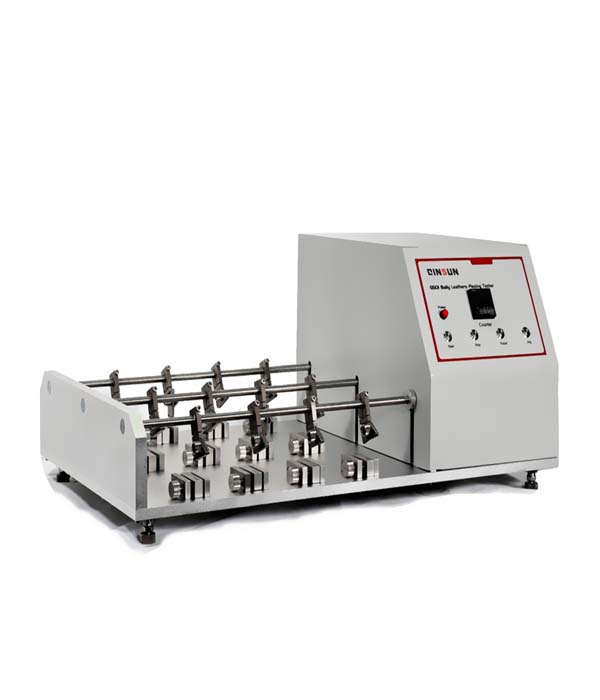
Functions and Applications of the Bally Type Flexometer
A Flexometer is a testing instrument used to evaluate the fatigue resistance and crack resistance of materials under repeated bending or flexing conditions. It is widely applied in quality control and R&D for flexible materials such as leather, rubber, and textiles.
Core Functions
Measurement of Flex Resistance:
Evaluates a material’s ability to resist surface cracking, wrinkling, or fracture during repeated bending cycles.
Simulation of Real-World Use Conditions:
Simulates bending behavior experienced in actual applications such as shoe uppers, gloves, and furniture leather during daily dynamic use.
Quantitative Durability Assessment:
By setting parameters such as bending cycles, angle, and frequency, the instrument observes and rates the degree of material damage.
Main Applications
Leather Industry:
Used to evaluate the flex durability of shoe upper leather, garment leather, and upholstery leather, ensuring that products do not crack during their service life.
Rubber and Polymer Materials:
Tests heat buildup, deformation, and fatigue performance of rubber products under dynamic compression or shear conditions.
Quality Control and Compliance Testing:
Ensures conformity with international standards such as ISO, SATRA, and GB/T requirements.
R&D and Comparative Analysis:
Compares the influence of different materials, coatings, or processing techniques on flex resistance performance.
Technical Principle and Core Structure of the Bally Type Flexometer
The Flexometer operates based on the principle of mechanical reciprocating motion. One end of the leather specimen is fixed, while the other end is subjected to a controlled bending force, causing repeated flexing at a specified angle and frequency.
Core Components
1. Drive System:
Typically adopts a servo motor or stepper motor to provide stable and adjustable flexing frequency, usually ranging from tens to hundreds of cycles per minute.
2. Clamping Fixture:
Designed in compliance with international standards such as ISO and GB/T, ensuring the specimen is securely fixed and subjected to uniform force distribution during testing.
3. Counting and Control System:
Records the number of flexing cycles and automatically stops the test when preset conditions are reached. Some models support predefined test cycles or termination conditions such as specimen failure (e.g., cracking or breakage).
4. Observation Window:
Allows real-time monitoring of surface changes on the specimen. Some advanced models are equipped with lighting and imaging systems to record the development of cracks during the test process.
Applications of the Bally Type Flexometer
The Flexometer is primarily used in industries where it is necessary to evaluate the fatigue resistance and crack resistance of flexible materials under repeated bending conditions.
Main Application Areas
1. Leather Products Industry
Footwear: Used to test the flex durability of shoe upper leather and lining materials, ensuring resistance to cracking during daily wear.
Bags and Handbags: Evaluates the durability and structural integrity of leather materials after repeated bending.
Apparel: Tests the flex resistance of garment leather, supporting the development of soft and flexible clothing designs.
2. Furniture and Automotive Interior Industry
Used to assess the long-term fatigue resistance of leather or fabric used in sofas, seats, and other upholstered products.
Automotive interior leather must meet strict durability requirements, such as ≥50.000 flex cycles in dry conditions, while furniture leather typically requires ≥20.000 cycles, in accordance with standards such as ISO 5402-1:2022.
3. Quality Inspection and Research Institutions
Used in product inspection, arbitration testing, and technical supervision to ensure compliance with international and national standards.
Supports research institutes in studying the durability performance of leather, rubber, coatings, and other flexible materials.
4. Rubber and Polymer Materials Industry
Although the Bally type is primarily designed for leather testing, the concept of flex testing is also applied to rubber materials to evaluate heat buildup and deformation behavior under dynamic compression or shear conditions.
Operating Procedure of the Bally Type Flexometer
1. Specimen Preparation Stage
First, the test specimens must be cut according to standard requirements. The typical specimen size is 70 mm in length × 45 mm in width, with thickness matching the actual material of the finished product, generally recommended within 1.0 to 2.5 mm. The number of specimens depends on the equipment capacity; common models support simultaneous testing of 6 or 12 samples, improving testing efficiency.
2. Specimen Mounting Stage
Before mounting, the specimen should be folded along its length, with the grain side facing outward. Then, both ends of the specimen are securely fixed onto the upper and lower clamps of the instrument. Proper clamping is essential to prevent slipping or displacement during testing, which could affect accuracy.
3. Test Parameter Setting Stage
This is a critical step to ensure compliance with standards. The main parameters include:
Flexing Frequency: Typically set to (100 ± 5) cycles per minute (cpm), simulating real-life flexing conditions.
Flexing Angle: The most common standard is 90° ± 5°, meaning the specimen is repeatedly bent between horizontal and vertical positions. Some special models (e.g., CY-03A) may use other angles such as 22.5°, but 90° is the most widely adopted standard.
Number of Flex Cycles: Pre-set according to test requirements or product specifications. Common values include 10.000 cycles, though 5.000 or higher values may also be used depending on application needs.
4. Testing Operation Stage
After parameter setup, start the motor. The instrument will automatically drive the clamps to flex the specimen continuously. Modern equipment is usually equipped with an electronic counter or digital display, allowing real-time monitoring of the number of completed cycles for accurate process control.
5. Test Completion and Result Rating Stage
Once the preset number of cycles is reached, the machine stops automatically. The operator carefully removes the specimen and inspects the flexed area under good lighting conditions, focusing on cracks, fuzzing, delamination, or breakage.
The damage level is then evaluated using a standard grading system:
Grade 0: No visible damage; surface remains intact.
Grade 1–4: Increasing severity of cracking or surface damage.
Grade 5: Severe failure, such as complete breakage or fully penetrated cracks, indicating the poorest flex resistance.
This evaluation provides a clear and standardized assessment of material flex durability performance.
Importance of the Bally Type Flexometer
The Flexometer plays a significant role in the testing of leather and related materials. It is a key instrument in quality control and R&D for flexible materials such as leather and textiles, and is especially essential for evaluating durability and flex resistance. Its importance is reflected in the following aspects:
Standardized Testing Method
The Bally type flexometer is an internationally recognized instrument for leather flex resistance testing. It is widely compliant with authoritative standards such as ISO, SATRA, GB/T, ASTM, and JIS, ensuring consistency and comparability of test results across different laboratories and industries.
Simulation of Real-World Conditions
By applying repeated flexing cycles (typically 90° ± 5° at 100 ± 5 cycles per minute), the instrument simulates the dynamic bending behavior experienced by leather products such as shoes, gloves, and furniture during daily use. This allows accurate evaluation of resistance to cracking, wrinkling, or fracture.
Quantitative Durability Evaluation
Test results are expressed in terms of crack grading (from Grade 0: no visible cracks to Grade 5: complete failure) or the number of cycles until first cracking (e.g., N₁ ≥ 5.000 cycles indicating excellent performance). This provides objective and comparable data for quality control.
Wide Range of Applications
In addition to the leather industry, the instrument is also widely used for testing textiles, rubber, plastics, and other flexible materials to assess flexibility and fatigue life.
Continuous Technological Advancement
Modern Bally type flexometers feature digital displays, multi-station configurations (6. 12. or 24 stations), and automatic counting systems. They comply with updated safety and precision standards, significantly improving testing efficiency and reliability.
In summary, the Bally type flexometer is a precision testing instrument that plays a critical role in evaluating the performance reliability of flexible materials under dynamic loading conditions. By simulating repeated stress and strain in real-world use, it accurately determines material fatigue resistance, flexibility, and structural integrity. It is therefore an indispensable tool for ensuring product quality, supporting material innovation, and meeting industry standards and regulatory requirements. It is widely used in quality control processes, new product development, and compliance verification.We sincerely welcome inquiries or direct contact so that we can provide more detailed technical information, application solutions, and professional support services.
Previous: What is the cantilever test for stiffness?
N e x t : How to use Rubber Rebound Elasticity Tester?
