





What device is used to measure static pressure?
2026/06/05
Share:

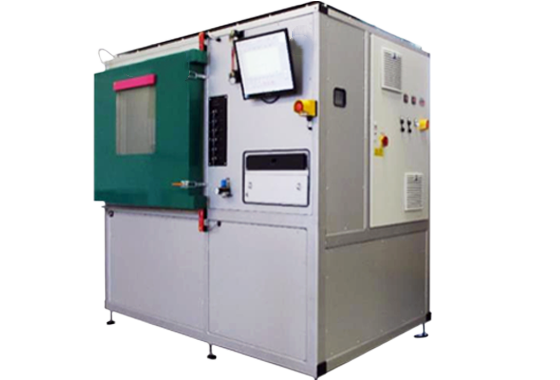
Composition of the Expansion Tank Static Pressure Test Machine
Main frame structure
The whole machine is built with a thickened steel frame, ensuring a solid and stable structure with no vibration or displacement during operation. The surface is treated with anti-rust and anti-corrosion coating, making it suitable for long-term continuous use in industrial workshop environments. The layout is compact and well-organized, occupying a small footprint and facilitating easy integration into production lines.
Pressure generation system (air/hydro type)
The pneumatic version consists of an air filtration and pressure regulating valve, a booster pump, and a stabilized air storage tank, providing clean and stable test air pressure.
The hydrostatic version is equipped with a high-pressure water pump, a constant-temperature water tank, and a media filtration and circulation system, enabling water reuse. It is energy-efficient, environmentally friendly, and ensures stable and uniform pressure output.
Core pressure control system
The core system includes a high-precision pressure sensor, a digital pressure controller, and a pressure compensation solenoid valve. It offers high adjustment accuracy and fast pressure stabilization response, enabling precise control of static test pressure. It also provides real-time pressure feedback, serving as the key component ensuring test accuracy.
Customized sealing fixtures
Sealing and clamping fixtures are customized according to the shape, size, and interface positions of different vehicle expansion tanks. High-elastic, wear-resistant silicone sealing elements are used to ensure tight sealing without side leakage. The quick-plug structure allows easy and fast sample installation and removal, significantly improving testing efficiency.
Timing and data storage system
The machine is equipped with a high-precision digital timer that allows flexible setting of pressure holding duration. A data storage module records each test’s pressure curve, holding time, and pressure decay values. This facilitates data retrieval, statistical analysis, and test report generation.
Safety protection system
The system integrates overpressure protection, an emergency stop button, an automatic pressure release valve, and an audible-visual alarm device. In case of abnormal pressure or excessive leakage, the machine immediately triggers an alarm and automatically stops the test, ensuring both equipment safety and operator protection.
Working Principle of the Expansion Tank Static Pressure Test Machine
The Expansion Tank Static Pressure Test Machine mainly relies on a hydraulic or pneumatic driving unit to provide stable and controllable static pressure to the expansion tank under test, thereby simulating its pressure-bearing capability under real operating conditions.
The equipment can increase pressure step by step according to a preset curve until reaching the target value, and maintain a constant pressure within a specified period. High-precision sensing elements are used to collect key parameters in real time, such as tank deformation, leakage, and pressure fluctuations. The entire testing process typically includes three core stages: pre-pressurization, pressure holding and stabilization, and automatic pressure release, which are coordinated by the upper computer and control system to ensure process stability and data traceability.
Mainstream testing machines generally adopt a PID closed-loop control system, with pressure control accuracy reaching ±0.5% FS. Taking commonly used models as an example, when equipped with a 0.1-level high-precision pressure sensor, they can accurately detect pressure variations as small as 0.01 MPa. Some high-end systems also integrate infrared thermal imaging modules, enabling simultaneous collection of temperature field distribution during pressurization. This provides more comprehensive and multi-dimensional test data for structural strength analysis and material fatigue performance research.
Functions and Applications of the Expansion Tank Static Pressure Test Machine
Functions
1. Static pressure testing
The machine simulates the static pressure conditions that expansion tanks experience in real-world applications, evaluating their sealing performance, pressure resistance, and structural stability under specified pressure levels.
2. Leakage detection
Through real-time monitoring by pressure sensors, the system detects pressure variations to determine whether any leakage exists in the expansion tank, ensuring compliance with airtightness requirements.
3. Durability testing
Long-duration pressure holding tests can be performed to evaluate the fatigue life and reliability of the expansion tank under continuous pressure conditions.
4. Data recording and analysis
Equipped with a data acquisition system, the machine records parameters such as pressure and time, generates test reports, and supports quality traceability and process optimization.
Applications
1. Automotive industry
Used in the development and production testing of expansion tanks in automotive engine cooling systems to ensure reliability under high-temperature and high-pressure conditions.
2. Construction machinery
Applied to test the performance of expansion tanks used in cooling systems of heavy equipment such as excavators and loaders, ensuring adaptability to harsh working environments.
3. Aerospace industry
Used for high-precision testing of expansion tanks in aircraft cooling systems, meeting safety requirements under extreme operating conditions.
4. Quality inspection and certification
Third-party testing institutions use this equipment for quality certification of expansion tanks to ensure compliance with industry standards.
Features of the Expansion Tank Static Pressure Test Machine
The core mission of this equipment is to accurately reproduce the pressure-bearing behavior of a cooling system under extreme operating conditions. Modern test machines typically offer a wide pressure regulation range, enabling simulation of extreme overpressure scenarios such as engine overheating or failure of pressure regulation valves in cooling systems.
To meet the high-throughput requirements of modern production lines, advanced static pressure test machines generally adopt a distributed control system based on “Windows + PLC”, and are equipped with large industrial touchscreen HMI panels. Operators can intuitively set parameters such as pressure holding time (ranging from seconds to thousands of hours), pressurization rate, and pressure thresholds.
The system supports multi-channel parallel testing, allowing multiple samples to be pressurized simultaneously under uniform flow and pressure conditions, significantly improving testing efficiency. In addition, the equipment integrates automatic liquid level control and explosion-proof design, ensuring absolute safety and stability during long-duration durability testing.
Unlike traditional manual observation methods, modern test machines are equipped with high-resolution pressure sensors. During the pressure-holding phase, the system continuously detects minute pressure decay. Combined with flow-based leak detection functions, it can accurately identify micro-leaks that are invisible to the naked eye.
Once a sample failure is detected, the system automatically shuts down the corresponding channel and triggers an alarm. All test data—including pressure curves, temperature variations, and evaluation results—are automatically recorded and compiled into standardized test reports. The system can seamlessly integrate with factory MES systems, enabling full lifecycle traceability of quality data.
Role of the Expansion Tank Static Pressure Test Machine
By continuously injecting pressurized coolant into the expansion tank and maintaining it for a specified duration, the test machine can directly evaluate whether the tank body, weld seams, and interfaces exhibit cracking, deformation, or leakage. This static pressure holding test effectively prevents potential defects caused by material flaws or poor injection molding processes, ensuring that every expansion tank delivered from production can remain completely leak-free under its rated working pressure or even test pressures exceeding 1.5 times the nominal value.
In addition to conventional short-term pressure resistance testing, the equipment also supports long-duration static creep testing. Plastic expansion tanks are prone to stress relaxation and micro-deformation under long-term high-temperature and high-pressure conditions. By maintaining continuous pressure for hundreds or even thousands of hours, engineers can evaluate material fatigue life and structural stability under extreme conditions, enabling the selection of higher-quality raw materials and preventing issues such as bulging or brittle fracture during long-term use.
For component suppliers, this testing machine serves as a “passkey” for gaining OEM approval. Major global automakers such as Volkswagen, General Motors, and BMW require cooling system components to pass specific static pressure test standards before qualification.
With authoritative test reports generated by this equipment, manufacturers can not only demonstrate compliance with industry standards but also quickly identify design flaws during the R&D phase (such as unreasonable rib structures), significantly shortening development cycles and reducing costly mold modifications.
With its realistic thermo-pressure coupling simulation technology, highly efficient multi-channel automation structure, and robust data traceability system, the Expansion Tank Static Pressure Test Machine has established itself as an authoritative solution in the field of fluid container testing. It is not merely an industrial testing device, but a critical guardian of thermal management safety and stable vehicle operation.
Today, as the automotive industry rapidly evolves toward electrification, lightweight design, and higher quality standards, the precision of vehicle thermal management systems continues to increase. This places ever-stricter requirements on structural strength, sealing reliability, and long-term stability of basic cooling components such as expansion tanks. Against this industry backdrop, the Expansion Tank Static Pressure Test Machine has become an indispensable core quality inspection device in the automotive cooling component supply chain.We sincerely welcome you to leave a message or contact us directly so that we can provide you with more detailed product information and technical support.
Previous: What is the Fabric Anti-Electromagnetic Radiation Performance Tester?
N e x t : How does the Simulation Test Dummy simulate real human reactions?
