





Which instrument is used for filter integrity tests?
2026/06/26
Share:

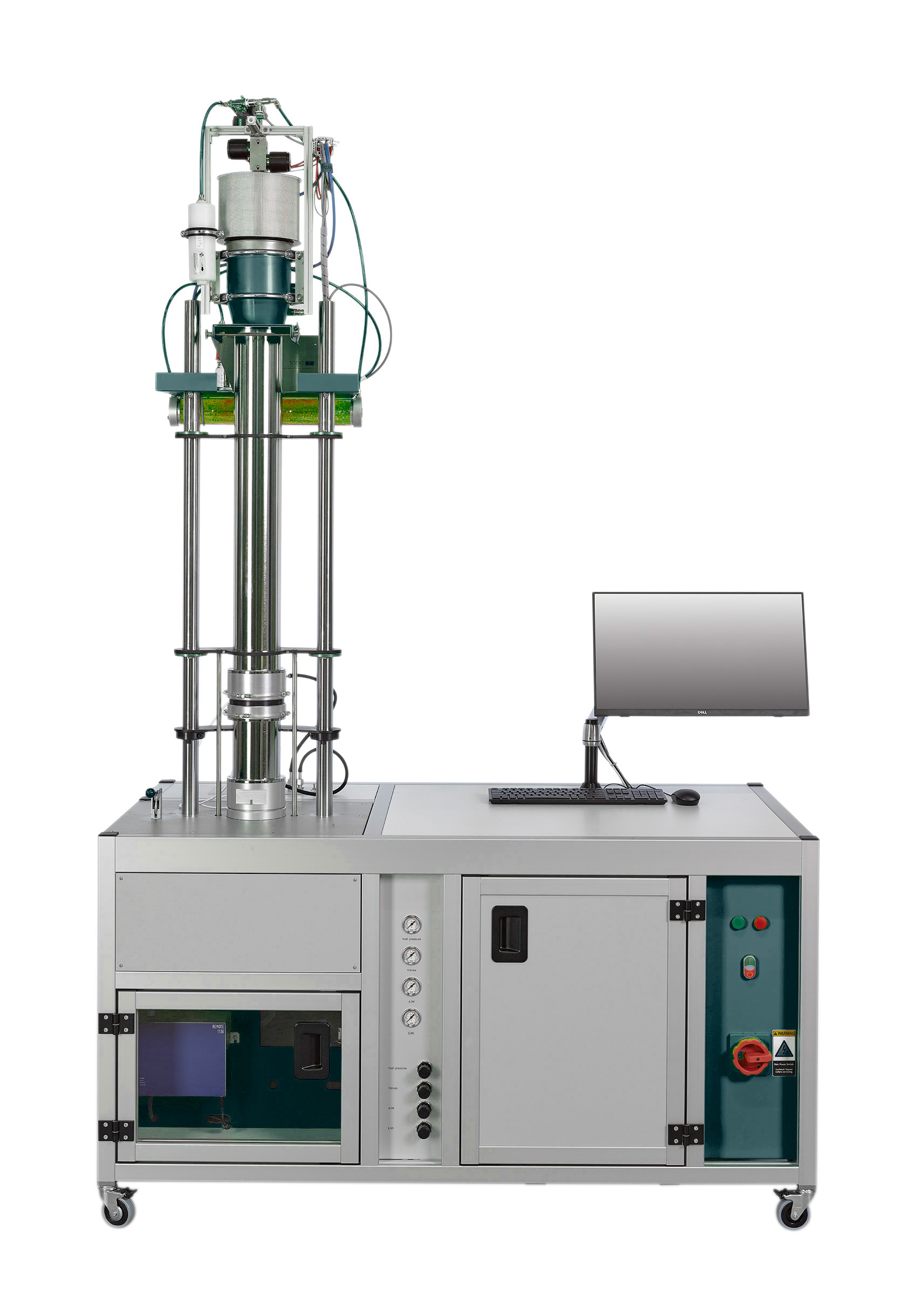
Definition and Technical Origin of the Filter Media Test System
In simple terms, a Filter Media Test System can be described as a “dedicated health examination center” for filter media. It is not used to evaluate the performance of a complete assembled filter unit; instead, it focuses specifically on the filter media itself. Within a controlled and standardized environment, it measures key performance indicators such as airflow resistance, filtration efficiency, and service life. In essence, it generates a precise “performance report” for each piece of filter media.
The technical requirements of such systems are not arbitrarily defined; they are governed by several internationally recognized industry standards. For example, commonly used European and American standards define procedures for dust-holding capacity testing of industrial filtration media. German standards place particular emphasis on cleanable filter media and specify performance evaluation methods after repeated cleaning cycles. Meanwhile, widely referenced ISO standards clearly define the most penetrating particle size (MPPS) testing requirements for high-efficiency and ultra-high-efficiency filter media, ensuring that results obtained by different laboratories are comparable and mutually verifiable.
It is also important to distinguish this system from other testing equipment, as their functional boundaries are clearly defined. A conventional air filter test bench evaluates the performance of a fully assembled filtration unit and cannot isolate the intrinsic performance of the filter media itself. A filter element integrity tester, on the other hand, is designed only to detect leakage or defects in finished filter cartridges and cannot assess deeper characteristics such as fractional efficiency or dust-holding capacity. In contrast, the Filter Media Test System is a specialized platform dedicated to comprehensive, full-spectrum performance evaluation of filter media as an independent material.
Core Components and Working Principle of the Filter Media Test System
The Filter Media Test System is primarily used to test and evaluate the performance of various types of filtration media. It plays a critical role in industrial production, environmental monitoring, medical applications, and scientific research, ensuring the effectiveness and compliance of filtration materials. The core components and working principles of the system are described in detail below.
I. Core Components
1. Filter Media Specimen
This is the central element of the testing process, including different types of filter meshes, filter papers, or filter membranes.
2. Testing Equipment
Pressure pump: Provides the necessary driving pressure for fluid to pass through the filter media.
Flow meter: Measures the flow rate of the fluid passing through the filter media.
Pressure sensors: Monitor pressure differentials before and after the filter media to evaluate filtration performance.
Temperature sensors: Measure fluid temperature, which is essential for testing certain types of filtration materials.
3. Control System
Computer control system: Controls test parameters such as flow rate, pressure, and duration, and records all test data.
Software interface: Provides a user-friendly platform for setting test conditions, initiating tests, and viewing results.
4. Fluid Supply System
This system supplies the testing medium (such as water, oil, or air), ensuring a stable and continuous fluid flow throughout the testing process.
5. Data Recording and Analysis System
This subsystem collects and stores test data and performs performance analysis. It evaluates key indicators such as filtration efficiency, pressure resistance, and leakage rate.
II. Working Principle
1. Preparation Stage
Install and calibrate all sensors and equipment.
Select and mount the filter media sample to be tested.
Configure test parameters such as flow rate, pressure, and test duration.
2. Testing Process
Start the pressure pump to drive fluid through the filter media.
The control system continuously monitors and records data such as flow rate, pressure, and temperature.
The system automatically regulates the test according to preset conditions (e.g., time duration or total fluid volume).
3. Data Analysis
After testing, the control system processes the collected data.
Software analyzes performance indicators such as filtration efficiency and pressure drop variation.
A test report is generated, including performance evaluation and recommended operating conditions.
4. Result Evaluation and Reporting
Based on the analysis, the system determines whether the filter media meets expected performance standards.
A detailed report is generated for user reference and further application.
Through the above process, the Filter Media Test System enables accurate evaluation of key performance parameters of filtration media, helping users select the most suitable materials and ensuring product reliability, safety, and operational efficiency.
Typical Industry Application Scenarios of the Filter Media Test System
The Filter Media Test System is primarily used to accurately determine key performance parameters of filtration materials, including filtration efficiency, pressure drop (resistance), and dust-holding capacity. Its typical applications span four major industrial domains:
1. Personal Protection and Healthcare
Respiratory protection equipment R&D and quality inspection
The system is used to test the filtration efficiency of medical protective masks and N95/FFP series respirators, ensuring compliance with relevant international standards.
Medical material validation
It evaluates the bacterial and particulate barrier performance of surgical gowns, isolation gowns, and medical filters, ensuring compliance with strict healthcare industry requirements.
2. Industrial Dust Removal and Environmental Engineering
Baghouse filter media selection
The system simulates real operating conditions through “filtration–cleaning (pulse-jet cleaning) cycles” to evaluate dynamic dust removal efficiency, residual pressure drop, and cleaning intervals of filter media used in baghouse dust collectors. These data provide critical technical support for projects such as power plants and cement plants during bidding and system design.
Industrial exhaust gas treatment
It assesses the performance degradation of cleanable filter media under long-term dust loading conditions, optimizes pulse-jet cleaning parameters, ensures emission compliance, and extends the service life of filter bags.
3. HVAC Systems and Cleanroom Applications
Air filter classification and certification
The system is used to test the particle counting efficiency and pressure drop of primary, medium, and high-efficiency air filters, which are widely applied in semiconductor fabs, hospitals, and other controlled environments.
Air purifier performance validation
It evaluates the particulate removal efficiency of both passive and active air purification systems, supporting energy efficiency labeling and regulatory compliance verification.
4. New Material Development and Third-Party Testing
Advanced filter media development
The system provides high-precision performance characterization for emerging materials such as melt-blown fabrics and electrospun nanofibers, accelerating process optimization from laboratory research to mass production.
Independent third-party quality inspection services
Testing institutions use this system to issue authoritative reports compliant with multiple international standards, supporting market regulation, import/export trade, and supply chain quality control.
Through these application scenarios, the Filter Media Test System serves as a critical platform connecting material R&D, industrial validation, and regulatory compliance across multiple industries.
Equipment Selection and Common Troubleshooting Guide for the Filter Media Test System
When designing and selecting equipment for a Filter Media Test System, multiple factors must be considered, including performance, compatibility, ease of use, cost, and future scalability. The following outlines key equipment selection recommendations as well as common troubleshooting guidelines.
I. Equipment Selection
1. Core Testing System Equipment
Filter testing instruments
Select high-precision and highly stable testing instruments, such as spectrometers or chromatographic analyzers. Ensure that they meet the required testing frequency range and accuracy specifications.
Data acquisition system
Choose a system capable of interfacing with the testing instruments and supporting real-time data collection and storage, such as data acquisition cards (DAQ) or high-performance industrial computers.
2. Auxiliary Equipment
Power supply unit
Provides stable and reliable electrical power to all testing equipment.
Control system
Automation control systems such as PLC (Programmable Logic Controller) or PC-based control systems are used to manage the testing process and data handling.
Environmental control equipment
Such as constant temperature and humidity chambers, ensuring stable and controlled test conditions.
3. Supporting Tools
Sample preparation equipment
Includes devices such as sample mixers and centrifuges, used for preparing and conditioning test samples.
Safety equipment
Includes smoke alarms, emergency stop buttons, and other safety systems to ensure safe operation during testing.
II. Common Troubleshooting Guide
1. Inaccurate Test Results
Check:
Verify the calibration status of testing instruments and the stability of the testing environment.
Solution:
Recalibrate the instruments and ensure that environmental control systems are functioning properly.
2. Slow or Unstable System Response
Check:
Inspect data transmission lines and verify whether the power supply is stable.
Solution:
Replace damaged cables and ensure a stable and reliable power supply.
3. Software or Hardware Conflicts
Check:
Verify compatibility between software and hardware, and check whether the latest drivers and firmware are installed.
Solution:
Update drivers and firmware; reinstall or upgrade related software and hardware if necessary.
4. Data Processing Errors
Check:
Inspect the configuration and settings of the data acquisition system.
Solution:
Reconfigure the system and ensure all parameters are correctly set.
5. Equipment Overheating or Failure
Check:
Check ventilation conditions and look for overheating warnings.
Solution:
Clean ventilation openings, ensure proper airflow around the equipment, and contact professional maintenance personnel if necessary for repair or component replacement.
Conclusion
With the continuous improvement of simulated operating conditions and the increasingly seamless integration between testing data and real industrial environments, the Filter Media Test System is expected to become a standard tool for all filtration-related industries. It enables precise quantification of filter media performance and effectively resolves key challenges in filter application.We sincerely welcome you to leave a message or contact us directly so that we can provide more detailed product information and technical support.
Previous: What is the Hexapod Tumbler test machine?
N e x t : What is a Humidifying Bottle Performance Tester?
