





What is a corrosion chamber?
2026/06/29
Share:

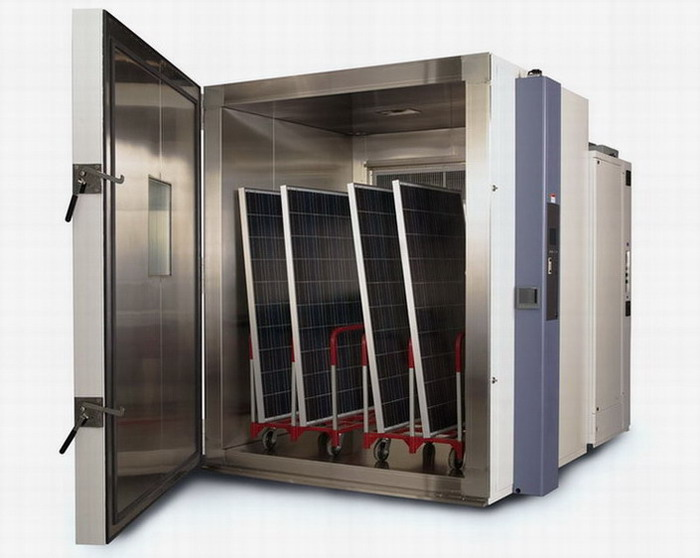
Applicable Industries of the Photovoltaic Module Ammonia Corrosion Test Chamber
The application fields of the photovoltaic module ammonia corrosion test are wide-ranging, mainly covering the following sectors:
The agricultural photovoltaic sector is one of the most important application scenarios for ammonia corrosion testing. In modern agriculture, the integration of photovoltaic power generation with agricultural production has become increasingly common, including agro-photovoltaic complementary projects and greenhouse photovoltaic systems. During agricultural activities, the use of fertilizers and pesticides, as well as ammonia generated from livestock and poultry farming, may cause corrosion effects on photovoltaic modules. Through ammonia corrosion testing, the suitability of PV modules in agricultural environments can be evaluated.
The livestock photovoltaic sector also requires close attention to ammonia corrosion issues. Large-scale livestock farms often install photovoltaic power generation systems to achieve energy self-sufficiency and surplus electricity export. The relatively high ammonia concentration in livestock environments poses a challenge to the long-term reliability of PV modules. Ammonia corrosion testing provides technical support for module selection in livestock photovoltaic projects.
Photovoltaic projects in chemical industrial parks are another important application area. During chemical production processes, various corrosive gases may be generated, including ammonia. When constructing PV power plants in chemical industrial parks, the impact of corrosive gases on PV modules must be carefully considered. The results of ammonia corrosion testing can serve as a basis for evaluating module adaptability in such environments.
In fishery-photovoltaic complementary projects, ammonia may be present in the air due to water evaporation and aquaculture activities. Combined with high-humidity conditions, this creates more severe environmental stress for PV modules. Ammonia corrosion testing can simulate such combined environments to assess the long-term reliability of the modules.
For PV module manufacturers, ammonia corrosion testing is required during the product development stage to verify environmental adaptability. The performance data obtained from these tests can be used to optimize product design, improve encapsulation materials, and enhance overall module quality.
For PV power plant operation and maintenance (O&M) units, ammonia corrosion testing can be used to evaluate the health condition of in-service modules and provide a basis for maintenance decisions. For modules suspected of ammonia-induced degradation, testing can confirm the degree of performance deterioration and guide repair or replacement strategies.
Test Methods for the Photovoltaic Module Ammonia Corrosion Test Chamber
The testing procedure for the ammonia corrosion test of photovoltaic (PV) modules is scientifically designed to ensure the accuracy and repeatability of the results.
During the pre-test preparation stage, the samples are first subjected to visual inspection and initial electrical performance testing, and all baseline parameters are recorded. The samples should be stabilized under standard test conditions to ensure consistency of their initial state. At the same time, the operating status of the test equipment is checked, relevant instruments are calibrated, and the ammonia test atmosphere is prepared.
In terms of test condition settings, the ammonia concentration is typically defined within a specified range according to relevant standards, while temperature and humidity parameters must also be strictly controlled. Typical test conditions include ammonia concentration levels determined by the simulated environmental severity, temperature ranging from ambient to elevated conditions, and relative humidity maintained at a specified level. The test duration is established by considering both the acceleration factor and the correlation with real operating conditions.
During the test execution phase, the samples are placed inside the test chamber, environmental parameters are set according to requirements, and the test program is started. Throughout the process, temperature, humidity, and ammonia concentration must be continuously monitored to ensure stable test conditions. Test data should be recorded periodically, and changes in sample appearance should be observed. After the test cycle is completed, the samples are removed for recovery treatment and stabilized under standard environmental conditions before further evaluation.
In the post-test evaluation stage, the samples undergo visual inspection, electrical performance testing, insulation testing, and other assessments, and the results are compared with the baseline data obtained before the test. The variation rates and degradation levels of each parameter are calculated to determine whether the samples meet the required standards. For samples with significant performance degradation, further analysis may be conducted to investigate failure causes and mechanisms.
The test result determination is based on relevant standards and technical specifications, which clearly define the acceptance limits for each evaluation indicator. If parameters such as power degradation rate, appearance defects, and insulation performance remain within allowable limits, the sample is considered to have passed the ammonia corrosion test. Otherwise, it is deemed to have failed, and a corresponding test report is issued.
Frequently Asked Questions and Answers on the Photovoltaic Module Ammonia Corrosion Test Chamber
During the ammonia corrosion testing process for photovoltaic (PV) modules, customers and technical personnel often focus on the following questions:
1. What types of PV modules require ammonia corrosion testing?
This test is mainly intended for PV modules used in ammonia-containing environments such as agricultural areas, livestock farms, and chemical industrial zones. If a PV power plant is located in such special environments, it is recommended to conduct ammonia corrosion testing on the selected modules to evaluate their suitability. Conventional PV power plants in normal environments generally do not require this test.
2. What standards are used for ammonia corrosion testing of PV modules?
Currently, relevant domestic and international standards mainly include environmental test specifications issued by the International Electrotechnical Commission (IEC series standards), as well as certain industry standards addressing special environmental applications. Testing institutions should select appropriate standard schemes based on customer requirements and project characteristics.
3. How long does the ammonia corrosion test usually take?
The test duration depends on the test program and acceleration level, typically ranging from tens of hours to several hundred hours. The specific duration is determined by considering the severity of the simulated environment, customer time requirements, and relevant standard specifications. The test cycle should be clearly defined in advance to ensure proper planning of the testing schedule.
4. How is it determined whether a PV module passes the ammonia corrosion test?
The evaluation is mainly based on visual inspection and changes in electrical performance parameters. Generally, the module should show no severe visual defects after the test, and the maximum power degradation rate must not exceed the limit specified by the relevant standards. Insulation performance must also meet safety requirements. The final acceptance criteria are subject to applicable standards or technical specifications.
5. What is the relationship between ammonia corrosion testing and other environmental tests?
Ammonia corrosion testing is part of the environmental reliability test system for PV modules. Together with damp heat testing, salt spray testing, UV aging testing, and others, it forms a comprehensive environmental qualification framework. Different tests simulate different environmental stresses, and appropriate combinations can be selected based on application scenarios.
6. How is personnel and equipment safety ensured during the test?
Ammonia is toxic and flammable, so strict safety procedures must be followed. The test equipment should be equipped with proper ventilation systems and ammonia leakage alarm devices. Operators must wear protective equipment. The laboratory should establish emergency response plans and be equipped with necessary safety facilities and first-aid equipment.
7. How do test results guide practical applications?
Test results can be used for PV module selection, site evaluation for power plants, and maintenance strategy planning. Modules that fail the test should not be used in high-ammonia environments. For modules showing significant degradation, maintenance monitoring frequency should be increased. Modules with excellent performance can be prioritized for use in special environments.
8. Can in-service PV modules be tested for ammonia corrosion resistance?
Yes, sampling tests can be conducted on installed and operating modules. However, the prior environmental stress experienced by the modules must be considered. Results from field-sampled modules should be analyzed in combination with their operational history and cannot be directly equated with new product test results.
9. Can ammonia corrosion testing replace long-term outdoor exposure testing?
Laboratory accelerated tests and outdoor exposure tests have different characteristics and cannot fully replace each other. Accelerated tests provide rapid evaluation results but require correlation with real-world conditions through acceleration factors. For critical projects, it is recommended to combine laboratory testing with field monitoring for more comprehensive assessment data.
10. How is the appropriate ammonia concentration selected for testing?
The test concentration should be determined based on the actual ammonia levels of the simulated environment, referring to environmental monitoring data or relevant standard recommendations. Lower concentrations are used for general agricultural environments, while higher concentrations are used for high-ammonia conditions such as livestock farms. The concentration setting should ensure both acceleration and representativeness.
In summary, through a systematic overview of application scenarios, testing methods, and frequently asked questions, we gain a clearer and more comprehensive understanding of the core functions, operational procedures, and practical value of the photovoltaic module ammonia corrosion test chamber. As a key piece of equipment for evaluating the long-term reliability of PV modules in ammonia-containing environments, its precise concentration control, stable environmental simulation capability, and scientific evaluation system are crucial for ensuring the safe and stable operation of PV systems in agricultural, livestock, and other specialized applications. If you have further questions regarding equipment selection, testing standards, or customized application solutions, we sincerely welcome you to leave a message or contact us directly so that we can provide more targeted and detailed technical support based on your specific application needs.
Previous: What is a Humidifying Bottle Performance Tester?
N e x t : Why is fiber fineness important?
