





What is a Humidifying Bottle Performance Tester?
2026/06/26
Share:

Working Principle of the Humidifying Bottle Performance Tester
I. Leakage Test Principle
The leakage test is a critical step for ensuring the sealing performance of a humidifying bottle. Its core purpose is to simulate the pressure conditions during actual use and detect whether gas leaks from connection points or structural seams.
1. Bubble immersion method
The humidifying bottle is fully submerged in a water tank with a depth greater than 20 cm. Compressed gas is introduced into the bottle at a specified pressure, typically 200 kPa, while accounting for additional hydrostatic pressure due to immersion depth. After holding for approximately 3 minutes to allow surface air to dissipate, the operator observes whether continuous bubbles are released from the bottle. The presence of bubbles indicates a leakage point. This method is intuitive and suitable for rapid visual inspection.
2. Pressure decay method
A high-precision pressure sensor is used to continuously monitor internal pressure changes within the humidifying bottle. After reaching the specified test pressure and stabilizing, any pressure drop exceeding the predefined threshold within a set time indicates leakage. This method provides quantitative, traceable data and meets the accuracy requirements of medical device quality management systems.
II. Pressure Resistance Test Principle
The pressure resistance test is designed to verify the structural stability of the humidifying bottle under extreme pressure conditions, simulating sudden high-pressure scenarios such as tubing blockage or humidification core obstruction.
During testing, the internal pressure is increased to at least twice the rated working pressure, typically 400 kPa, and maintained for 1 minute.
Throughout the process, pressure sensors continuously monitor pressure variations, while visual inspection or deformation sensors detect cracking, rupture, or permanent deformation of the bottle. If the structure remains intact with no abnormalities after pressure holding, the product is considered to have passed the test. Advanced systems can also generate pressure–time curves, enabling analysis of micro-creep behavior for R&D optimization.
III. Humidification Output Test Principle
The humidification output test evaluates the moisture delivery capability of the humidifying bottle, specifically measuring the water content per unit volume of gas at the patient-side outlet.
During testing, the humidifying bottle is placed under a controlled ambient temperature, and gas is introduced at a defined flow rate that simulates clinical operating conditions.
High-precision temperature and humidity sensors are used to measure changes in gas conditions after passing through the humidifying system. Specialized algorithms then calculate the absolute humidity (mg/L) of the output gas. The standard requirement is typically not less than 7 mg/L, ensuring adequate humidity for inhaled oxygen and improving patient comfort and safety.
IV. Overflow Test Principle
The overflow test simulates the anti-overflow performance of the humidifying bottle under conditions such as overfilling or abnormal tilting.
During the test, gas is introduced into the bottle at a flow rate of 7 L/min, while the device is tilted up to 20° in any direction from its normal operating position.
Visual inspection or liquid sensors are used to determine whether any water escapes from the gas outlet. If no liquid overflow occurs within the specified test period, the humidifying bottle is considered compliant, demonstrating effective anti-backflow design that prevents liquid from entering the patient’s respiratory system.
Functions and Features of the Humidifying Bottle Performance Tester
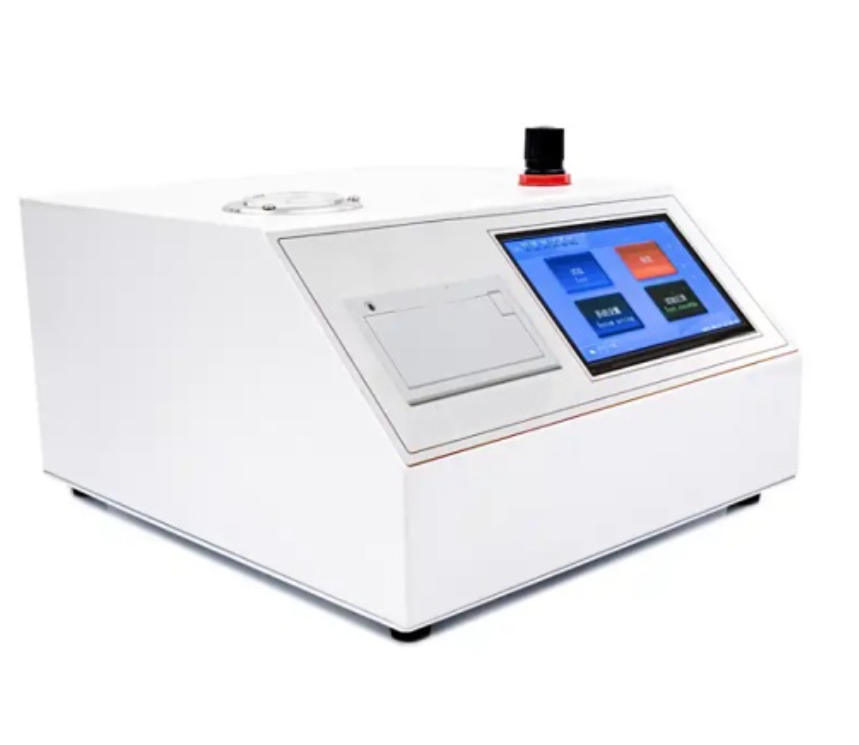
The Humidifying Bottle Performance Tester is a specialized testing device developed in accordance with relevant standards, designed for evaluating the physical safety and performance parameters of medical oxygen humidifiers.
I. Core Functions
1. Leakage Test
Under the maximum working pressure or a standard test pressure of 200 kPa, the system detects whether air leakage occurs at each connection point of the humidifying bottle by observing bubble formation, ensuring proper sealing performance.
2. Pressure Resistance Test
A pressure of 400–600 kPa is applied for 1 minute to verify whether the bottle body experiences cracking, rupture, or deformation, thereby assessing structural strength and safety under extreme conditions.
3. Humidification Output Test
The system measures the absolute humidity (water content per unit gas volume) at the patient connection outlet under specified flow rates and ambient temperature conditions, evaluating the humidification performance of the device.
4. Overflow Test
The device simulates abnormal working conditions by tilting the system at 20° while maintaining a gas flow of 7 L/min, to determine whether any liquid overflows from the gas outlet.
II. Key Features
1. Intelligent Operation
Equipped with a 7-inch full-color touchscreen interface, the system supports intuitive operation, multilingual menus (including Chinese), and preset test parameters for simplified use.
2. High-Precision Sensing
Built-in high-accuracy pressure sensors and flow meters ensure reliable measurement results, with pressure accuracy up to ±1%, guaranteeing data stability and repeatability.
3. Data Management
The system includes onboard data storage, supports real-time report printing via a micro printer, and enables data export through a USB interface. Optional GMP-compliant software with audit trail functionality is also available.
4. Universal Compatibility
A tapered test interface design allows compatibility with most commercially available humidifying bottles. Some models also feature a 20° tilting observation structure for overflow simulation.
5. Safety Protection
The system is equipped with overload protection, power-loss memory, and overpressure/overcurrent protection functions to ensure safe and stable operation throughout the testing process.
Importance of the Humidifying Bottle Performance Tester
The Humidifying Bottle Performance Tester serves as a core quality control instrument for ensuring the safety and reliability of oxygen therapy systems. Its importance can be understood from four key perspectives:
1. Preventing Rupture Risks and Ensuring Patient Safety
Humidifying bottles operate in oxygen-rich environments under continuous pressure. If the structural strength is insufficient or defects exist, mechanical rupture and oxygen leakage may occur, potentially causing serious injury.
Through burst pressure testing and pressure resistance testing (e.g., withstanding 400 kPa for 1 minute without failure), the tester accurately quantifies the pressure tolerance limit of the bottle. This effectively eliminates safety risks caused by structural failure at the source.
2. Ensuring Sealing Integrity and Maintaining Therapeutic Effectiveness
Even minor leakage can lead to insufficient oxygen flow and reduced humidification efficiency, directly affecting respiratory support outcomes.
Using high-precision sensors, the system performs leakage detection (such as pressure decay monitoring or bubble observation at 200 kPa), enabling the identification of micro-leaks that are invisible to the naked eye. This ensures zero leakage at all connection points, maintaining stable oxygen concentration and flow delivered to the patient.
3. Verifying Functional Performance and Enhancing Clinical Experience
Beyond safety, the tester evaluates key functional indicators such as humidification output and overflow prevention performance.
By simulating real clinical conditions, it assesses gas flow through the humidifying medium and verifies anti-backflow capability. This helps prevent pressure spikes caused by blockage and avoids water backflow into the oxygen source, thereby reducing patient discomfort and minimizing equipment damage risks.
4. Ensuring Regulatory Compliance and Supporting Standardized Production
The device is an essential tool for compliance with industry standards such as YY/T 1610-2018 (Medical Oxygen Humidifiers).
It provides objective, traceable data and pass/fail evaluation criteria, enabling manufacturers and healthcare institutions to meet GMP requirements and medical device regulatory standards, while avoiding legal and reputational risks caused by non-compliant products.
Conclusion
In essence, the Humidifying Bottle Performance Tester transforms subjective judgment into precise, quantifiable data, establishing a reliable evaluation system that bridges laboratory development and clinical application. It serves as a critical safeguard ensuring patient safety, oxygen therapy effectiveness, and regulatory compliance.We sincerely welcome you to leave a message or contact us directly for more detailed product information, technical specifications, or customized solutions to support your quality improvement and compliance needs.
Previous: Which instrument is used for filter integrity tests?
N e x t : What is a corrosion chamber?
