





What is a high-temperature curing chamber?
2026/07/02
Share:

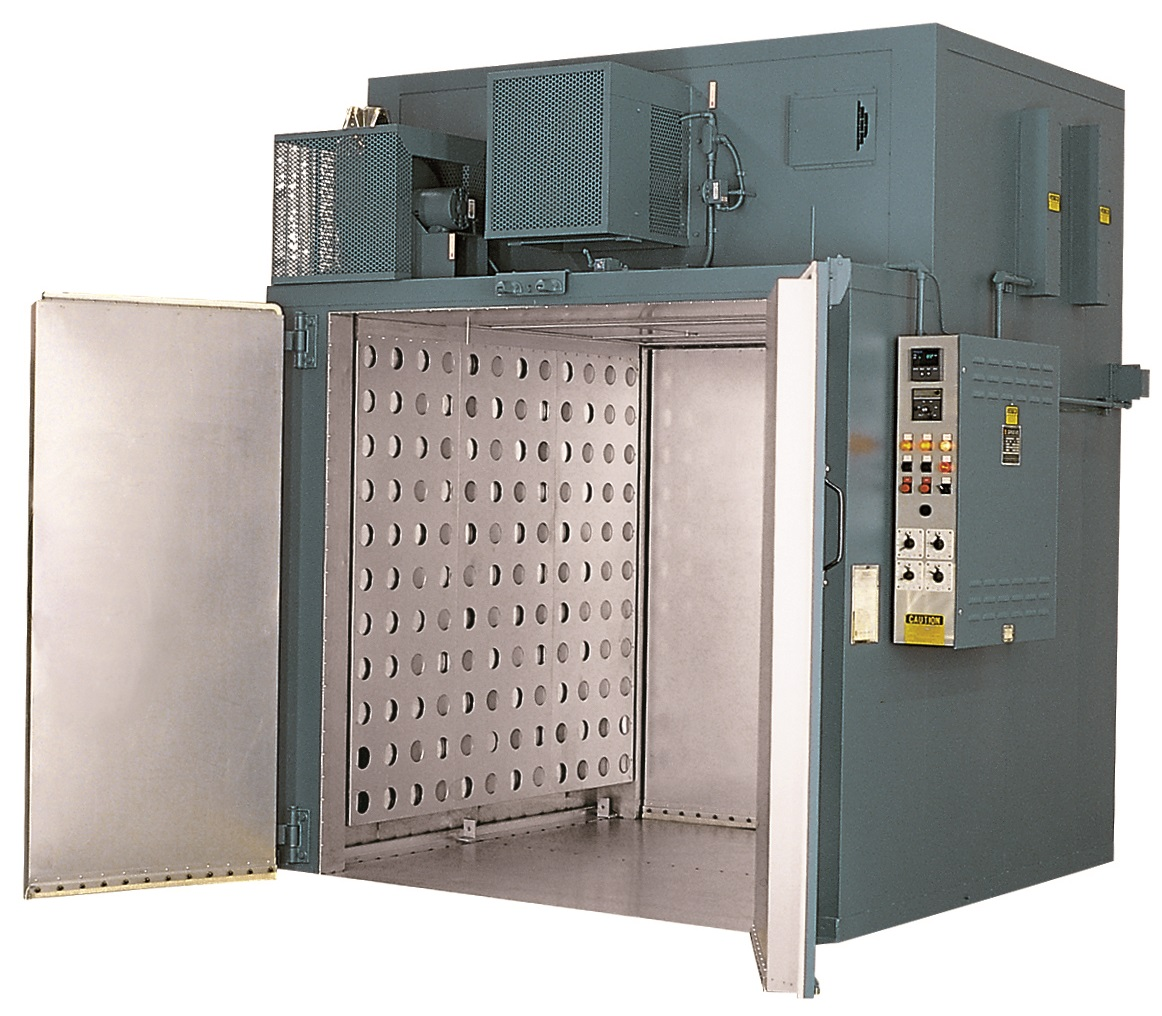
Working Principle and Operating Procedure of the High-Temperature Curing Room
Place the sprayed workpieces onto a suspended rail system or ground rail flat trolley, and move them into the high-temperature curing chamber. Close the inlet and outlet doors at both ends of the chamber, and follow the steps below for the curing process:
Turn on the vaporization furnace heating button to raise the water temperature to 70°C until the heating indicator light turns off. (Before starting, please ensure that the vaporization furnace is fully filled with water. Do not operate dry to avoid damaging electrical components.)
Turn on the fan switch and wait approximately five seconds for the fan to reach maximum speed. At this point, the interior of the curing chamber enters a 360-degree internal air circulation state.
Turn on the ignition button to start the burner operation. The internal temperature begins to rise, and after about 20 minutes, the heating process is completed and the system enters a heat preservation (holding) state. (The exact terminology may vary by region.) The duration of the holding period should be determined based on the surface curing requirements of the workpiece’s area and volume.
After turning off the heating function, open the outlet door at the end of the chamber and remove the workpieces. (Before opening the door, ensure that the temperature has dropped below 120°C to avoid injury.)
Technical Features of the High-Temperature Curing Room
A low-noise fan system creates a quiet working environment. The sealed electric heating tubes provide stable performance and long service life.
Rails are installed at the bottom and equipped with trolleys for loading workpieces or specimens, ensuring high operational efficiency.
Equipped with air inlet and exhaust devices, the ventilation rate of the chamber can be adjusted. The independent control system allows either local operation near the equipment or centralized control in a control room.
Optional imported high-precision intelligent programmable temperature controller is available, featuring automatic PID parameter tuning and solid-state relay power regulation. Multi-stage programmable temperature profiles can be preset.
The intelligent temperature control system ensures sensitive and reliable operation. A recorder logs the entire temperature curve during operation. An over-temperature protection device provides audible and visual alarms and automatically cuts off the heating power to ensure the safety of both equipment and workpieces.
Applications and Industry Characteristics of High-Temperature Drying Ovens
High-temperature drying ovens, with their strong high-temperature processing capability and flexible spatial configuration, demonstrate significant application value across a wide range of industrial fields. Different industries, based on their own process requirements and product specifications, have developed distinct application models for high-temperature ovens, resulting in diversified equipment variations and process standards. Through these differences, we can better understand the technical adaptability and process flexibility of high-temperature drying ovens as a general-purpose thermal processing platform.
1. Food Processing Industry
The food processing industry is one of the important application areas of high-temperature drying ovens. In this field, high-temperature ovens are mainly used for dehydration and drying processes. According to available references, drying rooms operating at around 150°C are widely used for meat dehydration and fruit and vegetable drying.
Within this temperature range, high heat enables rapid moisture evaporation and shortens drying time, while avoiding excessive temperatures that may damage nutritional content and sensory quality of food products. It is worth noting that food-grade high-temperature ovens strictly follow hygienic design standards. Stainless steel is commonly used for internal surfaces due to its easy-to-clean properties, and the hot air circulation system is designed to prevent cross-contamination.
Some advanced food drying systems are also equipped with precise humidity control functions to achieve accurate drying curve management, ensuring consistent product quality. In meat drying applications, multiple-layer trays are typically installed inside the chamber, allowing workers to perform tasks such as trimming and flipping, which aligns with operational workflows involving manual handling and production coordination.
2. Coating and Painting Industry
In the coating industry, the demand for high-temperature drying ovens is primarily focused on the critical process of coating curing. In this field, such equipment is often referred to as curing ovens, where temperature accuracy and uniformity directly determine coating quality.
Water-based phenolic resin coatings, commonly used in industrial painting processes, require curing at temperatures above 150°C to complete cross-linking reactions. This chemical process is highly temperature-sensitive: insufficient temperature leads to incomplete curing and poor coating performance, while excessive temperature may cause surface defects or substrate deformation.
Therefore, coating curing ovens are typically equipped with high-precision PID temperature control systems and uniform hot air circulation systems to ensure minimal temperature deviation across the working chamber. Walk-in curing ovens are a typical example in this application, allowing large workpieces such as automotive bodies and furniture components to be easily loaded and processed, meeting batch production requirements.
3. Chemical and Pharmaceutical Industries
Applications in the chemical and pharmaceutical industries show more diverse technical characteristics. In chemical production, high-temperature drying ovens are used not only for raw material drying but also for melting, curing, and various thermal treatment processes.
Chemical material heating chambers are designed specifically for processing certain materials under high temperatures to achieve melting, drying, or other process objectives. These ovens typically require a wider temperature range and stronger corrosion resistance due to the nature of chemical substances.
In the pharmaceutical industry, greater emphasis is placed on cleanliness and biosafety, especially in processes such as sterilization of packaging containers or drying of pharmaceutical raw materials. Steam-heated ovens mentioned in relevant applications are particularly valuable in this field because steam heating systems are easier to validate and control in terms of sterilization processes.
Such systems often require exhaust gas treatment units. Volatile organic compounds (VOCs) generated during processing must be effectively handled to meet environmental protection requirements, ensuring safe and compliant operation.
4. Electronics, Electrical, and Metal Processing Industries
High-temperature drying ovens are also widely used in electronics, electrical engineering, and metal processing industries for insulation treatment, powder coating curing, and preheating processes.
Industrial ovens can handle large electrical equipment such as motors and transformers for integrated thermal processing, which is not achievable with small laboratory ovens. In metal processing, high-temperature ovens are commonly used for drying sand cores in casting processes, where temperatures around 180°C ensure sufficient structural strength.
These industrial applications place extremely high demands on temperature uniformity and stability, as uneven heating may lead to product performance variations or residual stress. To meet these requirements, industrial-grade ovens typically adopt multi-zone independent temperature control systems and forced hot air circulation systems to ensure uniform heating of large workpieces.
Some advanced models are also equipped with automated loading/unloading systems and process recording devices, further improving operational efficiency and traceability.
Importance of High-Temperature Curing Rooms
High-temperature curing rooms are core process equipment in high-end manufacturing that determine the final performance, reliability, and regulatory compliance of products. Their importance can be summarized in the following four key dimensions:
1. Ensuring Material Physical and Chemical Performance
Achieving complete curing reactions:
Through precise temperature control, high-temperature curing rooms ensure sufficient cross-linking reactions in powder coatings, adhesives, and composite materials, thereby meeting required process standards for coating hardness, adhesion, and peel strength.
Eliminating residual risks:
They efficiently remove ink, solvents, or moisture, controlling residual solvent content within safe thresholds (e.g., ≤5 mg/m²), thereby preventing defects such as bubbling, haze formation, or delamination.
2. Improving Product Reliability and Service Life (Accelerated Aging Validation)
Early detection of potential defects:
By simulating extreme high-temperature environments for accelerated aging tests, early-stage failures in products such as electronic components and batteries can be identified, significantly reducing market failure rates.
Verification of long-term stability:
They provide thermal stability data for critical components in aerospace, new energy vehicles, and other high-reliability industries, ensuring safe long-term operation under harsh working conditions.
3. Optimizing Production Efficiency and Cost Structure
Shortening process cycles:
Compared with natural drying, high-temperature curing significantly reduces curing time, improves production line turnover efficiency, and supports large-scale continuous manufacturing.
Reducing overall costs:
By lowering rework rates and minimizing post-production maintenance and replacement costs, and combined with intelligent energy-saving technologies, the total lifecycle operating cost can be significantly reduced.
4. Meeting Strict Compliance and Safety Standards
Environmental compliance requirements:
When integrated with VOC catalytic combustion treatment systems, the equipment ensures exhaust emissions meet updated environmental standards (e.g., 2026 regulations), reducing the risk of environmental penalties.
Safety and data traceability:
With over-temperature protection, explosion-proof design, and full-process data recording functions, the system meets ISO quality management requirements for process traceability while ensuring operational safety.
In short, high-temperature curing rooms have evolved from auxiliary drying equipment into a key node that reshapes the value chain, directly influencing product quality competitiveness and regulatory survival capability.We sincerely welcome your inquiries or messages so that we can provide more detailed product information and technical documentation.
Previous: What is a photovoltaic module outdoor exposure test system?
N e x t : How to test shrinkage of fabric?
