





What is a photovoltaic module outdoor exposure test system?
2026/07/01
Share:

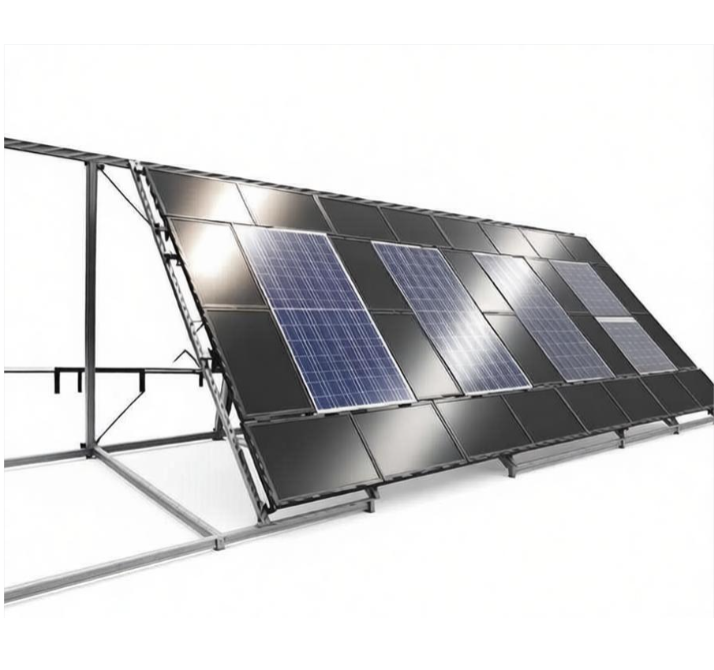
Composition and Working Principle of the Outdoor Exposure Test System for Photovoltaic Modules
1. Key system components
Test array
The system includes fixed-tilt or dual-axis tracking mounting structures to ensure consistent irradiance angles. Some systems also support backside irradiance monitoring for bifacial PV modules.
Data acquisition unit
It integrates high-precision ADC modules and supports remote data transmission, enabling long-term unattended operation.
Analysis software
The software automatically performs outlier filtering and curve pattern recognition, and generates reliability evaluation reports.
2. Working principle
The core principle of this system is to use the real natural environment as the stress source. High-precision sensors are used to synchronously collect environmental parameters and electrical performance data of photovoltaic modules, establishing an “environment–performance” correlation model to evaluate long-term reliability.
Unlike laboratory accelerated aging tests, this system does not simulate environmental conditions; instead, it directly exposes the modules to real outdoor climate conditions. Its working logic can be described as follows:
Natural stress exposure
PV modules are installed on outdoor test racks and directly exposed to combined environmental stresses, including full-spectrum solar radiation, temperature cycling, humidity variation, rain erosion, and atmospheric pollutants.
Compared with accelerated laboratory aging, the system records real-time, long-term material degradation and power decay under actual operating conditions.
Multi-parameter synchronous acquisition
Environmental parameter monitoring
Pyranometers are used to measure global irradiance, while temperature and humidity sensors, anemometers, and other instruments record key variables such as light intensity, module backsheet temperature, and ambient humidity in real time.
Electrical performance measurement
A multi-channel IV curve tracer performs rapid scans to obtain key parameters such as open-circuit voltage, short-circuit current, maximum power point, and fill factor.
Data synchronization
The system strictly aligns electrical performance data with environmental parameters using unified timestamps to eliminate measurement errors caused by irradiance fluctuations.
Data correction and analysis
Normalization
Using a single-diode model or standard test condition (STC) conversion algorithms, the measured power is corrected to equivalent output under standard irradiance and temperature conditions, removing weather-induced fluctuations.
Degradation rate calculation
Long-term data is fitted using linear regression to calculate power temperature coefficients and annual degradation rates, identifying potential failure modes.
Through this “real exposure + precise measurement” closed-loop system, the Outdoor Exposure Test System provides irreplaceable empirical data for predicting the service life of photovoltaic modules in specific climate regions.
Application Scenarios of the Outdoor Exposure Test System for Photovoltaic Modules
As a benchmark and calibration reference for artificial accelerated aging tests, the Outdoor Exposure Test System provides highly reliable and realistic data that closely reflects actual service conditions. It is widely used in material research and development, formulation screening, production quality control, standard formulation, and product certification. It is an indispensable core testing facility for evaluating the weather resistance of industrial products.
The following sections introduce its main application scenarios in detail:
1. Automotive exterior materials
Exterior automotive components such as plastics, body coatings, paint layers, rubber sealing strips, rearview mirror housings, sunroof parts, automotive films, and tire rubber are often exposed to long-term outdoor conditions and therefore require high weather resistance.
Using the outdoor exposure system, long-term weathering tests can be conducted on automotive exterior materials, coatings, and rubber products to evaluate aging issues such as fading, gloss loss, cracking, chalking, and sealing failure. The results provide real-world data for raw material selection, coating process optimization, and formulation improvement, ultimately enhancing the durability of automotive exterior components.
2. Building and construction materials
Materials such as exterior wall coatings, stone-effect paints, fluorocarbon coatings, anti-corrosion paints, aluminum composite panels, PVC profiles, decorative boards, and waterproof membranes must withstand long-term exposure to sunlight and rain.
Through long-term outdoor exposure testing, the system verifies resistance to fading, cracking, rain erosion, mildew, and chalking. It helps determine whether materials meet construction weatherability standards and provides essential data for product development and engineering material selection.
3. Polymer and rubber materials
Materials such as ABS, PP, PC, PVC, modified engineering plastics, silicone, rubber products, and nylon are widely used in outdoor appliances, gardening tools, photovoltaic accessories, and municipal facilities.
Outdoor exposure testing allows comparison of different antioxidant systems, UV absorbers, and formulations. It helps optimize material compositions, improve resistance to photo-oxidation and thermal aging, and extend outdoor service life.
4. Outdoor textiles and functional fabrics
Outdoor tent fabrics, sunshade materials, UV-protective clothing, artificial leather, outdoor furniture fabrics, and waterproof breathable textiles are prone to fading, strength reduction, and mold growth under long-term exposure.
The system simulates natural climatic conditions to evaluate color fastness, tensile strength, tear resistance, and appearance degradation, providing essential support for functional finishing and weather-resistant textile development.
5. Research institutions and third-party testing organizations
Universities and research laboratories use outdoor exposure systems to study polymer aging mechanisms, weather-resistant modification technologies, and new protective additives, building long-term natural aging databases.
Third-party testing agencies use the system to conduct commissioned weatherability tests, type inspections, and export certification testing. The resulting authoritative reports serve as key technical documentation for market access, engineering bidding, and industry standard compliance.
6. New energy and photovoltaic materials
New energy components such as photovoltaic backsheets, encapsulation films, inverter housings, and energy storage system enclosures are continuously exposed to outdoor environments, and their weather resistance directly affects system lifespan.
Outdoor exposure testing evaluates resistance to UV radiation, temperature cycling, and humidity aging, ensuring long-term stable operation of renewable energy equipment.
Conclusion
The Outdoor Exposure Test System provides real-world, long-term environmental data that is irreplaceable for evaluating material durability. It plays a critical role across automotive, construction, polymer, textile, scientific research, and new energy industries, ensuring reliable performance and long service life of materials and products under natural environmental conditions.
Importance of the Outdoor Exposure Test System for Photovoltaic Modules
The Outdoor Exposure Test System for photovoltaic (PV) modules serves as the “gold standard” for verifying long-term reliability and real-world energy yield performance. Its core value lies in overcoming the limitations of indoor accelerated aging tests and directly revealing failure mechanisms under complex, synergistic natural environmental conditions.
1. Revealing real failure mechanisms and synergistic effects
Indoor testing cannot fully replicate the combined effects of ultraviolet radiation, temperature fluctuations, humidity, wind, sand, and atmospheric pollutants. The outdoor exposure system can realistically expose defects that only emerge under specific climatic combinations, such as EVA encapsulant yellowing, backsheet cracking, and potential-induced degradation (PID). This helps prevent discrepancies between laboratory results and field performance.
2. Calibrating power degradation models and investment returns
Different PV technologies show significantly different annual degradation rates (DR) across climate zones such as tropical, desert, and high-altitude cold regions. Field exposure data is the only objective basis for correcting energy yield prediction models and evaluating lifecycle metrics such as LCOE (Levelized Cost of Electricity) and overall investment risk.
3. Verifying durability of new materials and processes
For emerging technologies such as perovskite solar cells, instability and hysteresis effects are still not fully understood, and indoor preconditioning protocols remain inconsistent. Outdoor exposure testing is therefore a necessary step to identify degradation pathways, validate material stability, and establish standardized certification procedures, directly determining whether new technologies can be commercialized.
4. Supporting international standard recognition and quality assurance
Outdoor exposure data based on IEC and other international standards provides critical evidence for global certification. It offers traceable and reproducible long-term performance records, helping manufacturers overcome trade barriers and improve market trust in product performance under extreme environmental conditions.
Conclusion
In summary, the Outdoor Exposure Test System for photovoltaic modules is a crucial platform for evaluating long-term reliability and environmental adaptability. Its importance is self-evident and deserves continuous attention and in-depth discussion.We sincerely welcome industry peers, experts, and potential users to leave messages or contact us directly through official channels, so that we can provide more detailed technical information and customized solutions tailored to your specific needs.
Previous: What is the wit test for filter integrity?
N e x t : What is a high-temperature curing chamber?
