





What is an airflow conditioning environmental chamber?
2026/07/08
Share:

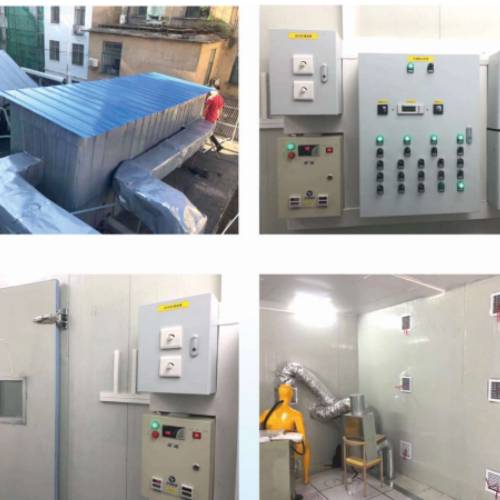
Core Design Principles of Airflow Conditioning Environmental Chambers
Airflow organization is the key feature that distinguishes an Airflow Conditioning Environmental Chamber from conventional temperature and humidity test chambers. Airflow organization refers to the scientific arrangement of supply and return air outlets, including their positions, angles, and airflow velocity parameters within a closed chamber space. Through this optimized design, purified air that has undergone precise thermal and humidity conditioning can effectively diffuse and mix throughout the chamber, uniformly removing excess heat and moisture. As a result, the entire working area achieves a stable and uniform distribution of temperature, humidity, airflow velocity, and cleanliness.
If airflow organization design is neglected in traditional environmental chambers, significant air recirculation and turbulence may easily occur inside the chamber. This can cause noticeable differences in environmental conditions experienced by test specimens at different locations. For example, areas near the air supply outlet may have lower temperatures, pollutant concentrations may accumulate in corners, and airflow velocity across specimen surfaces may vary significantly. As a result, the reliability and practical value of test data may be compromised.
In contrast, an optimized airflow organization design can effectively minimize recirculation and turbulence within the airflow field, allowing air movement inside the chamber to approach a uniform unidirectional flow or fully mixed flow pattern. This significantly reduces the average air residence time and enables the environmental parameters throughout the entire chamber to reach equilibrium more quickly and consistently.
To achieve ideal airflow performance, Airflow Conditioning Environmental Chambers incorporate CFD (Computational Fluid Dynamics) simulation technology during the design stage. By solving fluid dynamics equations through computer modeling, engineers can visually analyze pressure distribution, temperature distribution, and airflow velocity distribution at different locations inside the chamber. This allows the supply and return air structure to be optimized in advance, avoiding airflow imbalance caused by traditional experience-based design methods.
This digital simulation approach not only significantly reduces the time and cost associated with prototype testing but also enables customized airflow organization solutions for different testing scenarios, greatly improving the adaptability and application range of environmental chambers.
Structural Design and Technical Features of Airflow Conditioning Environmental Chambers
A standard Airflow Conditioning Environmental Chamber is not simply a sealed chamber combined with temperature and humidity control equipment. Instead, it is a sophisticated integrated system composed of multiple subsystems working together to achieve precise environmental simulation.
The main chamber body is typically constructed from mirror-finished stainless steel through welding, with the inner surfaces polished to minimize surface adsorption. This design prevents the accumulation of residual adsorptive materials and reduces the adsorption of pollutants such as formaldehyde and VOCs, thereby avoiding interference with test results. The airtightness of the chamber is strictly verified. Under a relative pressure of 1 kPa, the leakage rate is controlled below 3% of the total airflow volume, ensuring that the internal environment remains unaffected by external conditions.
The core airflow organization system consists of a clean air supply unit, airflow straightening devices, supply and return air networks, and circulation fans. Purified zero air first passes through straightening grids and guide plates, where unstable airflow is transformed into a uniform and stable flow pattern. The conditioned air is then introduced into the chamber through strategically arranged supply outlets and finally discharged through designated return air outlets, creating a complete airflow circulation system.
According to different testing requirements, the airflow organization mode can be flexibly adjusted:
For pollutant emission testing applications, a uniform mixed airflow pattern throughout the chamber is adopted to ensure consistent pollutant distribution.
For applications requiring high cleanliness levels, a vertical laminar airflow system can be applied to maintain a highly controlled clean environment.
For special operating condition simulations, the system can achieve directional unidirectional airflow to reproduce specific airflow conditions.
The integrated environmental control system enables precise regulation of multiple parameters. The temperature control range typically covers -40°C to 80°C, with a control accuracy of up to ±0.5°C. The humidity control range is generally 40%RH to 70%RH, with fluctuation controlled within ±3%RH. The air exchange rate can be accurately adjusted between 0.5 air changes/hour and 2 air changes/hour, while some specialized models can achieve an ultra-low air exchange rate control as low as 0.05 h⁻¹.
The airflow velocity within the chamber working area can be stably maintained between 0.1 m/s and 0.3 m/s, fully meeting the testing requirements of various international and industry standards.
Application Value Across Diverse Scenarios
The application of Airflow Conditioning Environmental Chambers has penetrated into the core research, development, and testing processes of numerous industries. The diverse requirements for airflow organization in different fields continue to drive the continuous evolution and upgrading of this technology.
In the field of building materials and home furnishing testing, the Airflow Conditioning Environmental Chamber serves as a key device for evaluating the formaldehyde and VOC (volatile organic compound) emissions of products such as engineered wood panels, furniture, coatings, and other materials. Uniform airflow organization ensures consistent air velocity across the sample surface, preventing localized accumulation of pollutants. This allows collected air samples to accurately reflect the emission characteristics of pollutants from materials. The test results fully comply with domestic and international standards such as GB and ASTM, providing reliable data support for indoor environmental safety assessments.
In the aerospace and automotive manufacturing industries, customized Airflow Conditioning Environmental Chambers can simulate extreme operating conditions such as high-altitude environments, extremely low temperatures, and high-temperature conditions. Through precise control of the airflow field inside the chamber, combined with coordinated regulation of multiple parameters including temperature, humidity, and atmospheric pressure, the system can reproduce low-pressure and low-temperature environments similar to high-altitude regions in a laboratory setting. This enables reliability testing of unmanned aerial vehicles (UAVs), automotive electronic components, and other equipment, helping identify potential issues before conducting costly outdoor field tests.
In clean technology and pharmaceutical manufacturing, optimized Airflow Conditioning Environmental Chambers can simulate the laminar airflow environment of Grade A cleanrooms. They are used to verify the removal efficiency of airborne particles under different airflow conditions and help pharmaceutical companies optimize supply and return air layouts in filling areas. By preventing contamination risks caused by airflow short-circuiting, these systems help meet the strict requirements of GMP (Good Manufacturing Practice) dynamic monitoring.
In atmospheric science research, large-scale Airflow Conditioning Environmental Chambers, commonly known as smog chambers, provide controlled experimental platforms for studying atmospheric processes. Through a precisely controlled uniform airflow field combined with lighting systems and pollutant injection systems, these chambers can accurately reproduce the formation processes of secondary pollutants such as haze. They provide a controllable and repeatable testing environment for research on atmospheric pollution mechanisms and pollution control strategies.
From traditional experience-based design approaches to today’s full-life-cycle airflow optimization enabled by CFD (Computational Fluid Dynamics) simulation, Airflow Conditioning Environmental Chambers are continuously pushing the boundaries of environmental simulation accuracy.
In the future, with the further integration of technologies such as AI-driven optimization and multi-physics field coupled simulation, these systems will achieve more precise airflow control under increasingly complex operating conditions, providing stronger technical support for new material development, environmental science research, and product quality improvement.
Previous: What is a toy flammability tester?
N e x t : the last page
