





What is the Large-Area Wing Illumination Testing Solar Simulator?
2026/07/09
Share:

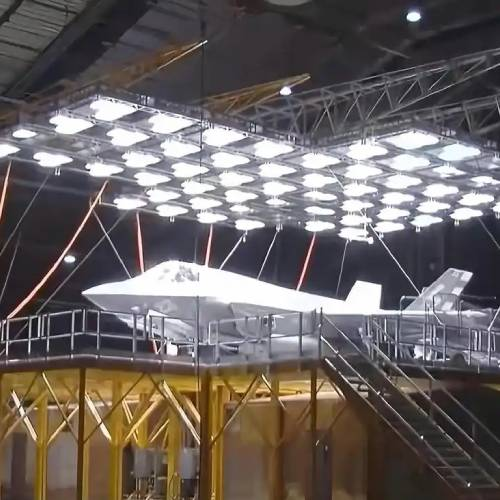
Technical Principles and Core Components of the Large-Area Wing Illumination Test Solar Simulator
The Large-Area Wing Illumination Test Solar Simulator simulates the solar spectrum through high-power xenon arc lamps or LED arrays. Combined with an optical filtering system, it adjusts the spectral distribution to closely match actual solar radiation conditions. The main components of the system include the light source system, optical filtering module, environmental control chamber, and PLC control system.
The core components of a solar simulator consist of the following parts, which work together to achieve high-precision solar radiation simulation:
1. Light Source System
The light source system typically uses xenon lamps or LED arrays as the primary light source. Xenon lamps provide a spectrum that closely resembles natural sunlight, while LED arrays can flexibly adjust the spectral output by combining LEDs with different wavelengths. The light source must provide high stability, consistent output, and a long service life.
2. Optical System
The optical system consists of components such as reflectors, lenses, and integrators. These components are used to focus, homogenize, and diffuse light to ensure uniform irradiance distribution across the test area. For example, an integrator can evenly distribute the light emitted from the source onto the testing plane, improving illumination uniformity and simulation accuracy.
3. Filtering System
The filtering system uses optical filters or spectral modulators to adjust the output spectrum so that it matches standard solar spectra, such as AM1.5G. AM1.5G is the standard terrestrial solar spectrum with an irradiance level of approximately 1000 W/m², covering a wavelength range from ultraviolet to infrared radiation (approximately 300–2500 nm).
4. Control System
The control system consists of electronic circuits and software used to regulate parameters such as light intensity, pulse frequency, exposure time, and temperature. It usually incorporates a feedback mechanism to monitor and correct output stability in real time, ensuring consistent and accurate test conditions.
5. Test Platform and Cooling System
The test platform is the area where samples are placed, and its design must ensure uniform light exposure across the entire sample surface. The cooling system, such as fans or water-cooling devices, prevents the light source from overheating and ensures reliable long-term operation of the equipment.
These components work together to form a complete solar simulation system. Among them, the light source system and optical system are the most critical components, as they directly determine the accuracy and reliability of solar radiation simulation.
Key Considerations When Selecting a Large-Area Solar Simulator
A Large-Area Solar Simulator is an experimental device designed to replicate natural sunlight conditions. It can accurately simulate various parameters of solar radiation, including solar spectrum, irradiance intensity, illumination angle, and exposure duration. Solar simulators are widely used in fields such as solar photovoltaics, materials science, architecture, and environmental science, playing an important role especially in solar cell performance testing, material weather resistance evaluation, and photothermal conversion research.
By reproducing real solar irradiation conditions, researchers can evaluate and optimize the performance of various products and materials under sunlight exposure, thereby promoting technological advancement in related industries.
I. Main Functions of a Large-Area Solar Simulator
1. Spectrum Simulation
The primary function of a solar simulator is to reproduce the solar spectrum, ensuring that the radiation characteristics of the light source are similar to those of natural sunlight. Most solar simulators use xenon lamps or other high-intensity light sources, which can provide a broad spectral range covering multiple wavelengths, including ultraviolet (UV), visible light, and infrared (IR) regions.
2. Irradiance Control
The simulator can adjust the light intensity to reproduce solar radiation levels under different times of day and seasonal conditions. Generally, 1000 W/m² is considered the standard solar irradiance level (AM1.5G condition). The simulator can adjust the irradiance according to specific testing requirements to perform various experiments.
3. Environmental Simulation
In addition to simulating solar spectrum and intensity, the system can simulate different sunlight conditions by adjusting the illumination angle. This function is essential for reproducing solar radiation under different latitudes, seasons, and weather conditions.
4. Weathering Resistance Testing
Through continuous solar simulation exposure, the equipment helps evaluate changes in materials and products caused by long-term solar radiation, including aging, color fading, hardness variation, and strength degradation. This function is widely used in the research and quality control of building materials, coatings, plastics, rubber products, and photovoltaic modules.
5. Solar Photovoltaic Testing
Large-area solar simulators are commonly used for solar cell performance testing. By simulating actual sunlight conditions, researchers can evaluate key performance indicators of photovoltaic devices, including conversion efficiency, stability, and durability.
II. Important Factors to Consider When Selecting a Large-Area Solar Simulator
1. Spectral Matching Accuracy
Different applications have different spectral requirements. Therefore, it is important to select a simulator that provides a broad spectrum closely matching natural sunlight. Generally, the simulated spectrum should cover the UV, visible, and infrared (IR) wavelength ranges, with a spectral distribution as close as possible to real solar radiation.
2. Adjustable Irradiance Range
The solar simulator should provide adjustable irradiance output to meet different testing requirements. The adjustment range should cover both standard testing conditions and special experimental environments requiring different light intensity levels.
3. Illumination Uniformity
Illumination uniformity is critical to the accuracy and reliability of test results. A high-quality solar simulator should ensure uniform irradiance distribution throughout the testing area without significant hot spots or low-intensity regions.
4. System Stability and Service Life
When selecting a solar simulator, equipment stability and service life are key considerations. The system should provide high operational stability, long service life, reliable performance, and low maintenance requirements to ensure continuous and accurate testing.
5. Automatic Control and Data Recording
Modern solar simulators are usually equipped with intelligent control systems that can automatically adjust and record parameters such as irradiance intensity, spectral output, and temperature. These functions enable long-term testing, data monitoring, and efficient analysis of experimental results.
How Large-Area Solar Simulators Enable Multi-Field Research and Testing
In numerous scientific research and industrial testing fields, Large-Area Solar Simulators are playing an increasingly important role. By accurately reproducing key solar radiation parameters such as solar spectrum and irradiance intensity, these systems provide a stable and controllable light source environment for various experiments and evaluation processes.
Before operation, comprehensive preparation is required to ensure accurate and reliable testing results.
First, an appropriate solar simulator model should be selected according to the specific requirements of the experiment or testing application. Different models vary in terms of spectral range, irradiance intensity, illumination uniformity, and other performance characteristics. For example, when performing solar cell efficiency testing, a simulator with a spectral distribution close to natural sunlight and precisely adjustable irradiance output should be selected. In addition, the stability of the power supply connection should be checked to ensure reliable operation. Key components such as the lamp head and optical filters should also be cleaned regularly to maintain high-quality and uniform illumination.
During operation, precise parameter configuration is essential.
According to different application scenarios, parameters such as spectral distribution, irradiance intensity, and exposure duration should be adjusted accordingly. For example, in material photo-aging tests, a higher irradiance level may be required to accelerate the aging process. These parameters can be conveniently adjusted through the simulator’s built-in control system.
The tested samples must also be positioned properly within the illumination area to ensure uniform light exposure. For large-area samples, such as full-size photovoltaic modules or aerospace components, special attention should be paid to the distance and angle between the sample and the light source to prevent shadows or uneven illumination.
During operation, real-time monitoring of the simulator’s working condition is essential.
Parameters such as irradiance intensity and temperature should be continuously monitored to ensure stable operation. If any abnormal conditions are detected, the system should be stopped immediately and inspected. Proper safety precautions are also necessary. Since the simulator generates high-intensity radiation during operation, it may cause eye damage. Operators should wear appropriate protective eyewear. In addition, the equipment generates heat during operation, so the cooling system must function properly to prevent performance degradation or reduced service life caused by overheating.
After use, proper shutdown and maintenance procedures should be carried out.
The power supply should be turned off according to the correct operating procedures. Dust and contaminants on the equipment surface should be removed, and key components should be inspected and maintained regularly, such as replacing aging lamps and cleaning optical reflectors. These maintenance measures help ensure that the solar simulator remains in optimal working condition over its service life.
Conclusion
In summary, a Large-Area Solar Simulator represents not only an expansion in light source coverage but also an innovation in testing methodology. By providing a large-scale, uniform, and stable "artificial sunlight environment", it effectively addresses the challenges associated with testing large aerospace structures and other oversized components.As a key precision scientific instrument, it plays an important role in ensuring the quality of next-generation aircraft development and accelerating the advancement of high-end manufacturing industries. For further requirements or technical inquiries, please feel free to contact us. Our professional team will provide timely communication and solutions to address your testing needs.
Previous: What is the MCD Metal Scratch Tester?
N e x t : the last page
