





What is a PVT coolant pulse test machine?
2026/07/09
Share:

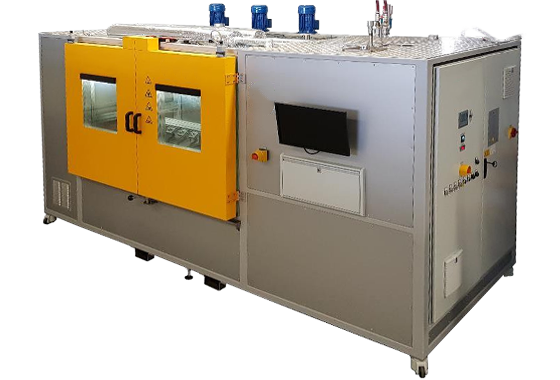
PVT Pulse Testing Machine: An Expert in Multi-Dimensional Operating Condition Simulation
As a core testing device for thermal management system evaluation, the PVT Pulse Testing Machine goes beyond simple “pressure and temperature control.” It serves as a comprehensive solution for complex operating condition simulation.
The system features deep coupling of pressure, temperature, and volume (PVT) parameters, with support for asynchronous programming. For special components such as new energy vehicle CO₂ air-conditioning pipes, it can accurately simulate supercritical pressure conditions of 1–15 MPa and temperature variations ranging from -38°C to 165°C, enabling the detection of micro-leakage defects under supercritical operating states.
Equipped with an intelligent control system featuring a touchscreen interface and industrial computer, the equipment can preset complex test profiles, including stepwise pressure increase curves and random pulse cycles. High-precision sensors can detect micro-leakage levels as low as 0.01 bar. Test data is recorded in real time and automatically generated into pressure-temperature-time curve reports, with support for USB and cloud-based data export.
The multi-channel parallel design supports up to 8 simultaneous test channels, allowing up to 1.200 liquid cooling plate inspections per day, significantly improving production quality inspection efficiency. Combined with a closed-loop circulation system, the equipment achieves both energy efficiency and environmental sustainability while maintaining high-performance testing capabilities.
Detailed Working Principle of the PVT Pulse Testing Machine
The core of the PVT Coolant Pulse Testing Machine is based on a multi-physics coupled simulation principle. By precisely coordinating the three parameters of pressure (P), vibration (V), and temperature (T), the system reproduces the complex stress environment experienced by automotive cooling systems during actual vehicle operation. Combined with fatigue cycle testing and leakage detection technologies, it evaluates the long-term reliability and durability of cooling system components.
1. Pressure Pulse (P) Principle
Pressure pulsation simulates the periodic pressure fluctuations of coolant driven by the water pump, which is one of the primary causes of fatigue failure in cooling pipelines. The equipment adopts a servo hydraulic drive system, combined with high-precision pressure sensors and proportional valves, to generate controllable pressure pulse cycles.
The pressure range can reach 0.1–5 MPa (up to 15 MPa under new energy vehicle supercritical operating conditions), with a frequency range of 0.1–5 Hz. The waveform can be configured as sine wave, square wave, or trapezoidal wave to reproduce pressure characteristics under different driving conditions, including cold start, rapid acceleration, and idling conditions.
During testing, the coolant (such as an ethylene glycol/water mixture) circulates within a closed-loop system. The servo system performs rapid pressurization, pressure holding, and pressure release according to the preset test curve, causing the specimen to withstand cyclic internal pressure changes. This process simulates the impact and expansion/contraction stresses caused by coolant flow inside the pipeline, evaluating the fatigue strength and sealing reliability of pipes, connectors, and welded joints.
2. Three-Dimensional Vibration (V) Principle
The vibration function simulates mechanical vibration loads transmitted from the engine and road surface to the cooling pipeline during vehicle operation. These vibration stresses are key factors accelerating component aging and causing connection loosening.
The equipment is equipped with a three-dimensional electric vibration table, which enables independent vibration control in the X, Y, and Z directions:
X direction: ±40 mm, 2.0 Hz
Y direction: ±40 mm, 2.5 Hz
Z direction: ±40 mm, 3.0 Hz
The vibration frequency and amplitude can be precisely adjusted to reproduce the actual vibration transmission path of the vehicle body.
The test specimen is fixed onto the vibration platform through dedicated fixtures. During the vibration process, the specimen simultaneously experiences internal pressure pulses and mechanical vibration loads, simulating potential failure modes such as fatigue damage, connector loosening, and sealing failure under dynamic conditions. This allows evaluation of the component’s vibration fatigue resistance and connection reliability.
3. High and Low Temperature Environment (T) Principle
The temperature simulation function reproduces extreme vehicle operating environments, including low-temperature cold starts in winter, high-temperature exposure in summer, and engine compartment heat radiation. Temperature cycling accelerates material aging and increases stress concentration through thermal expansion and contraction effects.
The equipment integrates a high-low temperature medium circulation system and environmental chamber, providing a temperature range of -40°C to 165°C. It supports rapid temperature changes with:
Heating rate: 5°C/min
Cooling rate: 3°C/min
The system precisely controls both coolant temperature and environmental temperature.
Under low-temperature conditions, materials become more brittle and sealing components shrink, increasing the risk of leakage. Under high-temperature conditions, rubber pipelines soften while metal components expand due to thermal effects, accelerating material degradation and fatigue crack propagation.
Through repeated high-low temperature cycling, the equipment evaluates the performance stability and long-term sealing durability of components under extreme temperature conditions.
4. PVT Coupling and Fatigue Testing Principle
The core of PVT coupling lies in the synchronous or asynchronous coordination of pressure, vibration, and temperature parameters, accurately reproducing the combined effects of multiple factors under real operating conditions.
For example:
High temperature + high-pressure pulse + high-frequency vibration: Simulates high-speed driving conditions in summer.
Low temperature + low-pressure pulse + low-frequency vibration: Simulates winter cold-start conditions.
The test adopts a constant-frequency and constant-pressure cyclic testing method. After setting the required number of cycles (typically reaching millions of cycles) or test duration, the system automatically performs the complete test sequence.
The equipment is equipped with high-precision sensors to continuously collect:
Pressure data
Temperature data
Vibration parameters
Leakage signals
When failure conditions such as leakage, cracking, or bulging occur, the system automatically identifies the failed channel, stops the corresponding test process, and records the failure cycle number and failure time.
Through data analysis, the system evaluates the component’s fatigue life, reliability level, and safety limits.
5. Data Acquisition and Evaluation Principle
The equipment is equipped with an industrial computer and touchscreen control system, with built-in standardized test programs. Users can preset complex test curves, including stepwise pressure increase cycles and random pulse profiles.
High-precision pressure, temperature, and vibration sensors collect test data in real time and generate pressure-temperature-time curve reports. The system can automatically calculate key evaluation parameters, including:
Fatigue life
Leakage rate
Failure cycle number
Operating stability
Evaluation Criteria:
A test specimen is considered qualified when it meets the following requirements:
No leakage
No cracking
No bulging deformation
No loosening of joints
By comparing the failure cycle numbers of different materials, structures, and manufacturing processes, engineers can identify optimized solutions. The micro-leakage detection function can capture early sealing defects and predict potential failure risks in advance.
With its scientific structural design, high level of automation, and reliable testing data, the PVT Coolant Pulse Testing Machine is suitable for a wide range of cooling system components used in both new energy vehicles and traditional fuel vehicles. It plays an essential role in product development, production quality inspection, failure analysis, and certification testing.With the rapid growth of the new energy vehicle industry and increasingly demanding requirements for thermal management system reliability, the PVT Coolant Pulse Testing Machine will become a key testing solution for ensuring vehicle safety, improving product quality, and accelerating the development of advanced automotive technologies.
Importance of the PVT Pulse Testing Machine
The PVT Coolant Pulse Testing Machine is designed to synchronously simulate the coupled effects of pressure, temperature, and vibration, providing accelerated fatigue life verification and sealing reliability evaluation for automotive thermal management system components. It helps identify potential failure risks such as leakage and cracking at an early stage, ensuring improved product reliability and safety.
1. Multi-Physics Coupled Simulation
The PVT pulse testing machine overcomes the limitations of traditional single-condition testing by simultaneously applying cyclic pressure fluctuations, severe temperature variations, and mechanical vibration loads. It accurately reproduces the complex operating environment experienced by automotive cooling systems during actual vehicle operation, enabling more comprehensive reliability evaluation.
2. Accelerated Life Testing and Failure Prediction
Through severe cyclic loading conditions, the equipment can reproduce the service degradation that may occur after hundreds of thousands of kilometers of vehicle operation within a relatively short testing period. It effectively reveals potential issues such as:
Material aging
Weld fatigue failure
Structural design defects
Seal degradation
This allows engineers to identify risks early and optimize product designs before mass production.
3. Sealing Performance and Structural Integrity Evaluation
The system focuses on verifying the reliability of critical components under dynamic stress conditions, including:
Pipeline connectors
Liquid cooling plate welds
Rubber hoses
It evaluates their resistance against:
Coolant leakage
Cracking and rupture
Aging degradation
Fatigue damage
ensuring long-term durability and structural integrity of thermal management components.
4. Product Development Optimization and Certification Support
The PVT pulse testing machine provides reliable comparative data for:
New material selection
Manufacturing process optimization
Structural design improvement
It can also generate professional test reports that comply with automotive manufacturer requirements, serving as an important technical basis for supplier qualification and mass production approval.
5. Failure Mechanism Analysis
By reproducing real-world failure scenarios reported from vehicle operation, the equipment helps engineers accurately locate failure points, such as specific weld areas or connection interfaces. This supports:
Root cause analysis
Product improvement strategies
Corrective action verification
and provides valuable guidance for enhancing component reliability.
Conclusion
In summary, the PVT Coolant Pulse Testing Machine delivers outstanding performance in realistic operating condition simulation and thermal management system durability verification. It is an essential testing solution for engineers and researchers involved in:Automotive thermal management system development,Component reliability validation,New material evaluation,Manufacturing process improvement.With its ability to accurately reproduce complex vehicle operating environments and evaluate long-term component reliability, the PVT pulse testing machine has become a key instrument for improving automotive safety and product quality.For more specific product requirements, technical parameter consultations, or customized testing solutions, please feel free to contact us. Our professional team will be pleased to provide further assistance and technical support.
Previous: What is the Large-Area Wing Illumination Testing Solar Simulator?
N e x t : the last page
