





Is there any real benefit to having male and female crash test dummies?
2026/07/09
Share:

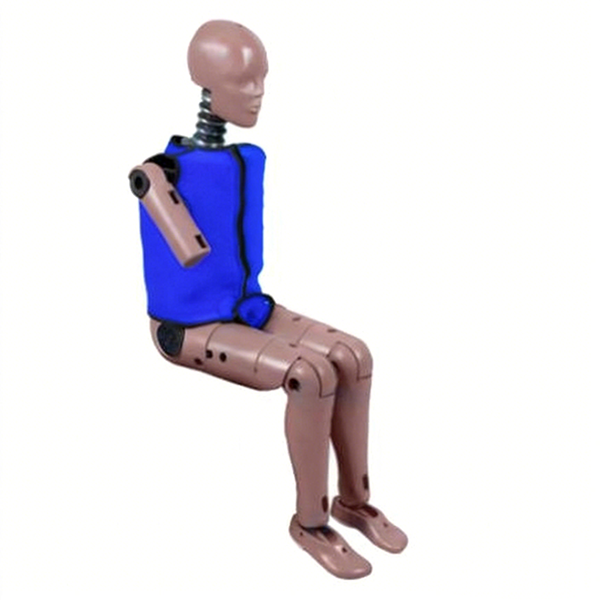
Why Do Crash Test Dummies Need to Represent Both Male and Female Bodies
Currently, crash tests conducted in almost all countries rely on standardized crash test dummies that comply with international safety regulations. These internationally recognized crash test dummies are generally divided into three categories:
Adult male dummies
Child dummies representing approximately 7–8-year-old children
Infant dummies representing babies around one year old
However, for many years, there has been a significant lack of female crash test dummies in mainstream vehicle safety evaluations.
The primary purpose of crash test dummies is to simulate the probability of injury to different parts of the human body during a collision as accurately as possible. Standard crash test dummies are equipped with numerous sensors throughout the body to collect impact data. When countries establish crash safety standards and automakers conduct safety evaluations before introducing vehicles to the market, these tests rely on standardized data provided by these three main dummy categories.
Although men and women share the same basic human anatomy, there are significant physiological differences between male and female bodies that can affect injury outcomes during vehicle collisions.
For example, in frontal collisions, women generally have a higher probability of chest and abdominal injuries than men, particularly regarding the likelihood and severity of abdominal trauma. This is partly because the strength and stiffness of major muscle groups in the female chest and abdominal areas are typically lower compared with males.
Similarly, in frontal impacts, women’s necks generally have a lower ability to withstand impact forces, making them more vulnerable to neck injuries. In addition, whether in frontal or side collisions, women often have different body proportions, including longer legs relative to body height and softer hip muscle structures. These physiological differences can influence how the lower body absorbs and responds to impact forces.
As mentioned earlier, crash safety standards rely heavily on data collected from crash test dummies. When automakers develop new vehicles, they also use dummy test data as a reference for designing vehicle safety structures. In other words, since current mainstream testing primarily relies on adult male dummies, vehicle manufacturers generally base their crash safety designs and evaluation criteria on male occupant data.
This creates a significant challenge. As previously discussed, men and women have different physiological characteristics, and women already face a higher risk of injury in certain types of crashes. When crash test standards and vehicle safety structures are primarily developed around male body characteristics, they may unintentionally increase injury risks for female occupants because the vehicle’s safety design does not fully account for female anatomical differences.
Therefore, developing more representative female crash test dummies and incorporating gender-specific biomechanical data into vehicle safety standards has become an important direction for improving automotive safety and ensuring that all vehicle occupants receive more equal protection.
Is Large-Scale Adoption of Female Crash Test Dummies Necessary
The answer is yes, it is absolutely necessary. Currently, a global trend shows that the proportion of female vehicle owners and female drivers among road users is increasing year by year. Many people may have already noticed that more women are driving today compared with the past, and this is a worldwide phenomenon.
In fact, some automakers have already begun considering female body characteristics in vehicle structural safety design. Companies such as Volvo, Toyota, and several European automakers have incorporated female occupant considerations into their internal safety development processes. Although global crash test standards have not yet widely included specific evaluation criteria for female occupants, some manufacturers have proactively conducted related tests as part of their corporate responsibility.
According to publicly available information, Geely Auto introduced a non-standardized adult female crash test dummy in the rear seat during the collision testing of the first-generation Geely Borui in 2015. The purpose was to evaluate the protection performance for female rear-seat occupants during a 100% frontal collision. In 2018. Changan Automobile also reportedly used a non-standardized adult female dummy in the passenger seat during an internal crash test of one of its new vehicle models (public information does not clearly specify the exact model).
At present, some socially responsible automakers have voluntarily introduced female crash test dummies into their internal safety verification processes as additional reference data. However, considering that there are still no internationally standardized crash evaluation protocols specifically designed for adult women and adolescent occupants, establishing and promoting relevant testing standards is highly necessary.
While relying on manufacturers’ sense of responsibility can improve safety protection for women and adolescent passengers to some extent, mandatory safety standards remain the fundamental solution. Standardized regulations can ensure that vehicle safety development considers a broader range of body characteristics rather than relying solely on voluntary actions from individual companies.
Compared with features such as intelligent cockpits, large in-vehicle displays, and other comfort or entertainment configurations, a vehicle is ultimately a high-speed transportation tool. Protecting the lives and safety of every occupant inside the vehicle should always be the highest priority and the area receiving the greatest engineering attention and investment.

The Greatest Principle the Automotive Industry Should Respect: Safety Should Never Be Limited by Gender
Those familiar with the automotive industry understand that automakers have never lacked the ability to overcome complex engineering challenges. Over the past decades, manufacturers have solved countless difficult technical problems, including high-performance acceleration, battery safety, intelligent driving systems, and vehicle lightweighting technologies.
Even a minor oversight, such as an issue involving a vehicle identification label, can trigger large-scale recalls across an entire country. This clearly demonstrates one fact: when the industry places sufficient emphasis on a safety issue, there is always a way to solve it.
However, the issue of physiological adaptability in vehicle safety design, which directly affects the lives and safety of hundreds of millions of women worldwide, has been overlooked by the industry for decades.
In the past, when evaluating whether a vehicle was safe, people often focused only on factors such as five-star safety ratings, the number of airbags, and body structural strength. However, after examining the underlying logic, it becomes clear that safety without adaptability is only generalized safety — and incomplete safety.
The ultimate purpose of automotive safety has never been simply to achieve better-looking specifications or higher safety ratings. True automotive safety should protect every body type, every seating posture, and every category of occupant.
The millions of female drivers and countless female passengers should not continue bearing the consequences of outdated safety standards. When automotive safety standards finally move beyond the traditional “universal male standard” and begin to achieve truly human-centered protection based on individual physiological differences, that will represent one of the greatest advancements in automotive engineering.
Safety has never been about gender differences — it is about ensuring that every person inside a vehicle receives equal protection. This is the responsibility and respect that the automotive industry should always uphold.
The Role of Female Side-Impact Crash Test Dummies
1. Pelvic and Chest Protection Evaluation
Women generally have a wider pelvis and relatively lower bone density compared with men. During side-impact collisions, the pelvis and ribs are among the body areas most vulnerable to injury.
New-generation female side-impact crash test dummies are equipped with specialized sensors in the pelvic and chest regions, enabling accurate evaluation of how effectively safety components such as side airbags, vehicle B-pillars, and door structures protect female occupants during side collisions.
2. Evaluation of Neck Whiplash Injury Risk
Research indicates that women face a significantly higher risk of neck whiplash injuries than men in rear-end collisions. Although side-impact crash test dummies primarily focus on lateral impact conditions, their more flexible spinal structures also provide a valuable foundation for studying neck response under complex collision scenarios.
The quantitative data collected by female crash test dummies directly helps engineers improve vehicle safety systems and enhance protection for female occupants.
How Female Side-Impact Dummies Improve Vehicle Safety Design
1. Optimization of Side Airbags and Curtain Airbags
By analyzing acceleration and impact force data collected from the dummy’s head and chest areas, engineers can optimize key parameters of side safety systems, including:
Airbag deployment timing
Inflation pressure
Protection coverage area
This ensures that side airbags and curtain airbags can provide effective protection for female occupants, including those with relatively smaller body sizes.
2. Reinforcement of Vehicle Body Structures
The pelvic and chest deformation data collected by female crash test dummies helps engineers identify weak points in vehicle side structures, including:
Side body panels
B-pillars
Door beams and rocker structures
Based on this data, manufacturers can implement targeted reinforcement designs to improve the overall side-impact protection capability of vehicles.
Female Crash Test Dummies and the Evolution of Automotive Safety Standards
With the continuous improvement of automotive safety regulations, the use of female crash test dummies has gradually become a mandatory requirement or industry-wide standard practice.
1. Requirements of New National Safety Standards
China’s updated mandatory national standard for “Occupant Protection in Side Impact Testing of Automobiles” requires the use of more advanced and highly biofidelic crash test dummies. This directly encourages automakers to consider female occupant protection during vehicle development.
2. Reference in NCAP Safety Ratings
In consumer-oriented vehicle safety evaluation systems such as New Car Assessment Programs (NCAP), test results involving female crash test dummies can directly influence vehicle safety ratings. This motivates manufacturers to actively improve female occupant protection in order to achieve higher market recognition.
Conclusion
For many years, automotive safety design has been primarily based on the “average male” body model, resulting in significant safety disparities between different occupant groups. The widespread adoption of female side-impact crash test dummies is fundamentally changing this situation.Female crash test dummies are not merely technical testing tools; they represent an important force driving gender equality in automotive safety engineering. They help ensure that advancements in vehicle safety technology benefit all road users, regardless of gender.As a bridge between human biomechanics and automotive engineering, female side-impact crash test dummies transform the abstract concept of “safety” into measurable and optimizable engineering parameters through precise physical simulation and comprehensive data collection.Their increasing application marks a transition in automotive safety testing from a one-size-fits-all approach toward a more precise, human-centered, and inclusive development model, providing stronger and fairer protection for the lives and safety of every vehicle occupant.
Previous: What is a PVT coolant pulse test machine?
N e x t : the last page
