





What is a Full Notch Creep Tester?
2026/07/13
Share:

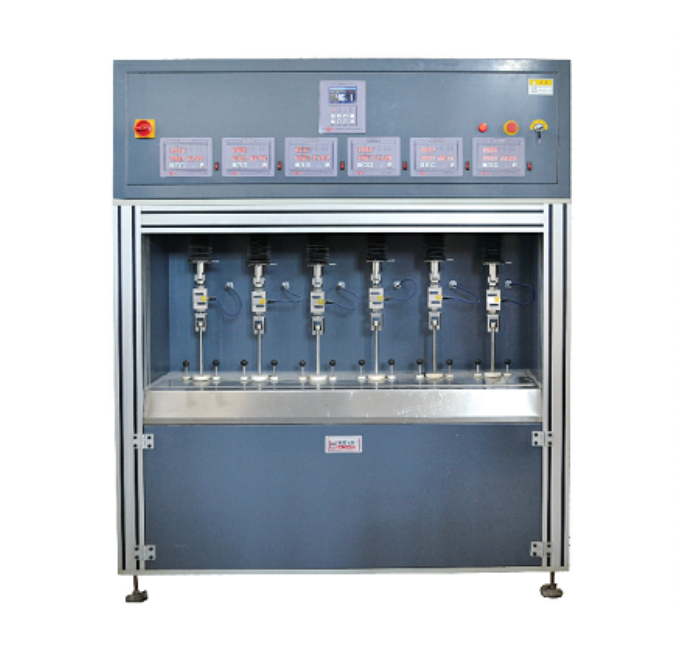
What is a “Full Notch”
A “full notch” refers to a specimen design in which a sufficiently large notch is machined at the center of the test specimen, causing the central section of the specimen to form a complete annular (ring-shaped) structure. This notch makes the center area of the specimen the location where material defects are most concentrated, allowing for a more realistic simulation of critical service conditions and a more accurate evaluation of the specimen’s creep performance.
In the field of materials research, creep performance is an important area of study because the creep behavior of materials at high temperatures is closely related to their service life. The Full Notch Creep Tester can more accurately simulate the actual operating conditions of materials under high-temperature environments, especially by reproducing the effects of defects concentrated in the central region of the material, thereby providing a more realistic assessment of creep properties.
Therefore, the Full Notch Creep Tester has significant application value in materials research and related fields.
Technical Features of Full Notch Creep Tester
1. Efficient Multi-Channel Parallel Testing Capability
The equipment is capable of accommodating and testing up to 15 independent specimens simultaneously, significantly improving testing efficiency. Each test channel allows independent parameter settings, including key variables such as load and temperature. All channels are completely isolated from each other, ensuring the independence of each test process and the accuracy of test data without mutual interference.
2. Unlimited Test Duration and High-Precision Time Recording
The tester has no limitation on the duration of a single test, making it suitable for long-term creep performance studies. The built-in high-precision timing system provides a time resolution of up to 1 second, enabling accurate recording of every critical moment from initial loading, crack initiation, crack propagation, to final fracture. This provides detailed data support for evaluating the long-term durability and reliability of materials.
3. Precisely Controlled Constant-Temperature Active Medium Environment
The temperature of the specimen testing chamber is controlled by a high-precision external heater with a closed-loop control system, ensuring excellent temperature stability throughout the entire long-duration testing process. The surfactant solution contained in the chamber is continuously circulated by a corrosion-resistant stainless steel circulation pump to maintain uniform medium composition and simulate actual service environments. The system is equipped with a pH sensor for real-time monitoring of the medium’s acidity and alkalinity. Once the parameters exceed the preset safety range, the equipment automatically activates an audible and visual alarm system for early warning.
4. User-Friendly Human-Machine Interface
The tester is equipped with an intuitive color touchscreen control panel, allowing convenient setting of key parameters such as load, temperature, test duration, and pH value through a graphical interface. During the testing process, various status information, real-time curves, and test data are displayed visually, greatly facilitating operation, monitoring, and interaction for users.
5. Flexible Remote Control and Data Access
The creep tester provides standard external data interfaces and supports network connectivity. Users can remotely access the equipment control system through a standard web browser to perform parameter configuration, monitor testing progress in real time, and check equipment operating status. This meets the requirements of modern laboratory automation and digital management.
6. Open and Compatible Data Management System
The equipment adopts an open data storage system, allowing all generated raw data and result files to be saved in universal formats. Users can freely convert data into various formats, such as CSV and TXT, according to the requirements of subsequent analysis software. The system also enables convenient data access, export, and processing, providing significant support for advanced scientific research and material performance analysis.
Working Principle of Full Notch Creep Tester
The Full Notch Creep Tester evaluates the environmental stress cracking resistance (ESCR) of polymer materials, especially polyethylene, by applying a constant tensile load to a pre-notched full circumferential notch specimen immersed in a constant-temperature active medium. The equipment accelerates and monitors the process of slow crack growth (SCG) until final fracture, thereby assessing the long-term creep and durability performance of materials under simulated service conditions.
Core Working Mechanism
1. Stress Concentration Initialization
The test specimen is machined with a standardized full circumferential notch to artificially create a sharp stress concentration point. This design forces crack initiation to occur at the notch root, eliminating the influence of random material defects and ensuring more reliable and repeatable test results.
2. Environmental Synergistic Acceleration
The notched specimen is immersed in a heated surfactant solution. The test medium penetrates into the material structure, reducing surface energy and promoting the formation of crazes and the breakage of microfibers. This significantly accelerates the slow crack growth process and simulates the actual environmental conditions that materials may encounter during long-term service.
3. Constant Load Creep Driving Mechanism
A constant static tensile load below the material’s yield strength is applied to the specimen. Through the time-dependent plastic deformation behavior of the material (creep), the crack tip continuously advances under sustained stress, allowing the tester to evaluate the material’s resistance to long-term crack propagation.
4. Failure Determination and Evaluation
The system continuously monitors the specimen throughout the testing process until complete brittle fracture occurs. The failure time is used as the primary evaluation index for determining the material’s resistance to slow crack growth (SCG), providing important data for predicting long-term service life and reliability.
Operating Procedure of Full Notch Creep Tester
The operating process of the Full Notch Creep Tester mainly consists of the following steps: specimen preparation → specimen installation and alignment → medium immersion → temperature heating and stabilization → constant load application → automatic fracture monitoring → shutdown and cleaning. The entire testing process can be performed automatically without manual intervention for data recording.
1. Standard Operating Procedures
1. Specimen Preparation
Prepare rectangular specimens according to the specified testing standards. Use a dedicated precision notch cutting machine to machine a full notch with the required depth and geometry on one side of the specimen. Ensure that the ligament section meets the standard requirements and that the notch surface is smooth and free from damage.
2. Equipment Initialization
Turn on the main unit, temperature control system, and control software. Set the test temperature (typically adjustable from room temperature to 95°C), alarm thresholds, and protection parameters. Check and calibrate the load sensor and displacement measurement system to ensure they are properly zeroed before testing.
3. Specimen Installation
Install the pre-notched specimen into the self-aligning fixture, ensuring that the notch is positioned exactly on the loading centerline. Install the extensometer if displacement monitoring is required. Then close the test chamber or fill the chamber with the specified surfactant test medium.
4. Environmental Stabilization
Start the heating and circulation system. After the temperature reaches the preset value and becomes stable, maintain the required holding time (typically 1–2 hours) to ensure uniform temperature distribution throughout the specimen.
5. Creep Loading Test
Apply the preset constant tensile load to the specimen (usually by applying a preload first to eliminate mechanical gaps, followed by the main test load). Start the timer and automatic monitoring program. The system continuously records test data until specimen fracture occurs or the maximum test duration is reached.
6. Test Completion and Post-Processing
After the test is completed, the system automatically releases the load. Remove the fractured specimen, clean the test medium and fixtures, and turn off the heating system and power supply. The equipment automatically generates a test report, including the fracture time and related evaluation results.
2. Key Operating Considerations
1. Test Medium Requirements
When performing tests according to standards such as ISO specifications, the specified non-ionic surfactant solution must be used. The medium temperature and circulation conditions must be maintained throughout the test. Dry tensile testing without the required environmental medium is strictly prohibited.
2. Notch Quality Control
The notch depth and geometry have a direct influence on test accuracy and validity. The cutting tool precision should be regularly verified, and manual modification or polishing of the notch is not permitted.
3. Safety Protection
The equipment should be equipped with protection functions such as overload protection, over-temperature protection, and automatic shutdown after specimen fracture. During long-duration tests, the medium level and pH value should be periodically checked to ensure stable operation.
4. Prevention of Uneven Loading
The fixture must ensure accurate axial loading and prevent lateral forces from being introduced. Improper alignment may cause premature or abnormal specimen failure and affect test accuracy.
Importance of Full Notch Creep Tester
The Full Notch Creep Tester plays an irreplaceable role in materials science, engineering quality control, and product development. Its core value lies in the in-depth evaluation of the long-term reliability and failure mechanisms of polymer materials.
1. Accurate Simulation of Extreme Service Conditions and Identification of Potential Failure Risks
The equipment is capable of simulating complex service conditions where materials are subjected to the combined effects of specific temperatures, solution environments, and constant static tensile loads. By introducing surfactant solutions or simulated body fluids, combined with high-temperature, high-humidity, or temperature cycling conditions, the tester can accelerate the initiation and propagation of microscopic defects within materials.
This simulation capability allows researchers to identify potential failure modes, such as brittle fracture and environmental stress cracking (ESC), at the laboratory stage before products enter the market. As a result, it helps prevent serious safety risks caused by hidden material failures during actual service.
2. Quantitative Evaluation of Creep Resistance and Optimization of Material Formulations and Processing Technologies
The Full Notch Creep Test uses a standardized notch design to initiate cracks under controlled conditions and focuses on monitoring crack propagation behavior and fracture time. This process not only determines the creep strain rate and permanent deformation of materials but also enables accurate measurement of critical stress parameters and durability degradation thresholds.
For critical components such as polyethylene pipes, semiconductor packaging materials, and biomedical implants, these test data provide scientific support for optimizing molecular structures, improving manufacturing processes, and determining minimum safe bending radii. This significantly improves the accuracy of material selection and engineering design.
3. Compliance with International Standards and Assurance of Product Quality and Certification Requirements
The Full Notch Creep Tester is designed in accordance with various international and domestic standards, including ISO and GB/T standards. It features multi-station independent testing capability, high-precision temperature control, and automatic loading protection functions.
With stable testing performance and standardized operating procedures, the equipment serves as an ideal solution for testing laboratories and industrial quality control departments. By providing reliable and repeatable test data, it effectively supports the complete quality control process from raw material selection to final product certification, ensuring compliance and safety in demanding applications such as medical devices, electronics, and pipeline transportation systems.
Conclusion
In summary, the Full Notch Creep Tester is not merely an instrument for evaluating material mechanical properties; it is also a critical bridge connecting fundamental material research with real-world engineering applications. It plays a significant role in improving the service life of advanced manufacturing products, reducing maintenance costs, and enhancing public safety.We sincerely welcome your inquiries and comments. Please feel free to contact us for more detailed product information and professional technical support.
Previous: What is a shoe thermal insulation tester?
N e x t : the last page
