





How does a hydraulic oil filter work?
2026/07/14
Share:

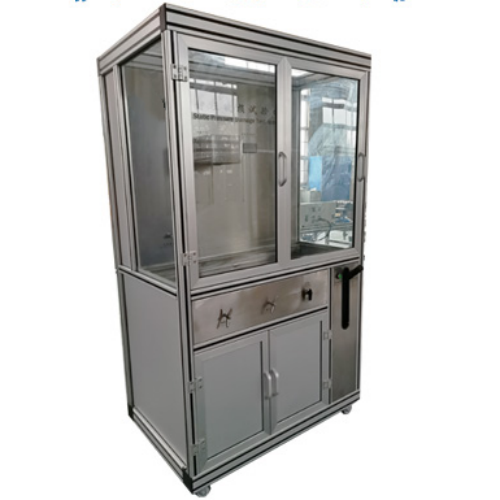
Working Principle of Oil Filter Hydrostatic Breakage Tester
The Oil Filter Hydrostatic Breakage Tester uses a hydraulic system to smoothly inject test oil into the sealed oil filter and gradually increase the pressure step by step. Under static conditions without fluid flow, the system monitors pressure changes until the filter housing or sealing structure ruptures/leaks, thereby determining the maximum burst pressure value and verifying the structural safety of the filter.
1. Core Working Logic
Test Medium Filling and Air Exhaust
The test filter is connected to a dedicated filter mounting seat. Standard test fluid, such as SAE 5W engine oil, is injected into the system. After opening the exhaust valve to completely remove air from the system, the circuit is sealed.
Static Step-by-Step Pressurization
A manual or automatic hydraulic pump is used to increase the internal pressure at a constant rate. Each pressure stage is maintained for approximately 1 minute to observe leakage, deformation, or other abnormal conditions.
Failure Judgment and Recording
The pressure continues to increase until the oil filter experiences physical rupture, severe deformation, or a sudden pressure drop. The pressure value at this moment is recorded as the burst pressure value, which is used as the bursting strength evaluation index.
Safety Protection
The testing area is equipped with a transparent protective shield to prevent fragments from splashing and causing injury during high-pressure rupture.
2. Key Components of the System
Pressure Source
A high-pressure hydraulic pump that provides stable pressurization and accurate pressure control capability.
Actuation Mechanism
A dedicated mounting filter seat ensures reliable sealing and simulates the actual tightening torque during installation.
Measurement and Control Unit
A high-precision pressure sensor/pressure gauge and data acquisition system are used to record the pressure-time curve in real time.
Safety Devices
Includes an explosion-proof transparent protective cover, over-pressure relief valve, and emergency stop button.
Hydrostatic Breakage Test of Automotive Oil Filters
Automotive oil filters are one of the key components responsible for maintaining oil lubrication and purifying engine oil inside the engine system. Through the hydrostatic breakage test, the performance of oil filters can be better understood, their reliability can be improved, and the long-term stable operation of engines can be ensured.
I. Test Purpose
The hydrostatic breakage test is a standard testing method used to evaluate the strength and performance of oil filters. Its main purposes include:
Evaluating the pressure resistance performance of oil filters under high-pressure conditions.
Determining whether the oil filter has sufficient structural strength to ensure that no damage occurs under high-pressure conditions.
Ensuring that the oil filter will not fail due to excessive oil pressure during normal operation.
II. Test Method
1. Materials and Equipment
Before conducting the hydrostatic breakage test, the following materials and equipment need to be prepared:
Oil Filter Samples:
A certain number of samples are randomly selected from the production line for testing.
High-Pressure Equipment:
A hydraulic system is generally used to provide the high pressure required for the test.
Pressure Measurement Equipment:
Used to measure the pressure applied to the oil filter.
Control System:
Used to monitor and record various parameters during the testing process.
Safety Equipment:
Used to ensure the safety of test operators.
2. Test Procedures
The procedures of the hydrostatic breakage test are as follows:
Sample Preparation
Install the selected oil filter sample onto the test fixture, and confirm that the installation is correct and the sealing performance is reliable.
Pressure Application
Gradually increase the pressure applied to the oil filter through the hydraulic system. The pressure should be increased slowly to simulate the oil pressure changes under actual engine operating conditions.
Pressure Monitoring
Monitor the pressure applied to the oil filter through the pressure measurement equipment and record the pressure variation over time.
Failure Recording
When the oil filter experiences rupture or leakage, record the pressure value and test time at the moment of failure.
Result Analysis
Evaluate the hydrostatic breakage performance of the oil filter according to the test data obtained.
3. Result Analysis
The results of the hydrostatic breakage test are generally evaluated based on the maximum pressure that the oil filter can withstand.
If the oil filter does not rupture within the maximum pressure range during normal engine operation, its hydrostatic breakage performance can be considered qualified.
Conversely, if the oil filter ruptures at a relatively low pressure, it indicates that its performance does not meet the required standards.
III. Conclusion
The hydrostatic breakage test of automotive oil filters is one of the key procedures for evaluating oil filter performance. Through this test, it can be confirmed whether the oil filter has sufficient structural strength and pressure resistance capability to maintain structural integrity under high-pressure conditions.This helps ensure that the engine receives effective lubrication, maintains internal cleanliness, improves engine reliability, and extends service life.
During the implementation of hydrostatic breakage testing, relevant standards and safety regulations must be strictly followed to ensure accurate test results and protect the safety of operators. At the same time, test results should be regularly monitored and recorded to continuously evaluate and improve oil filter performance.It should also be noted that oil filter performance evaluation does not only include hydrostatic breakage testing. Other tests under different parameters and operating conditions, such as flow rate testing and filtration efficiency testing, are also required.Only by comprehensively considering these factors can the performance of oil filters be fully evaluated and their effective operation in engine systems be ensured.
Importance of Oil Filter Hydrostatic Breakage Tester
The Oil Filter Hydrostatic Breakage Tester plays a core role in the manufacturing and quality control system of automotive components. Its importance is mainly reflected in three aspects: ensuring driving safety, guaranteeing product compliance, and improving manufacturing process quality.
1. This Tester Is a Key Defense Line Against Major Engine Mechanical Failures
During the operation of internal combustion engines, the oil system generates continuously changing pulsating pressure. If the oil filter housing assembly cannot withstand high static pressure under extreme operating conditions, it may easily suffer from rupture or leakage.
Once the oil filter fails, unfiltered impurities will directly enter the engine lubrication system, causing wear of precision components and even resulting in engine failure or scrapping.
Through the hydrostatic breakage test, the ultimate internal pressure resistance capability of the oil filter can be accurately measured, and potential structural weaknesses can be identified. This can fundamentally prevent risks such as oil leakage and power loss caused by filter element rupture, thereby effectively ensuring vehicle driving safety.
2. It Is an Essential Method to Meet Mandatory National and International Standard Requirements
According to international standards, full-flow oil filters and spin-on oil filters must undergo strict hydrostatic burst strength testing.
The test bench simulates the pressure increasing process under actual operating conditions and records the failure pressure, deformation condition, and failure location of the oil filter. It provides objective and quantitative data support for determining whether the product complies with industry requirements.
Only products that pass these strict tests can enter the market, ensuring the quality stability of the supply chain for complete vehicle manufacturers.
3. This Equipment Helps Enterprises Optimize Design and Control Costs
By conducting destructive tests on oil filters from different production batches or different design solutions, R&D engineers can analyze:
The strength of housing materials;
The rationality of sealing structures;
The quality of welding processes.
This data-based feedback mechanism enables manufacturers to optimize material usage and structural design while ensuring sufficient safety margins. It helps avoid cost waste caused by excessive design while improving the overall reliability and market competitiveness of products.In summary, the Oil Filter Hydrostatic Breakage Tester is not only a tool for quality inspection but also an important technical link connecting product design, manufacturing processes, and safe application.
In conclusion, the Oil Filter Hydrostatic Breakage Tester, as a key testing device, deserves extensive attention. It is not only a core tool for evaluating the ultimate performance of products but also an important guarantee for promoting technological advancement and quality improvement in the industry.We sincerely welcome everyone to discuss topics related to the technical details, application scenarios, or purchasing criteria of this equipment. You may also contact us directly for professional consultation.Based on our extensive industry experience and technical support, we will provide more detailed and targeted product information and solutions.
Previous: What is a Crash Test Dummy (based on Chinese anthropometric data)?
N e x t : the last page
