





What is a high-temperature half-mannequin?
2026/07/14
Share:

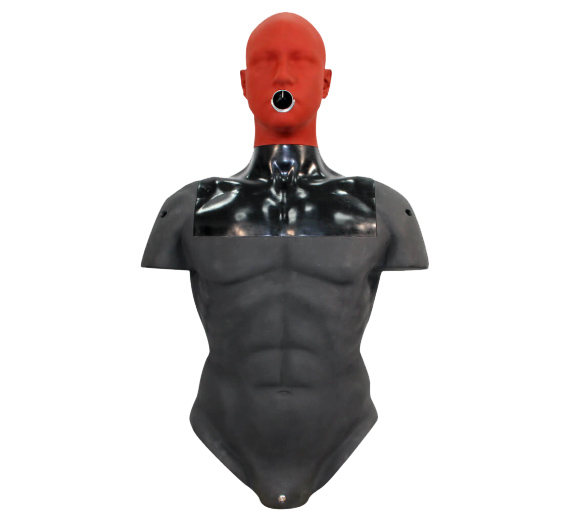
Technical Principle and Core Components of High Temperature Half-Body Manikin
The High Temperature Half-Body Manikin uses stainless steel as its framework and is covered with high-temperature-resistant materials on the surface. Temperature sensors and heating modules are integrated inside the system.
Its design is based on human thermal engineering principles. Through a PLC control system, the heating power is adjusted to simulate different environmental temperatures, typically covering a temperature range from normal temperature conditions up to 300°C.
The digital display screen shows the surface temperature distribution in real time. Combined with button or touchscreen operation, the testing parameters can be set accurately.
The upper-body structure of the manikin includes the head, torso, and arms, mainly simulating the heat transfer characteristics of the human body's core areas and limbs, ensuring that the test data is close to real application scenarios.
Practical Application Scenarios of High Temperature Half-Body Manikin
The High Temperature Half-Body Manikin is mainly used for the quantitative testing of thermal resistance and evaporative resistance of protective equipment under extreme thermal environments, human thermal stress risk assessment, and optimization of local thermal comfort.
1. Core Application Scenarios
Protective Clothing Development and Quality Inspection
For firefighting protective clothing, industrial high-temperature workwear, and medical protective clothing, the manikin simulates the heat accumulation and sweat evaporation process of wearers under high-temperature and high-humidity environments.
It is used to measure the thermal insulation value and moisture permeability index of clothing, predict safe working duration, and evaluate burn risks.
Local Thermal Comfort and Ergonomic Evaluation
It focuses on evaluating the heat distribution of key upper-body areas in confined spaces such as vehicle cabins and operating stations.
The test results can be used to optimize seat ventilation systems, air-conditioning outlet designs, and the performance of localized protective equipment.
Extreme Environment Safety Limit Research
By reproducing scenarios such as metallurgical operations, glass furnaces, and fire flashover environments in an artificial climate chamber, the system simulates human heat generation and sweating regulation mechanisms.
It helps determine thermal stress critical points (such as the duration of excessive core temperature exposure) and replaces human subjects in high-risk extreme environment testing.
Smart Temperature-Controlled Equipment Verification
The system is used to test the cooling efficiency of phase-change material clothing, active liquid cooling systems, and air cooling systems.
It verifies their ability to regulate the upper-body microclimate under conditions of intense physical activity or stationary states.
2. Key Functions and Technical Features
Independent Zoned Temperature Control
The torso and upper limbs are divided into multiple independently controlled heating zones to simulate the uneven temperature distribution of different human body regions.
Dynamic Sweating Simulation
A microporous water spraying system is used to simulate local or full-body sweating, allowing evaluation of the moisture resistance performance of clothing during evaporative cooling processes.
Posture and Movement Simulation
The system supports different postures and movements, including sitting, standing, and upper-limb activities, to evaluate the influence of body movement on clothing thermal resistance and air layer circulation.
Quantitative Data Output
The system collects parameters such as heat flux density, surface temperature, and power consumption in real time.
The collected data can be directly used to calculate thermal resistance, evaporative resistance, and predicted thermal strain indicators.
Functions of High Temperature Half-Body Manikin
The core function of the High Temperature Half-Body Manikin is to quantitatively evaluate the thermal protection performance of protective clothing and predict human burn risks under simulated extreme high-temperature and fire environments, replacing human subjects in high-risk experiments.
Core Functions and Applications
Quantitative Thermal Protection Performance Testing
The manikin wears special protective equipment such as firefighting suits and flame-resistant workwear, and is placed in simulated flame or high thermal radiation environments (such as flame burners or thermal radiation panels).
Through built-in high-density sensors, the system collects surface heat flux data in real time, calculates the thermal insulation efficiency of protective clothing, and determines the time required for second-degree or third-degree burns to occur.
Burn Risk Prediction and Evaluation
Based on biological heat transfer models, the collected heat flux data is converted into predictions of human skin burn severity, including:
Burn area;
Burn classification;
Burn duration.
This allows scientific verification of the protective capability of equipment under actual fire conditions and avoids inaccurate protection assessments caused by relying only on fabric-level testing.
Extreme Environment Safety Experiments
Under dangerous conditions that cannot be tolerated by human subjects, such as extremely high temperatures (up to over 1000°C) and flash fire environments, the manikin simulates human posture and movement.
It provides repeatable and high-precision experimental data for the development of new heat-resistant materials and the optimization of protective equipment structural designs.
Local Thermal Comfort and Ergonomic Analysis
Some high-end models are equipped with zoned temperature control functions, allowing analysis of differences in heat loss among different body regions under high-temperature environments.
This helps evaluate local protection weaknesses of protective equipment and assess wearing comfort.
In summary, compared with traditional testing methods, the High Temperature Half-Body Manikin can reproduce complex high-temperature environments and provide critical data support for the development of high-performance protective equipment.The equipment supports customized processing, allowing users to adjust the model dimensions or sensor layout according to specific requirements, further expanding its application range.We sincerely welcome your comments or direct inquiries, so that we can provide you with more detailed product information and professional solutions.
Previous: How does a hydraulic oil filter work?
N e x t : the last page
