





Automotive Connector Air Tightness Testing for Dust and Chemical Protection
2026/08/07
Share:

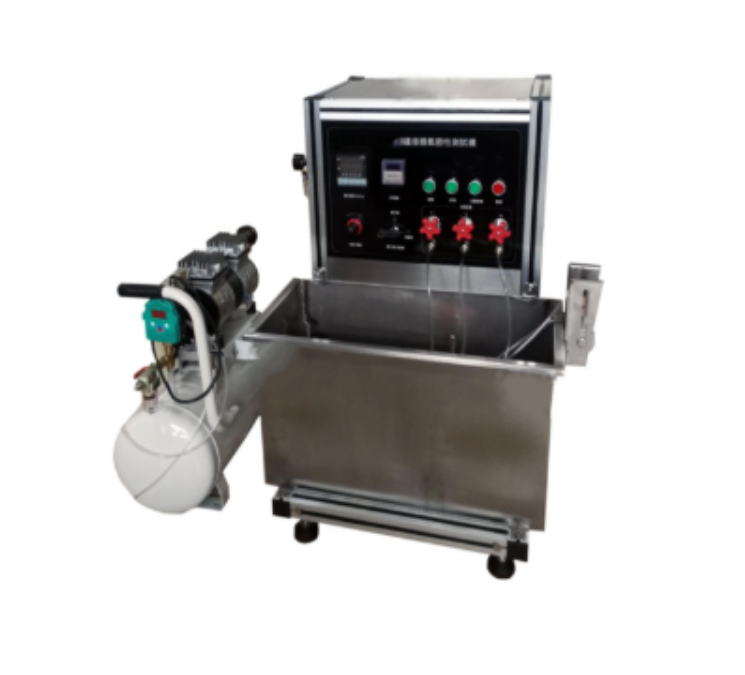
Fundamentals and Consensus: Core Principle of Air Tightness Testing
Air tightness testing generally adopts the pressure decay method or flow rate method. During the test, clean gas (such as air) with a preset pressure is introduced into the interior of the connector housing. Then, during the pressure-holding stage, the system monitors changes in internal pressure or leakage flow rate to accurately determine the sealing performance of the connector.
A connector that can effectively prevent liquid penetration (such as water intrusion) must have a highly integrated and reliable structural design. This high level of sealing integrity also provides the essential foundation for the connector’s ability to resist the intrusion of external solid particles and chemical substances.
Extended Application I: Building a Strong Defense — Ultimate Dust Protection2
1. Why Are Dust Protection Requirements Becoming Increasingly Stringent
● Dependence on Autonomous Driving and Sensors
Advanced driver assistance systems (ADAS) and autonomous driving systems above L2 level rely heavily on sensors such as cameras, LiDAR, and millimeter-wave radar. Once the lenses or surfaces of these optical and electronic components become contaminated by fine dust particles, signal attenuation, image distortion, or detection errors may occur, creating significant safety risks.
● Reliability of Electrical Contacts
For high-voltage connectors in electric vehicles (EVs) and high-speed data connectors in automotive networks, the intrusion of micron-level conductive dust may cause contact corrosion, increased electrical resistance, short circuits, or arc discharge, compromising signal transmission integrity and system reliability.
● Long-Term Service Life Requirements
The designed service life of automobiles typically exceeds 15 years. Throughout this period, connectors must continuously withstand the gradual and long-term impact of dust contamination to ensure stable performance throughout their entire lifecycle.
2. How Does Air Tightness Testing Support Dust Protection
Dust is essentially composed of solid particles, and its protection level is defined in standards such as IEC 60529. where the first characteristic digit of the IP code indicates the degree of protection against solid foreign objects.
Air tightness testing and dust protection testing share a highly consistent technical foundation:
● Correlation
A connector that passes strict air tightness testing with an extremely low leakage rate must have highly controlled structural gaps, which are sufficiently small to prevent the penetration of most dust particles.
● Efficiency and Quantitative Evaluation
Compared with traditional dust chamber testing, which requires prolonged exposure to dusty environments followed by disassembly and inspection, air tightness testing provides a rapid, quantitative, and non-destructive inspection method. On production lines, connector quality can be determined within seconds by comparing the measured leakage rate with the preset dust protection threshold. This enables 100% inspection, significantly improving testing quality and production efficiency.
● Process Monitoring and Traceability
By monitoring leakage rate data during air tightness testing, manufacturers can also trace the stability of critical production processes, including injection molding, crimping, and interference fitting. This helps identify potential sealing defects at the source and prevents dust protection failures before products enter the market.
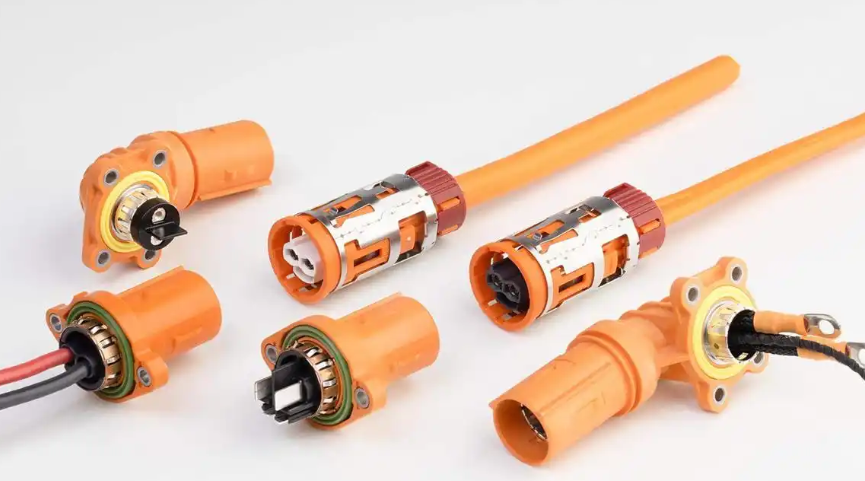
Extended Application II: Chemical Resistance Protection — Building a Barrier Against Chemical Corrosion
1. Why Is Chemical Resistance Becoming Increasingly Important
Modern vehicles operate in environments involving various chemical challenges:
● Electric Vehicle Applications
In electric vehicles, battery packs may experience leakage of corrosive electrolytes. Cooling systems contain fluids such as ethylene glycol mixtures, and in cases of vehicle collisions or system failures, connectors may be exposed to high-temperature and high-pressure chemical environments.
● General Automotive Applications
In engine compartments, connectors are exposed to substances such as engine oil, transmission fluid, and brake fluid. During winter, roads may contain deicing agents such as calcium chloride and sodium chloride. During vehicle cleaning, connectors may come into contact with detergents and solvents. In addition, environmental factors such as acid rain and ozone can also contribute to material degradation.
These chemical substances can attack connector housings, causing cracking, powdering, deformation, and other forms of material degradation. They may also cause sealing rings to swell, age, or lose elasticity, eventually leading to sealing failure. Once the sealing system fails, subsequent damage to the internal components of the connector can be severe and irreversible.
2. How Does Air Tightness Testing Evaluate Chemical Resistance
Air tightness testing does not directly measure the chemical resistance of materials. However, it has become a critical method for verifying and screening the structural integrity of connectors after chemical resistance treatments.
● Before-and-After Comparative Testing
The most important application scenario is comparative evaluation before and after chemical exposure. After connector samples undergo chemical resistance tests such as chemical immersion, spray exposure, or vapor exposure, air tightness testing is performed before and after the treatment.
Before Testing:
The initial leakage rate is measured and recorded to confirm that the sample is in good original condition.
After Testing:
The leakage rate is measured again. If the leakage rate increases significantly or exceeds the specified limit, it indicates that chemical exposure has caused irreversible damage to the material or sealing structure. This demonstrates that the connector design or material selection fails to meet chemical resistance requirements.
● Accelerated Aging Monitoring
During accelerated lifetime testing under simulated chemical environments, regular air tightness tests can be performed to establish a degradation curve showing how sealing performance changes over time and exposure levels. This provides essential data for predicting the actual service life of connectors.
● Quality Consistency Assurance
For connectors that require long-term exposure to specific chemicals, variations in manufacturing processes may cause some products to become more vulnerable to chemical-induced failure. Conducting strict 100% air tightness inspection before shipment can effectively eliminate products with potential sealing defects. These defective products often fail earlier when exposed to chemical corrosion during initial service conditions.
Value Enhancement: From Single Inspection to Comprehensive Reliability Assurance
The extended applications of air tightness testing in the fields of dust resistance and chemical resistance have transformed it from a simple “waterproof inspection step” into a comprehensive “reliability protection system.” Its value is mainly reflected in the following aspects:
1. Earlier Design Validation
During the product design stage, air tightness testing can be used to quickly verify the sealing performance of different structural designs and material selections after exposure to simulated harsh environments. This helps engineers identify potential problems in advance, optimize product designs, and significantly shorten the research and development cycle.
2. Improved Production Process Control
By integrating air tightness testing into production lines, manufacturers can achieve real-time monitoring and feedback on manufacturing quality. This ensures that every connector leaving the production line has sufficient protection capability against complex environmental conditions, improving overall product consistency and reliability.
3. More Efficient Testing Methods
Compared with traditional dust chamber tests and chemical immersion tests, air tightness testing provides a faster, more objective, and more economical solution. As a non-destructive inspection method, it is particularly suitable for large-scale production environments requiring high inspection efficiency and stable quality control.
4. Compliance with Global Safety Standards
As international standards continue to impose stricter requirements on connector sealing performance, advanced air tightness testing methods with extended applications have become an essential approach for meeting the quality requirements of leading global automotive manufacturers.
The reliability of automotive connectors is essentially a continuous battle against external threats, including water, dust, and chemical corrosion. As a mature and reliable technology, air tightness testing is expanding the protection scope from traditional “waterproof defense” to deeper levels of “dust resistance” and “chemical resistance” through its advantages of quantitative evaluation, high efficiency, and non-destructive testing.It is not only a “quality gatekeeper” for controlling product performance but also a “predictive safeguard” and “reliability guardian” that ensures connectors maintain stable operation throughout their entire service life.
Previous: Do you know what a Steam Jet Test Chamber is?
N e x t : Which instrument is used to measure the airflow resistance of textiles?
