





Which instrument is used to measure the airflow resistance of textiles?
2026/08/07
Share:

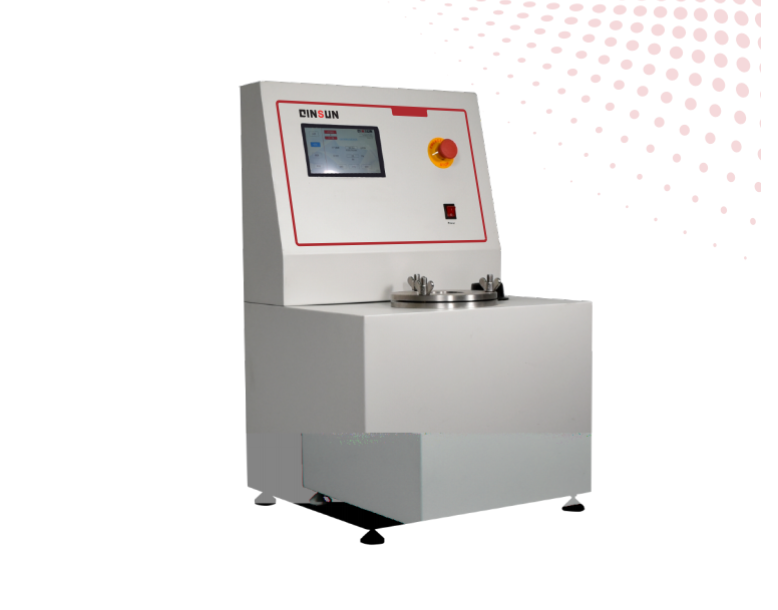
Structure of Textile Air Permeability Tester
1. Adjustable Air Flow Source
The adjustable air flow source is one of the core components of the Textile Air Permeability Tester. It provides a stable and adjustable airflow throughout the testing process. By precisely controlling the airflow rate, the instrument can simulate different air flow conditions in practical applications, enabling a more comprehensive and accurate evaluation of the air resistance performance of tested materials.
Whether simulating gentle airflow conditions or stronger wind environments, the adjustable air source can accurately reproduce various airflow scenarios to meet different testing requirements.
2. Specimen Clamping Device
The specimen clamping device is mainly used to securely fix the tested material, ensuring that the sample does not move, shift, or deform during the testing process. At the same time, it maintains the airtightness of the testing area.
Only when the test area is completely sealed can the resistance generated when airflow passes through the material be accurately measured, preventing external air interference from affecting test accuracy. The clamping device is usually designed with high precision and can accommodate textile samples with different shapes and sizes.
3. Air Pressure Measurement System
The air pressure measurement system is the key component for obtaining test results. It monitors the pressure changes generated when airflow passes through the tested material in real time.
Through advanced pressure sensors and precision measurement circuits, pressure variations are converted into digital signals and clearly displayed as resistance values on the screen. This digital display method makes test results more intuitive and accurate, allowing operators to easily record, analyze, and evaluate the performance data of textile materials.
Working Principle of Textile Air Permeability Tester
1. Principle of Airflow Resistance Measurement
The core principle of the Textile Air Permeability Tester is to evaluate the air permeability performance of textile materials by quantitatively measuring the resistance generated when air passes through the fabric. Its theoretical foundation is based on the laminar flow principle in fluid mechanics.
When air flows through a textile specimen at a stable flow rate, a pressure difference is generated due to the porous structure formed by the gaps between fibers. The instrument detects this pressure difference and converts it into a measurable value. The final airflow resistance result is expressed in Pascals (Pa), providing a quantitative evaluation of the fabric’s resistance to airflow.
2. Constant Flow Rate Method
The constant flow rate method uses an air source to provide a stable airflow and precisely controls the flow rate within a preset range. After the airflow becomes stable, a high-precision pressure sensor measures the pressure difference between both sides of the specimen. The airflow resistance value can then be directly calculated based on the measured pressure difference.
3. Constant Pressure Difference Method
The constant pressure difference method applies a fixed pressure difference across both sides of the specimen. The instrument measures the volume of air passing vertically through a specified area of the sample within a certain period of time. The air permeability is then calculated through a specific formula, and the airflow resistance value is further derived from the obtained data.
Through these measurement methods, the Textile Air Permeability Tester provides accurate and reliable data for evaluating the breathability, comfort, and functional performance of textiles.
Application Fields of Textile Air Permeability Tester
1. Medical Textile Field
In the field of medical textiles, the Textile Air Permeability Tester is an essential instrument for ensuring product safety and performance. For medical protective products such as protective masks and protective clothing, airflow resistance directly affects wearing comfort and protection efficiency.
If the airflow resistance is too low, the filtration performance may be insufficient, reducing the ability to block viruses and particulate matter. On the other hand, excessive airflow resistance increases breathing difficulty and affects long-term wearing comfort. Therefore, accurate airflow resistance testing helps manufacturers optimize product design and achieve a balance between protection performance and breathability.
2. Apparel and Textile Field
In the clothing and textile industry, the Textile Air Permeability Tester is mainly used to evaluate the thermal and moisture comfort performance of fabrics. The air permeability of textiles directly affects the speed of heat and water vapor release from the human body.
Fabrics with appropriate airflow resistance can effectively discharge sweat and heat during physical activities, helping maintain a dry and comfortable skin environment.
Researchers can test the airflow resistance of fabrics with different fiber materials and fabric structures to select textiles with excellent breathability and improve wearing comfort during sports activities.
For winter thermal clothing, airflow resistance must be controlled within an appropriate range while maintaining insulation performance. Poor breathability may cause excessive heat accumulation and discomfort. In addition, the tester can also be used to evaluate the wind resistance performance of functional fabrics such as tent materials and outdoor clothing, providing data support for product quality control.
3. Filtration Material Field
In the filtration industry, the Textile Air Permeability Tester is used to evaluate the filtration performance and airflow resistance characteristics of filter materials.
Products such as air purifier filters and automotive air conditioning filter elements must maintain high filtration efficiency while controlling airflow resistance. Excessive resistance may increase equipment energy consumption or reduce airflow output.
Manufacturers can test filter materials with different pore sizes and thicknesses to determine the optimal material combination and achieve a balance between filtration efficiency and airflow resistance.
4. Scientific Research and Education Field
In scientific research and education, the Textile Air Permeability Tester is an important tool for studying textile material performance.
Universities and research institutions use this instrument to investigate how factors such as fiber fineness, fabric structure, and finishing processes affect airflow resistance, providing theoretical support for the development of new textile materials.
For example, studies on polyester fabrics with different fiber fineness levels have shown that finer fibers generally increase airflow resistance while improving airflow distribution uniformity. Research on knitted fabrics with different densities has also demonstrated that increased fabric density can significantly increase airflow resistance.
These research findings not only help enterprises optimize production processes but also contribute to the development of textile material science.
With the development of artificial intelligence and Internet of Things (IoT) technologies, future Textile Air Permeability Testers will become more intelligent and automated.Advanced systems may use machine learning algorithms to automatically identify sample types and recommend optimized testing parameters. Remote monitoring, data management, and fault diagnosis functions will further improve equipment efficiency and usability.To meet the growing demand for on-site testing and rapid inspection, portable airflow resistance testers will become an important development direction. With compact design and simple operation, portable instruments can quickly perform measurements in production workshops, market supervision environments, and other field application scenarios.
Previous: Automotive Connector Air Tightness Testing for Dust and Chemical Protection
N e x t : What is Complete Footwear Breathability and Thermal Insulation Tester?
