





What is a battery slurry resistance tester?
2026/09/04
Share:

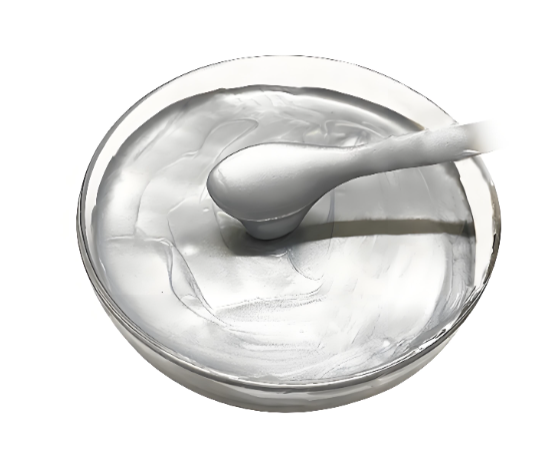
What Is Resistance Paste
Stable current during smartphone charging, precise control in autonomous driving systems, and accurate heart-rate monitoring in smartwatches—all of these functions rely on a material that is “invisible yet essential”: resistance paste.
Simply put, resistance paste is a “printable resistive material.” It combines conductive powders, such as metals and metal oxides, with binders and solvents. Like ink, it is applied to substrates such as ceramics and glass through printing processes. After drying and firing, it forms the familiar resistive components.
Its core function is “precise current control.” When current passes through it, the resistance paste “blocks” a portion of the current according to the design requirements, ensuring that electronic components are not damaged by excessive current. From miniature resistors in smartphone chargers to power resistors in high-speed railway traction systems, all rely on its stable performance.
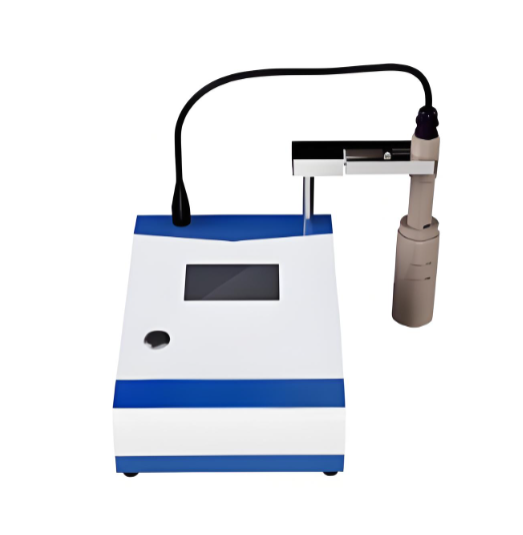
Core Principles and Technical Advantages of the Slurry Resistivity Meter
1. Core Principle
The basic operating principle of the Slurry Resistivity Meter is based on the four-probe method or a specific electrode configuration. A certain volume of slurry is placed into a measurement container, and dedicated electrodes are inserted to monitor changes in the slurry’s resistivity at different positions and time points in real time. Since the electrical conductivity of the slurry is closely related to the formation of its internal conductive network, and the integrity of this conductive network depends on the dispersion state of the conductive agent and active materials, resistivity serves as a sensitive indicator of the slurry’s microscopic uniformity.
2. Technical Advantages over Traditional Equipment
Compared with traditional equipment, modern Slurry Resistivity Meters offer the following significant technical advantages:
Multi-Position Spatial Monitoring: Advanced instruments employ three pairs of electrodes positioned at the upper, middle, and lower sections to simultaneously measure the resistivity of the slurry at different heights in the vertical direction. This design can directly capture stratification during the settling process, thereby enabling evaluation of the slurry’s sedimentation stability.
High-Precision Measurement: By separating the voltage and current leads, interference from inductance during voltage measurement can be effectively eliminated. Combined with disk electrodes featuring a large contact area, contact resistance errors can be reduced, ensuring measurement accuracy.
Dynamic Real-Time Monitoring: The software system can continuously record the resistivity-versus-time curve, enabling researchers to observe the evolution of slurry properties throughout the entire process, from the end of mixing to subsequent static settling.
Key Application Scenarios of the Slurry Resistivity Meter
1. Formulation Development and Additive Screening
During slurry formulation development, the selection of dispersing additives is critical. The Slurry Resistivity Meter can be used to quantitatively compare the effects of different types of dispersing additives, including polymer-based, small-molecule, and composite additives. Experimental data show that high-quality dispersing additives can maintain extremely small fluctuations in slurry resistivity after prolonged static storage, such as a fluctuation of only 2% over 72 hours. In contrast, inferior additives may cause a sharp increase in resistivity or abnormal data, directly indicating particle agglomeration or uneven dispersion.
2. Process Stability Monitoring
The slurry mixing process directly affects the formation of the conductive network. By measuring slurry resistivity at different mixing speeds and mixing times, the optimal process window can be determined. In addition, for slurries with different viscosities, the variation in resistivity before and after dilution provides an additional reference parameter for process adjustment. In general, the higher the conductive agent content, the lower the resistivity and the better the electrical conductivity. This linear relationship can be used to quickly evaluate the accuracy of material dosing.
3. Sedimentation Performance and Shelf-Life Evaluation
Slurry stability is reflected not only immediately after preparation but also during storage and transportation. By monitoring slurry resistivity after different periods of static storage, such as Day 1. Day 3. and Day 8. and particularly by analyzing the resistivity difference between the upper and lower layers, it is possible to accurately determine whether sedimentation or stratification has occurred. For example, if the resistivity of the lower layer is significantly lower than that of the upper layer, it indicates that heavier particles have settled and that the conductive network has become concentrated at the bottom. This can lead to uneven coating and reduced battery cell performance. Based on these results, companies can establish a reasonable maximum allowable static storage time for the slurry and avoid using degraded or expired slurry.
Industry Value and Future Prospects
With the rapid development of the new energy vehicle and energy storage markets, requirements for lithium-ion battery consistency and safety are becoming increasingly stringent. The Slurry Resistivity Meter fills the gap left by traditional physical parameters in the characterization of microscopic electrical properties, serving as an important bridge between materials science and battery manufacturing processes. It not only helps shorten R&D cycles and reduce trial-and-error costs, but also enables more refined quality control on production lines.
In the future, with further miniaturization and intelligent development of testing technologies, the Slurry Resistivity Meter is expected to integrate more functions, such as online real-time monitoring, optimized temperature compensation algorithms, and deep integration with manufacturing execution systems (MES), providing stronger data support for the digital and intelligent transformation of lithium-ion battery manufacturing. Through the scientific application of the Slurry Resistivity Meter, battery manufacturers can better control slurry quality and thereby produce lithium-ion battery products with superior performance, enhanced safety, and greater reliability.
Previous: What is a simulated transport vibration test machine used for?
N e x t : the last page
