





How Does a Film Impact Tester Measure Impact Resistance?
2026/09/16
Share:

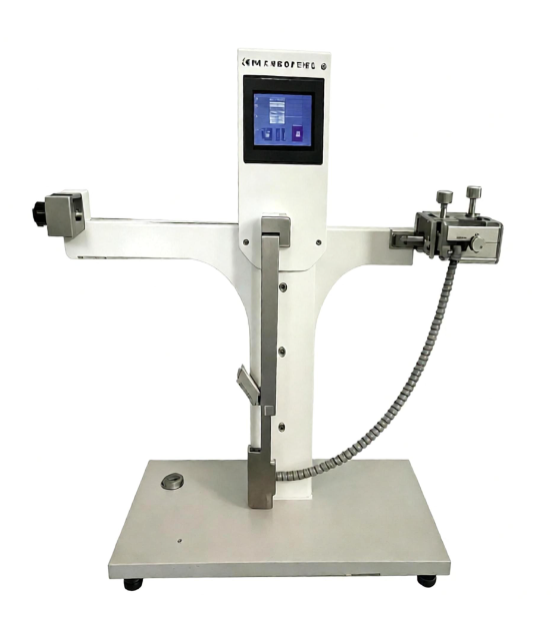
In-Depth Analysis of the Working Principle of a Film Impact Tester
The Film Impact Tester is a key testing instrument for evaluating the impact toughness of film materials such as plastics, rubber, and metal foils. Its core function is to simulate the dynamic response of materials when subjected to sudden mechanical impact during transportation and use. By quantitatively measuring the energy absorbed by a specimen at break or the critical impact mass, the tester provides a scientific evaluation of the material's resistance to damage.Depending on the testing method, Film Impact Testers are mainly divided into two types: Pendulum Impact Testers and Dart Impact Testers. Although both are based on the principles of mechanical energy conversion, they differ significantly in their specific operating mechanisms and methods of data representation.
1. Pendulum Impact Tester: Based on the Law of Conservation of Energy
The working principle of a Pendulum Impact Tester strictly follows the law of conservation of energy. The equipment mainly consists of a pendulum release mechanism, a hemispherical impact head, a specimen clamping fixture, and a high-precision energy display system.
During the test, the film specimen is securely clamped in an annular fixture. The pendulum is released freely from a predetermined initial height. Its gravitational potential energy is converted into kinetic energy, causing the pendulum equipped with a hemispherical impact head to strike the center of the specimen at a specified velocity, typically around 2.5 m/s.
When the impact head penetrates the specimen, part of the energy is absorbed by the specimen to produce deformation and rupture, while the remaining energy causes the pendulum to continue swinging upward to a certain height.
The system uses a high-precision angular displacement sensor to detect the angular position of the pendulum before and after impact and calculates the difference between the initial potential energy and the residual potential energy. This difference represents the impact energy absorbed by the specimen during rupture and is typically expressed in joules (J).
This method can directly reflect the toughness of the material under high-speed impact and is widely used for evaluating materials such as food packaging films and agricultural greenhouse films.
2. Dart Impact Tester: Based on Kinetic Energy from Free Fall
The Dart Impact Tester uses the free-falling dart method. Its core principle is to use a dart head (weight) with a specified mass to fall freely from a predetermined height and apply a vertical impact to the specimen.
During the test, the dart is released from a specified height, such as 0.66 m or 1.5 m, and its gravitational potential energy is converted into impact kinetic energy.
When the dart impacts and penetrates the film specimen, the mass or impact energy of the dart at which specimen failure occurs is recorded. Since the falling height is fixed, the work performed by the dart on the specimen mainly depends on its mass. Therefore, this type of tester generally uses the critical impact mass at which 50% of the specimens fail, or the corresponding impact energy, as the evaluation index.
The dart impact method is divided into Method A and Method B, which are applicable to film materials with different thicknesses and impact mass ranges. Method A is generally applicable to thinner films with a thickness of ≤0.25 mm, while Method B is applicable to thicker sheet materials.
By statistically analyzing the failure results of a large number of specimens using the staircase method or alternative method, the statistical impact resistance of the material can be determined.
Technical Features and Application Value of a Film Impact Tester
A Film Impact Tester is a specialized instrument designed to evaluate the impact resistance of film materials. In simple terms, it uses a pendulum or falling dart to impact or puncture the film and measures the amount of energy absorbed by the specimen during the impact. Generally, a higher absorbed impact energy indicates better impact resistance.The tester is mainly used for packaging materials such as plastic films, laminated films, and aluminum foil to help prevent packaging failures such as rupture during dropping or puncture and leakage during transportation and use.
1. Technical Features
High Level of Automation
Modern Film Impact Testers are generally equipped with microcomputer control systems and touchscreens. The specimen clamping and pendulum release processes can be automated, reducing the need for continuous manual operation. The system can automatically calculate average values, store test data, and generate or print test reports.
High Measurement Accuracy
Electronic measurement systems can provide resolutions as high as 0.001 J, offering significantly higher precision than traditional pointer-type displays. This allows the equipment to detect subtle differences in the impact resistance of different materials.
Adjustable Measuring Range
Impact energy ranges are typically available in several levels, such as 1 J, 2 J, and 3 J. Different impact heads and specimen clamping apertures can also be selected to accommodate films with different thicknesses and material properties.
Reduced Human-Induced Errors
Pneumatic clamping helps ensure uniform force distribution on the specimen and prevents slipping or inconsistent clamping force. Pneumatic pendulum release can also minimize deviations caused by manual operation, thereby improving test repeatability.
Traceable Test Data
The equipment can be equipped with an RS232 interface or network communication function for connection to computers and laboratory management systems. This facilitates data storage, transmission, analysis, and quality traceability.
2. Application Value
Essential Quality Control Equipment for the Packaging Industry
Packaging bags for food, pharmaceuticals, cosmetics, and other products are particularly vulnerable to rupture and puncture during transportation. Impact testing can help identify films that do not meet the required performance specifications before they are used in production, reducing the risk of large-scale leakage and packaging failure.
Material Development and Formulation Optimization
When changing raw material formulations or adjusting manufacturing processes, impact test data can be used to compare the impact resistance of different material formulations and process conditions. This provides quantitative evidence for material development and process optimization and reduces reliance on trial and error.
Incoming Material Inspection and Export Compliance
Raw materials can be tested upon arrival at the factory, while finished products can be sampled before shipment. The resulting test data can also support customer audits, quality verification, and compliance testing for export products, providing documented evidence of product quality.
Expanding Industrial Applications
In addition to packaging materials, impact testing technology can also be applied to areas such as new energy vehicle battery pack housings and aerospace composite materials. It helps evaluate the reliability of materials when subjected to dynamic impact conditions.
Conclusion
Overall, the Film Impact Tester is an important tool for achieving refined and standardized production of packaging materials. With the development of microcomputer control, high-precision sensors, and automation technology, modern testing equipment can effectively reduce errors caused by manual operation while providing accurate and traceable test data.Enterprises should select an appropriate Pendulum Impact Tester or Dart Impact Tester according to the characteristics of their products and the applicable testing standards. By establishing a comprehensive impact performance testing system, manufacturers can improve product quality, strengthen quality control, and provide greater assurance of product reliability and end-user safety.
Previous: How Does a Solid Combustion Rate Tester Evaluate Flammability?
N e x t : the last page
