





How Does a Solid Combustion Rate Tester Evaluate Flammability?
2026/09/15
Share:

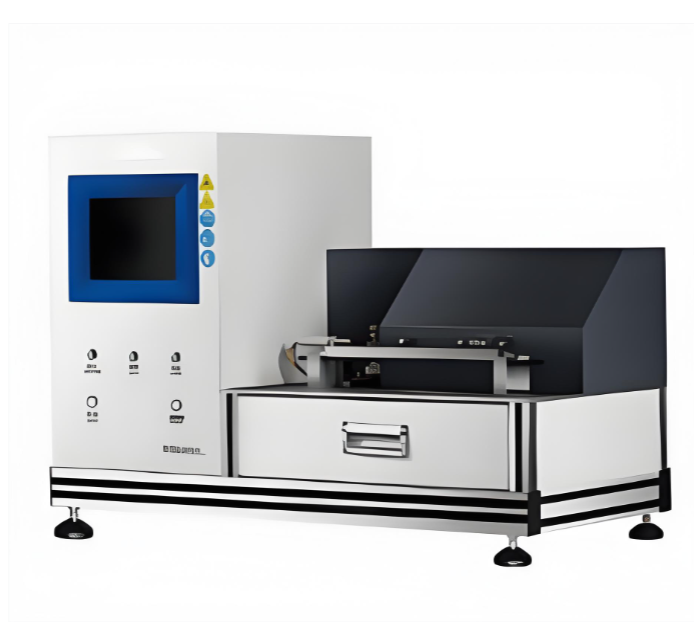
Working Principle and Technical Configuration
Modern Solid Burning Rate Testers generally consist of three main sections: the display and control unit, the specimen stacking mold, and the test chamber. Their technical architecture features a high degree of automation and precision:
Ignition System:
A silicon nitride rod or gas igniter is used as the heat source to ensure a stable ignition temperature above 1000°C. Compared with traditional open flames, silicon nitride rods offer excellent oxidation resistance and corrosion resistance and are less likely to disturb or disperse powdery samples, helping ensure consistent test results.
Detection System:
High-precision infrared sensors or near-infrared spectroscopy technology are used to monitor the combustion status of the specimen in real time. This technology can not only detect visible flames but also effectively identify smoldering, while algorithms accurately determine the flame propagation position, with a measurement accuracy of up to ±0.5 mm.
Control System:
An embedded processor works together with a touchscreen interface to provide convenient human-machine interaction. The system automatically records combustion time, calculates the burning rate, and provides fault self-diagnosis as well as audible and visual alarms, enabling full-process automation from parameter setting to result output.
Operating Procedure of the Solid Burning Rate Tester
1. Test Procedure
Modern Solid Burning Rate Testers are generally equipped with automated functions and integrate both screening tests and burning rate tests. Before operation, set the test parameters on the control panel and select the appropriate test mode.
Preliminary Screening Test:
Start the ignition device and bring the ignition source into contact with one end of the sample. For non-metallic powders, observe whether the sample ignites and propagates combustion over 200 mm within 2 minutes. For metal powders, observe the reaction for 20 minutes. If combustion does not propagate within the specified time, the material is classified as a non-flammable solid and no further testing is required.
Burning Rate Test:
If the sample passes the screening test, proceed with the formal burning rate measurement. The instrument automatically records the time required for the flame to propagate across a specified distance, such as 100 mm. High-precision infrared sensors or near-infrared spectroscopy technology monitor the position of the flame front in real time and automatically calculate the burning rate.
Process Monitoring:
Operators should monitor the combustion process through the observation window and pay attention to any abnormal splashing or violent reactions. The instrument automatically records afterflame time, afterglow time, and burning rate, and generates a test data report after completion.
2. Safety Precautions and Maintenance
Safety is the primary consideration during testing. Operators must wear appropriate personal protective equipment, such as safety glasses and protective gloves. A dry powder or carbon dioxide fire extinguisher should be readily available near the test area, and the emergency stop button must remain easily accessible. During ignition, personnel should stand to the side rather than directly facing the flame. After the test, immediately shut off the gas supply or heating power and clean the residues after the specimen support plate has cooled.
Regular maintenance includes cleaning the infrared sensor lens, checking the condition of the ignition rod, and calibrating the timing and temperature measurement systems. Keep the interior of the instrument clean and prevent dust accumulation from affecting sensor sensitivity.
Through standardized operation and proper maintenance, the Solid Burning Rate Tester can provide scientific and accurate data for dangerous goods classification, helping ensure the safety of chemical transportation and storage.
Technical Advantages of the Solid Burning Rate Tester
High-Precision Automated Control:
The instrument is equipped with an embedded processor and touchscreen operating system, enabling fully automated operation throughout the entire process, from parameter setting, ignition, and combustion timing to data recording and result determination. Each stage is centrally controlled and automatically completed by the system, effectively eliminating uncertainties caused by differences in operator reaction time, reading deviations, and operating habits. This significantly improves the consistency and repeatability of test results.
Strong Adaptability:
The instrument is designed to accommodate the testing requirements of both non-metallic powders and metal powders. Considering the combustion characteristics of metal powders, which may include high burning rates, significant heat release, and unique flame behavior, the equipment provides a longer timing range, a more stable ignition method, and detection channels suitable for different specimen forms. This ensures comprehensive and reliable testing for various types of samples.
Safety Protection Mechanisms:
Considering the potential hazards of high temperatures, open flames, and splashing during combustion tests, the instrument uses high-temperature-resistant and low-thermal-conductivity alumina-mullite or quartz glass as the combustion support plate to reduce heat accumulation and heat transfer to the surroundings. The equipment is also equipped with automatic fault detection and audible and visual alarms to promptly alert operators in abnormal situations. Some high-end models also support remote start, allowing operators to control the test process from a safe distance and providing enhanced personal safety.
Overall, the technological development of the Solid Burning Rate Tester, from early manual observation to today's fully automated infrared detection, has greatly improved the accuracy and efficiency of dangerous goods classification. It not only provides an important technical safeguard for chemical safety management but also establishes a solid scientific foundation for the compliant international transportation of dangerous goods. In the future, with the further integration of sensor technology and artificial intelligence algorithms, this type of instrument is expected to play an increasingly important role in fire hazard assessment and flame-retardant material research and development.
Previous: What is a scratch test for coatings?
N e x t : the last page
