





What is a thermal-cold cycle testing machine?
2026/09/16
Share:

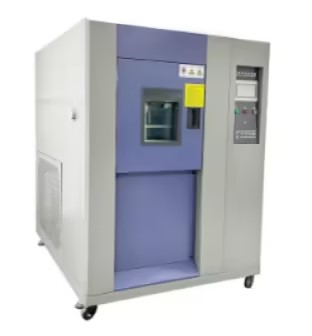
Features of the Thermal Cycling Test Chamber
1. Precise Simulation of Thermal Expansion and Contraction
The core advantage of this equipment is its ability to accurately reproduce the thermal expansion and contraction that products may experience under extreme temperature variations. Based on differences in heat-transfer media and structural design, modern thermal cycling test chambers are mainly divided into two types: air-type and liquid-type. Traditional air-type test chambers rely on the coordinated operation of refrigeration and heating systems, together with high-power circulation fans, to achieve rapid switching between high- and low-temperature air within the test zone.
2. High-Speed Liquid Thermal Shock Testing
High-end liquid thermal shock chambers adopt a dual-tank independent temperature control and rapid mechanical transfer design. High-specific-heat-capacity liquids, such as silicone oil and fluorinated oil, are used as heat-transfer media. A sample basket driven by a servo motor can transfer the specimen between the high- and low-temperature liquid tanks within seconds. This diversified testing mechanism ensures that products ranging from precision IC chips to heavy-duty mechanical components can undergo thermal stress testing that closely simulates actual operating conditions.
3. High-Precision Measurement and Comprehensive Safety Protection
To ensure objective and accurate test results as well as safe operation, modern test chambers are equipped with industrial-grade, high-precision sensors. They commonly use Class A platinum resistance temperature sensors (PT100) or highly sensitive thermocouples to collect temperature data inside the chamber or liquid tanks in real time. In terms of safety protection, the equipment incorporates multiple protection mechanisms, including over-temperature, over-pressure, and overload alarms, as well as emergency shutdown functions. It may also be equipped with intelligent defrosting technologies, such as hot-gas bypass defrosting, to effectively prevent evaporator frost buildup from reducing refrigeration efficiency. In addition, the control system supports historical data storage and power-failure memory, ensuring that the entire testing process is traceable.
4. Intelligent and Automated Operation
Modern thermal cycling test chambers have entered an increasingly intelligent and automated stage. They commonly use a 7-inch true-color touchscreen or PC-based software to provide one-touch operation. The operator only needs to set the temperature ranges for the high- and low-temperature zones, holding times, and the number of cycles. The equipment can then automatically perform complex operations such as refrigeration, heating, air damper switching, and sample basket lifting and lowering. With RS-232/RS-485 communication interfaces, the equipment can be seamlessly connected to a host computer for real-time temperature curve plotting and standardized report generation, thereby minimizing errors caused by manual operation.
Applications of the Thermal Cycling Test Chamber
1. Detection of Potential Physical and Chemical Failures
By subjecting samples to hundreds or even thousands of controlled hot-and-cold temperature cycles, the test chamber can directly identify potential physical damage or chemical changes within products. In the semiconductor and integrated circuit industries, it is used to accurately identify failures caused by thermal stress, including solder joint cracking, package material cracking, and wire bonding failures.
2. Reliability Testing of Automotive Electronics
In the automotive electronics industry, the equipment is used to verify the starting performance and sealing reliability of engine control units (ECUs) and sensors under extreme temperature variations. This quantitative performance evaluation provides a solid scientific basis for service-life prediction and quality control of various high-precision products.
3. Research and Development of New Materials and Product Designs
When developing new polymer composite materials, optimizing PCB substrate designs, or improving the adhesion of metal coatings, engineers can use the equipment to compare the performance of different materials under extreme thermal shock conditions. By analyzing dimensional deformation, performance degradation curves, and failure modes after thermal cycling tests, R&D teams can quickly identify optimized process solutions for reducing thermal stress concentration and improving material compatibility, thereby accelerating the development of high-value-added and highly reliable products.
4. Quality Control, Standards Compliance, and Product Certification
In the global high-end manufacturing supply chain, environmental reliability is often a mandatory requirement for product qualification and market access. Quality inspection organizations and third-party certification bodies use thermal cycling test chambers to conduct rigorous testing in accordance with applicable national and industry standards. From qualification testing of military equipment to sampling inspections of high-end consumer electronics, authoritative test data generated by the equipment provides important evidence that products meet specified service-performance requirements. This helps reduce the risk of large-scale recalls caused by inadequate environmental adaptability while protecting end-user safety and supporting product quality and brand reputation.
Benefits of Using a Thermal Cycling Test Chamber
The primary benefit of using a thermal cycling test chamber is its ability to simulate the alternating high- and low-temperature environments that products may experience over a relatively short period. By accelerating thermal stress, the equipment can expose potential defects at an early stage, helping improve product quality, reliability, and long-term performance.
Main Benefits
1. Early Detection of Product Defects
By simulating extreme temperature variations, the equipment can quickly reveal weaknesses in product design, materials, or manufacturing processes, such as structural damage caused by thermal expansion and contraction, material aging, and electronic component failures. This helps prevent defective products from reaching the market.
2. Improved Product Reliability and Service Life
Products that have undergone thermal cycling testing can demonstrate better resistance to temperature variations and improved long-term stability. This can help reduce failure rates and maintenance costs during actual use.
3. Accelerated Product Development and Time to Market
Compared with waiting for failures to occur under natural environmental conditions, a thermal cycling test chamber accelerates the effects of thermal stress and can complete hundreds of temperature cycles within a relatively short period. This enables R&D personnel to quickly verify and optimize product designs, helping shorten development cycles and accelerate time to market.
4. Compliance with Industry Standards and Certification Requirements
Thermal cycling test chambers are widely used for testing in accordance with major domestic and international standards. They play an important role in product type testing, export certification, and qualification for specific industries, including automotive and defense-related applications.
5. Reduced Overall Costs
Although purchasing a thermal cycling test chamber involves an initial investment, it can help reduce overall costs throughout the product life cycle by identifying defective products at an early stage, reducing after-sales repairs, and minimizing potential losses associated with product quality issues and brand reputation.
Conclusion
Overall, the thermal cycling test chamber combines highly controlled thermal cycling conditions, high-precision temperature measurement, and automated testing functions to provide reliable data for environmental reliability testing. By creating standardized extreme temperature conditions in a laboratory environment, it transforms the complex process of thermal expansion, contraction, and aging into precise and traceable engineering data. This enables manufacturers and R&D teams to identify potential weaknesses, optimize material selection and structural design, and continuously improve product reliability and performance.
Previous: How Does a Film Impact Tester Measure Impact Resistance?
N e x t : the last page
