





Automated Cleanliness Analysis System: From Particle Extraction to AI Analysis
2026/09/16
Share:

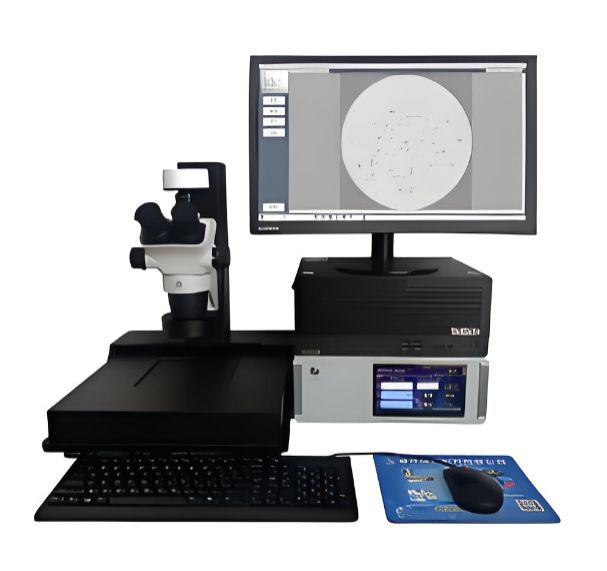
Why Is Automated Cleanliness Analysis Needed
Traditional manual cleanliness inspection relies on operators to manually count and classify particles under a microscope, which has several significant limitations. Human fatigue can lead to missed detections, differences in individual judgment can result in data variability, and the material properties of microscopic particles are difficult to quantify accurately.
With the increasing adoption of international testing standards, the industry has placed increasingly stringent requirements on the objectivity, repeatability, and traceability of test results. Automated cleanliness analysis systems integrate optical imaging, fluid control, and artificial intelligence algorithms to transform subjective assessments of “cleanliness” into objective and quantifiable data. This approach helps overcome the efficiency limitations and consistency challenges associated with manual inspection while providing more reliable data for quality control and process optimization.
Core Working Principle of the Cleanliness Analysis System
A mature automated cleanliness analysis system typically consists of three key stages: particle extraction, optical imaging, and intelligent analysis. These stages are closely interconnected and progressively build upon one another, forming a complete technical workflow from the original sample to reliable analytical data.
Standardized Particle Extraction
The first step of the inspection process is to transfer contaminants attached to the surface of a component into a medium suitable for analysis. The system uses methods such as ultrasonic cleaning, pressure flushing, or agitation, together with a specified solvent, to thoroughly dislodge particles from the surface of the workpiece. The extracted contaminants are then captured on a filter membrane through a precision filtration system.
This process strictly follows standardized procedures, with parameters such as cleaning time, solvent temperature, and flow rate precisely controlled. This helps prevent particles from being broken apart or lost due to improper handling, ensuring that the extraction results accurately represent the actual contamination condition of the component surface and provide a reliable sample basis for subsequent analysis.
High-Precision Optical Imaging
After drying, the filter membrane is transferred to an automated scanning platform. The system is equipped with a high-resolution industrial camera and a multi-angle illumination module, which can automatically adjust the illumination angle and intensity according to the reflective characteristics of different particles. For example, highly reflective metal particles are particularly visible under dark-field illumination, while transparent or translucent fibers are easier to identify under transmitted light at specific angles.
The motorized positioning stage scans the filter membrane line by line with micrometer-level precision, ensuring that adjacent fields of view are neither overlapped nor missed. This process generates continuous and complete high-resolution digital images, providing sufficient information for subsequent particle identification and measurement.
AI-Powered Intelligent Identification and Classification
This stage serves as the “brain” and core decision-making component of the entire system. Based on deep-learning algorithms, the software can not only count particles and measure their sizes, but also automatically distinguish particle materials according to features such as grayscale values, texture, and shape.
Through training with large numbers of samples, the system can accurately identify potentially high-risk metallic particles and distinguish them from non-metallic particles. It can also effectively eliminate background noise and artifacts originating from the filter membrane, reducing false identification and preventing distortion of test results. This helps ensure the accuracy, consistency, and reliability of the final analytical data.
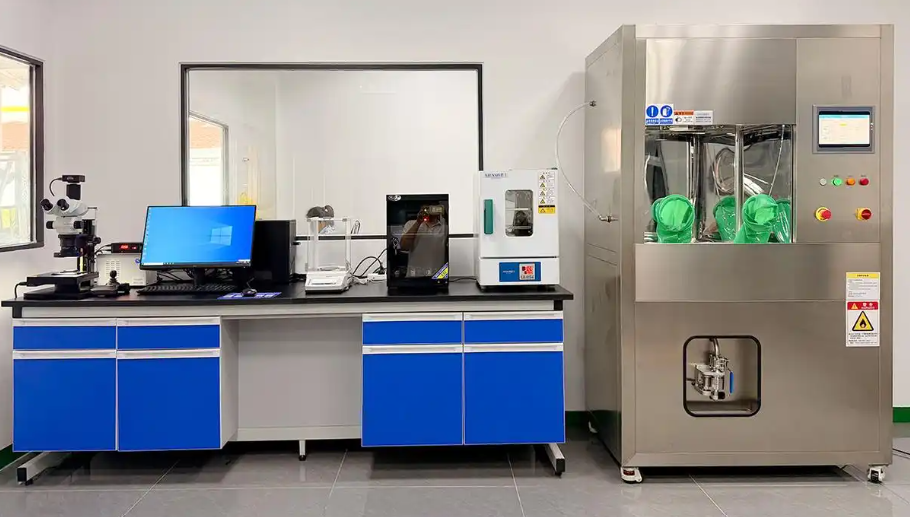
From Inspection to Traceability: Data-Driven Quality Improvement
The value of an automated cleanliness analysis system lies not only in determining whether a product is “qualified” or “unqualified,” but also in its powerful data analysis and traceability capabilities.
Risk Warning
The system can automatically issue alarms based on predefined criteria, such as the maximum allowable particle size or the maximum permitted number of particles of a specific material. For example, in automotive hydraulic systems, hard metal particles only a few micrometers in size can potentially scratch valve spools. An automated cleanliness analysis system can effectively detect such high-risk contamination signals.
Contamination Source Traceability
By statistically analyzing particle morphology and material characteristics, engineers can work backward to identify potential sources of contamination. For example, the presence of a large quantity of flake-shaped aluminum debris may indicate tool wear during a milling process, while plastic particles with a specific color may originate from aging seals or the shedding of packaging materials.
Closed-Loop Process Optimization
Inspection data can be integrated with production management systems to establish a closed-loop quality feedback process. Based on the analytical results, manufacturers can adjust cleaning parameters, optimize cleanroom management, or improve machining processes to reduce contamination risks at the source. This enables a transition from “post-process inspection” to “process control.”
Conclusion
With the rapid development of industries such as new energy vehicles, semiconductors, and medical devices, cleanliness requirements are increasingly moving toward the nano- and molecular-scale levels. As a key infrastructure for quality control, automated cleanliness analysis systems are continuously integrating more advanced optical technologies and AI algorithms, driving manufacturing toward greater precision and intelligence.These systems not only help maintain microscopic cleanliness and product quality, but also contribute to protecting brand reputation and end-user safety. In the future, cleanliness analysis will no longer be limited to a single inspection step, but will evolve into an intelligent quality-control hub spanning the entire product life cycle.
Previous: What is a thermal-cold cycle testing machine?
N e x t : the last page
