





How Does a Falling Ball Rebound Instrument Measure Material Resilience?
2026/09/17
Share:

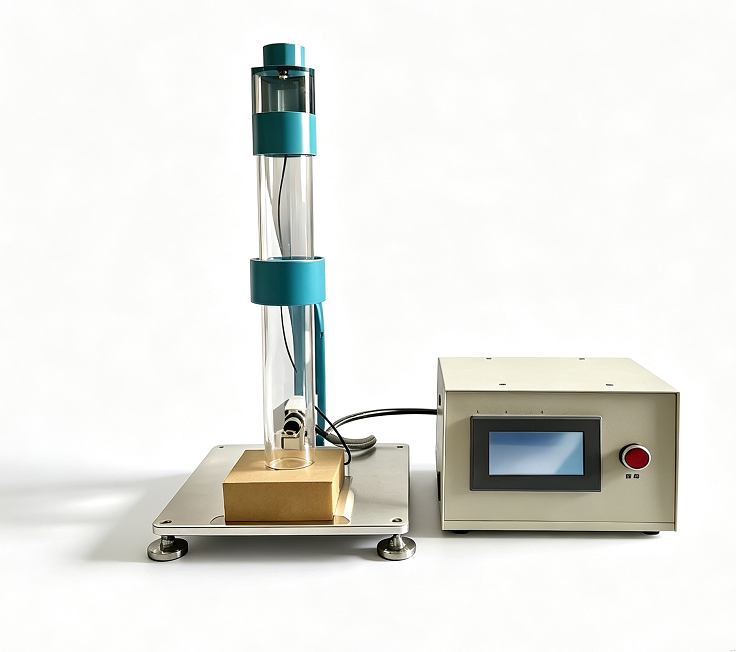
Basic Principle: The Simple Philosophy of Energy Interaction
The core principle of the Ball Rebound Tester can be understood as a carefully designed “energy interaction.” A standard ball (impact body) is vertically released from a fixed height, allowing it to fall freely under the force of gravity onto the surface of a horizontally positioned specimen. When the ball makes instantaneous contact with the material, part of the impact energy is absorbed by the material and converted into internal energy, such as heat or energy associated with microstructural deformation. The remaining energy drives the ball upward in rebound.
The most sophisticated aspect of the instrument lies in its ability to accurately capture the rebound height. Using advanced photoelectric sensing or high-speed imaging systems, the tester can precisely record the highest point reached by the rebounding ball. The ratio of the rebound height to the drop height, known as the rebound coefficient, is a dimensionless key indicator used to characterize the resilience of a material.
Behind this simple ratio lies the combined response of the material’s microscopic structure—including molecular chain flexibility, crosslink density, and internal damping characteristics—to external dynamic impact. Highly elastic materials, such as natural rubber, can store and release a large proportion of the impact energy, resulting in a higher and faster rebound. Materials with strong damping characteristics or pronounced plastic behavior, such as certain soft plastics, dissipate more of the impact energy, resulting in a lower and slower rebound.
Performance Advantages: Comprehensive Applications from Laboratories to Production Lines
Material Research and Development
Dynamic Mechanical Performance Analysis:
Through continuous impact testing modes, such as one impact per second, the tester can simulate long-term material usage conditions. For example, testing conducted by a polyurethane foam manufacturer showed that the material’s rebound rate could be increased from 75% to 82%, significantly improving the seating comfort of automotive seats.
Fatigue Performance Evaluation:
Using interval testing modes, such as measuring the reduction in rebound rate after 1.000 impacts, researchers can evaluate the fatigue characteristics and service life of materials. A sports flooring manufacturer used this function to extend the service life of its products by 30%.
Quality Control Applications
Rapid Testing Mode:
A single test can be completed within 10 seconds, allowing the tester to be seamlessly integrated into high-speed production lines for products such as tires and footwear materials. After introducing the equipment, one tire manufacturer reduced its batch non-conformance rate from 3% to 0.5%, saving more than RMB 2 million in quality inspection costs annually.
Multi-Batch Data Management:
The built-in microprocessor can automatically calculate the average rebound rate and supports the storage and comparative analysis of up to 500 sets of test data. A furniture manufacturer used this function to implement graded quality management of raw material suppliers.
Standards Compliance
The accompanying professional analysis software can generate test reports that meet the requirements of various standards, including ISO, ASTM, and GB standards. For example, a badminton court construction contractor used the equipment to verify the rebound consistency of PVC sports flooring. By confirming that the rebound performance fell within the required range of 45%–60%, the contractor could ensure that the flooring provided athletes with the required take-off cushioning performance.
Key Operating Procedures for the Ball Rebound Tester: Ensuring Reliable Test Data
Obtaining reliable test data depends not only on the accuracy of the instrument itself but also on rigorous and standardized operation. Key considerations include:
1. Rigorous Specimen Preparation
The specimen should have a uniform thickness, a smooth and flat surface, and be free from visible defects. It should also be conditioned as required, such as under controlled temperature and humidity conditions, to minimize environmental influences on the test results.
2. Accurate Alignment and Leveling
The impact ball must be positioned so that it falls vertically onto the specified location of the specimen. At the same time, the entire instrument must be properly leveled. Accurate alignment and leveling are fundamental to minimizing testing deviations.
3. Standardized Release Mechanism
An electromagnetic or equivalent release mechanism should be used to ensure that the ball is released freely without initial velocity or rotation during every test. This helps maintain consistent impact conditions and improves test repeatability.
4. Regular Calibration and Maintenance
The release height, timing system, and rebound-height measurement system should be calibrated regularly according to the applicable requirements. The guide rail should be kept clean, and the impact ball should remain free from damage or deformation. These measures are essential for maintaining the long-term stability and accuracy of the instrument.
Future Outlook: Intelligent and Diversified Development
With advances in technology, the Ball Rebound Tester is evolving from a device focused on single-parameter measurement toward greater intelligence and integration. Modern instruments may incorporate automatic specimen loading, multi-dimensional sensing technologies—such as simultaneous measurement of contact time and impact-force waveforms—and environmental simulation chambers. Combined with artificial intelligence-based data analysis, these systems can provide more than just the rebound coefficient; they can also offer deeper insights into the viscoelastic spectrum, damage evolution, and other dynamic characteristics of materials. At the same time, the scope of application is expanding beyond traditional materials into emerging fields such as food texture analysis and biomechanical evaluation of biological tissues.
In conclusion, the Ball Rebound Tester has established a solid position in the field of dynamic material performance evaluation due to its intuitive testing principle, relatively simple operation, and highly practical test data. Like a silent judge, it continuously provides objective evaluations of material resilience and product reliability through repeated, precise impacts and measurements. As the industry continues to pursue higher-performance and smarter materials, this classic yet continually evolving testing technology will continue to play an important and irreplaceable role.
Previous: What is the purpose of a helmet tensile tester?
N e x t : the last page
